
Matrice 4 Best Practices for Mountain Wildlife Surveys
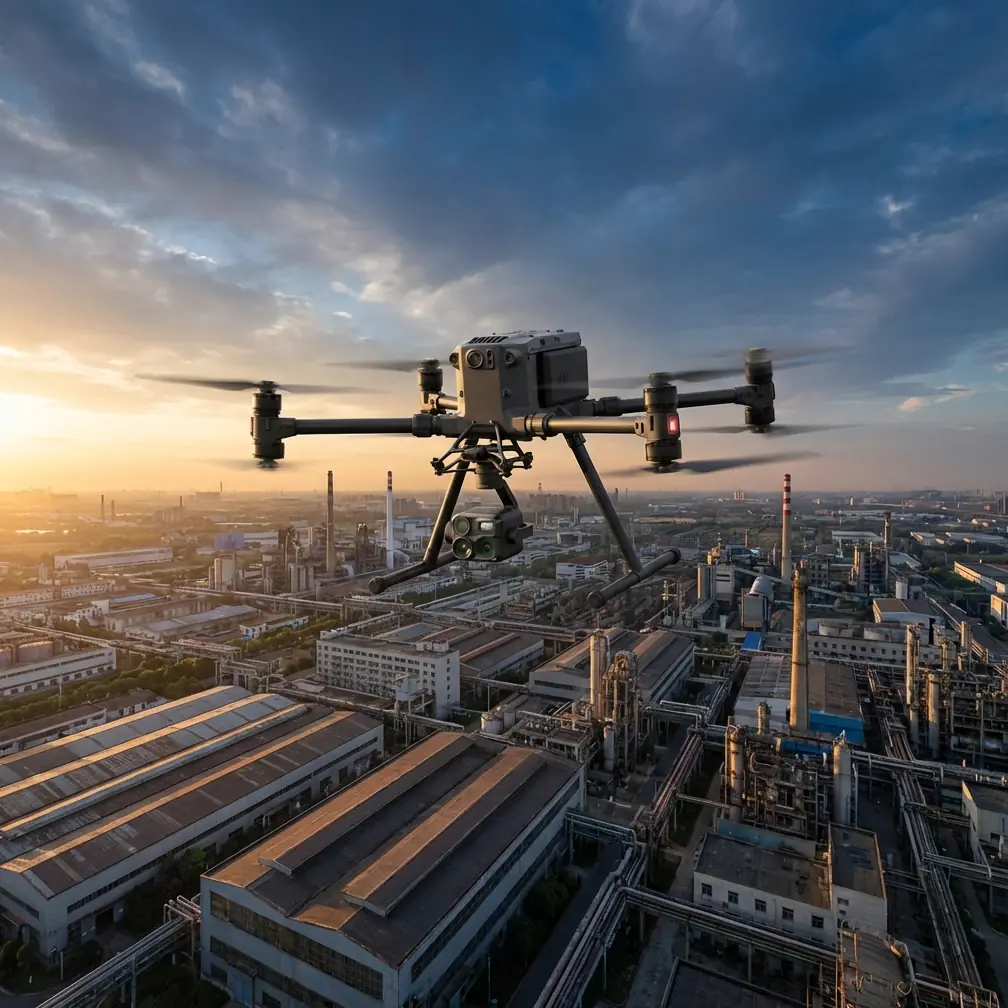
Matrice 4 Best Practices for Mountain Wildlife Surveys: Fast Mapping, Reliable Links, and Smarter Field Workflow
META: Expert tutorial on using Matrice 4 for mountain wildlife surveys, covering photogrammetry, thermal signature capture, antenna positioning, data transmission, field processing, and emergency-ready mapping workflow.
Mountain wildlife surveys punish weak workflows.
You may have the right aircraft, a capable payload, and a strong pilot, yet still lose the mission to terrain shadow, slow data handling, poor antenna alignment, or a field team that cannot turn images into decisions while conditions are still changing. For teams planning to use Matrice 4 in alpine and high-relief environments, that is the real challenge: not just flying, but building a survey process that acquires, processes, and transmits usable information fast enough to matter.
That problem is not new. One emergency mapping study from the Chinese Academy of Surveying & Mapping and industry partners centered on exactly this bottleneck: how to make remote sensing data acquisition, on-site processing, and remote transmission fast and efficient enough to improve response capability. Their answer was not a single device. It was an integrated system that combined remote sensing, GIS, GPS, and network communications in a vehicle-based UAV mapping platform so imagery could be captured quickly, processed in the field, and sent onward without delay. That framework translates surprisingly well to mountain wildlife work with Matrice 4.
If you are counting ungulates on ridgelines, monitoring nesting zones, tracking habitat change, or building terrain-aware population maps, the lesson is simple. The aircraft matters, but the system matters more.
Why Matrice 4 fits mountain wildlife surveys
Matrice 4 makes sense in this role because mountain surveys ask for three things at once: stable image capture, dependable link performance over broken terrain, and efficient handling of multiple data types. In practice, you are often collecting visible imagery for photogrammetry, thermal signature observations near dawn or dusk, and precise positional data for later GIS analysis. The reference paper emphasized the operational value of integrating remote sensing, GIS, GPS, and communications rather than treating them as separate tasks. For wildlife teams, that integration is what turns a flight into a useful survey product.
A mountain mission can begin as a simple habitat check and evolve into a more complex mapping exercise. Snowline movement, water access, vegetation stress, migration corridors, cliff roosts, and thermal detections can all end up on the same project layer stack. That is where Matrice 4 is strongest when paired with disciplined mission design.
Start with the vehicle, not just the drone
One of the most practical details from the emergency surveying reference is the decision to build a vehicle-based system. That was done to support three operational needs: rapid image acquisition, timely field processing and output, and immediate remote transmission. Those same three needs apply in mountain wildlife work.
Treat your survey vehicle as a mobile command node.
That means:
- charging strategy built around hot-swap batteries
- a rugged workstation for quick image review
- field storage with clean file structure
- connectivity for remote sync when needed
- a map display that combines flight plans, terrain, and habitat layers
This setup shortens the time between capture and interpretation. In mountain ecology, that matters more than many teams expect. If thermal detections suggest animals moved into a different aspect after sunrise, or if fog closes in on one ridge and opens another, the crew needs to re-task quickly. A slow data loop turns a good drone into a passive camera.
Mission planning for mountain wildlife: photogrammetry and thermal are not the same flight
A common mistake is trying to force one flight profile to serve every objective. It rarely works.
For photogrammetry, your priorities are overlap, consistency, and positional control. For thermal signature work, your priorities shift toward timing, angle, environmental contrast, and interpretation discipline. Separate these unless the site and objective are unusually simple.
Photogrammetry workflow
If the goal is habitat modeling, slope analysis, trail detection, or vegetation boundary mapping, build your Matrice 4 mission around repeatable geometry:
- Fly when light is stable.
- Use terrain-aware altitude planning in steep relief.
- Maintain sufficient forward and side overlap for the surface type.
- Use GCPs where the terrain and access make them realistic.
GCP placement in mountains deserves extra thought. Teams often put control where it is easy to reach rather than where it improves the model. Spread GCPs across elevation bands, not just along the valley floor. In high-relief terrain, vertical variation can distort the model if your control is too flat and too clustered. Even a modest number of well-distributed GCPs can improve consistency in orthomosaics and elevation products.
Thermal workflow
Thermal flights work best when the environment is doing some of the separation for you. In mountain settings, that often means early morning, late evening, or overcast transitions when animal heat signatures stand out against rock, scrub, or snow patches. But thermal imagery should not be treated as automatic evidence. Sun-warmed boulders, exposed soil, and reflective surfaces can all create confusion.
Use thermal detections as a screening layer, then confirm with visual context, terrain position, and movement behavior when possible. For wildlife ethics and data quality, maintain stand-off distance and avoid repeated hovering over sensitive areas.
Antenna positioning advice for maximum range in mountains
This is where many otherwise skilled teams underperform.
The prompt mentions O3 transmission, and regardless of your exact Matrice 4 communications setup, the mountain rule is the same: range is rarely lost because of headline spec limits. It is lost because of terrain obstruction and poor antenna orientation.
Here is the field advice I give crews.
1. Elevate the control position whenever possible
Do not launch from the deepest part of the valley if the mission runs along upper slopes. A small elevation gain at the pilot position can improve line-of-sight dramatically. Even moving 20 to 50 meters higher on a road cut, turnout, or shoulder can clean up a marginal link.
2. Keep the broad face of the antenna aimed at the aircraft, not the tip
Many pilots instinctively point the antenna ends at the drone. That is often the wrong geometry. For best signal, orient the antenna surfaces so their strongest pattern faces the aircraft’s path. If the mission arc changes, adjust your body and controller position instead of staying fixed and hoping the link holds.
3. Avoid parking beside metal clutter
A vehicle-based setup is useful, but do not trap your control signal between the vehicle roof, a guardrail, and a rock wall. Step clear of reflective or obstructive surfaces when signal quality matters. Use the vehicle as your processing base, not necessarily as the exact pilot station.
4. Plan around terrain shadow, not just distance
A drone 1.5 km away with clear line-of-sight may hold a better link than one 600 m away behind a spur ridge. Before launch, study the route for likely signal shadow zones. If necessary, split the mission into sectors rather than forcing one continuous run.
5. Hold antenna discipline during turns and climbs
The link often drops at the moment pilots stop paying attention to orientation—during a high climb, a lateral reposition, or a camera task change. Assign one crew member to monitor aircraft position relative to the controller during longer transects.
If you routinely work complex ridgelines and want help reviewing your field layout, you can message a mountain survey workflow question here.
Build a fast data chain or your survey loses value
The emergency mapping paper made a point that deserves more attention: improving capability depends on making acquisition, processing, and transmission fast. Not eventually. Fast.
That is operationally significant for wildlife survey teams because mountain conditions move quickly. Cloud, glare, wind acceleration over saddles, and animal movement patterns can all shift within the same field window. If your team waits until evening to assess whether the morning data was usable, you may have wasted the only good weather period.
A better Matrice 4 workflow looks like this:
- capture imagery in structured mission blocks
- review coverage immediately in the vehicle
- run rapid quality checks on overlap, blur, and exposure
- tag detections and anomalies while the site context is fresh
- push essential outputs to the remote team as soon as a connection is available
This does not mean you need full final processing on the mountain. It means you need enough processing to make decisions. Quick-look orthos, reduced-resolution previews, and preliminary GIS overlays are often enough to determine whether to re-fly a zone, adjust altitude, or send a ground observer.
Security and transmission discipline matter in conservation work
Wildlife data can be sensitive even when the mission is completely civilian. Nest sites, rare species locations, and movement corridors should not be shared casually. If your workflow supports AES-256 encryption for stored or transmitted files, use it. The reference material highlighted remote data transmission as a core feature of an effective field system. Today, that should include secure transmission practices, not just fast ones.
Operationally, this matters for two reasons.
First, field crews often work through mixed connectivity environments: local storage in the vehicle, mobile uplink when available, and remote collaboration with off-site GIS staff. Every transfer step creates risk if file handling is loose.
Second, mountain work frequently involves partnerships across ecology teams, land managers, and contractors. A disciplined naming, encryption, and permissions structure prevents location data from drifting into the wrong hands.
BVLOS planning requires more than legal awareness
BVLOS is often discussed as a regulatory topic, but for survey design it is also a data-quality topic. In mountain wildlife projects, longer-range operations can tempt teams to stretch one launch point too far. The result is usually weaker line-of-sight, worse viewing geometry, and lower confidence in detections.
Even where BVLOS pathways are available within your operating framework, ask whether they improve the survey. Sometimes the better answer is multiple short sectors from carefully chosen vantage points. You gain cleaner transmission, more consistent image angles, and simpler recovery options if weather turns.
The emergency surveying concept of a mobile mapping unit supports this perfectly. Move the base. Reposition with purpose. Keep the aircraft working in its strongest envelope instead of building the mission around convenience.
A practical field sequence for Matrice 4 in mountain habitat surveys
Here is a compact workflow I recommend for teams that need repeatable results.
Before departure
Load terrain layers, prior sightings, habitat polygons, access points, and weather models into your GIS project. Define separate missions for photogrammetry and thermal work. Pre-assign file naming conventions and backup rules.
At the survey vehicle
Check winds by slope aspect, not just forecast average. Build your launch plan around line-of-sight and antenna orientation. Confirm battery rotation and hot-swap sequence so the aircraft is never waiting on field organization.
First flight
Run a short proofing mission. Validate exposure, signal behavior, terrain clearance, and actual overlap. If the link degrades where you expected it to, revise immediately.
Main data collection
Fly habitat mapping blocks first if light is clean. Reserve thermal passes for the time window with strongest thermal separation. Log any wildlife detections with location context, not just image references.
Immediate review
Inside the vehicle, inspect a sample from each block. Look for blur from wind shear, coverage gaps on steep faces, and thermal false positives from sun-loaded surfaces. Generate preview outputs before leaving the site.
Remote coordination
Transmit essential previews and GIS-ready notes to the off-site team while the field crew still has local memory of conditions. The reference paper’s emphasis on immediate remote transmission is highly relevant here; remote specialists can often catch an issue before the vehicle leaves the mountain.
What most improves survey quality is not the camera
It is the handoff between capture, interpretation, and action.
That is the deepest takeaway from the vehicle-based emergency surveying model. The system was designed because the limiting factor was not merely obtaining imagery. It was getting from imagery to usable output, then delivering it where it could support real decisions. For wildlife survey teams using Matrice 4, the same logic applies.
A drone can collect beautiful data and still fail the mission if the crew cannot process enough of it on site, communicate it securely, and adapt before the weather changes. By combining remote sensing, GIS, GPS, and network communication in one disciplined field workflow, you make Matrice 4 much more than an aircraft. You turn it into a reliable mountain survey platform.
That is what expert operation looks like in practice: not more complexity, but fewer breaks between steps.
Ready for your own Matrice 4? Contact our team for expert consultation.