
How to Track Urban Coastlines With Matrice 4 When Heat
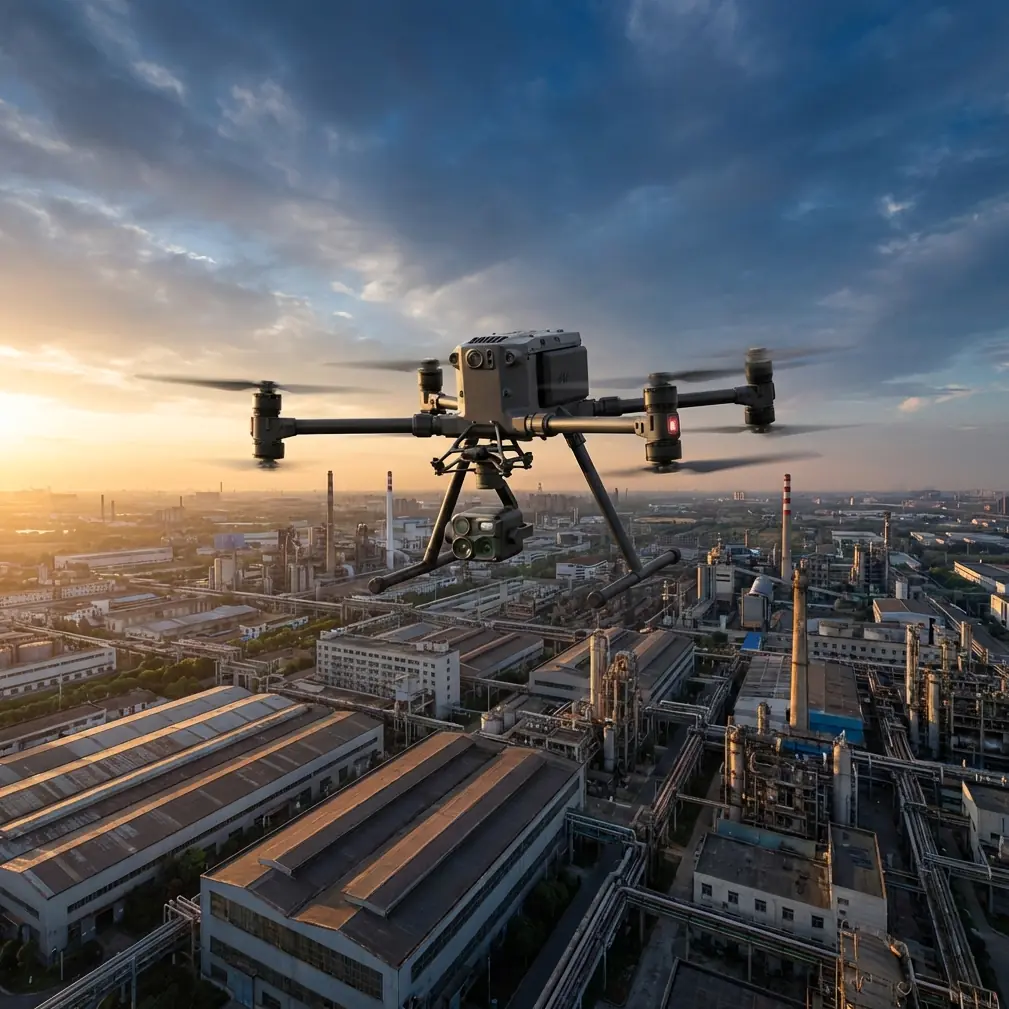
How to Track Urban Coastlines With Matrice 4 When Heat, Wind, and Structure All Start Competing
META: Expert how-to for tracking urban coastlines with Matrice 4, covering thermal interpretation, photogrammetry workflow, structural planning logic, weather shifts, and operational decision-making.
Urban coastline work looks simple from a distance. Water on one side, buildings on the other, a clean edge to follow.
In practice, it is one of the messier drone missions you can run with a Matrice 4.
You are dealing with reflective surfaces, uneven heat signatures, gusts moving off towers and seawalls, GPS multipath near dense construction, and long linear corridors that tempt crews into rushing their flight planning. Add a weather swing mid-flight and the mission can unravel fast unless the aircraft, sensor plan, and route logic are built around what the environment is actually doing.
That is where Matrice 4 becomes interesting. Not because it magically solves the coast. It does not. It gives you enough sensing, transmission stability, and workflow flexibility to keep the data usable when conditions stop cooperating.
What matters most is how you set up the job.
Start with the real objective, not the drone
When people say they need to “track a coastline,” they can mean three different things:
- document shoreline geometry for mapping updates
- inspect urban edge assets such as retaining walls, drainage outfalls, promenades, piers, and rooflines near the waterfront
- monitor thermal anomalies, water intrusion, or material stress where land, structure, and sea interact
Those are not the same mission.
If your deliverable is a photogrammetric corridor map, you care about overlap discipline, repeatable altitude, GCP placement, and clean image geometry. If the client wants thermal signature changes along concrete flood barriers after a storm tide, your priorities shift toward timing, emissivity awareness, and the relationship between surface heating and subsurface moisture.
Matrice 4 can support both approaches, but only if the flight plan reflects the job. That sounds obvious, yet it is where many coastline operations fail. Crews often launch with one route and expect one payload behavior to serve every purpose.
It rarely does.
Why thermal matters more along the coast than many operators expect
A useful way to think about urban coastline flying is to borrow a principle from traditional aircraft thermal design: heat management is never just about the hot source. It is about how airflow, insulation layers, and surrounding structure change the temperature that actually reaches the sensitive area.
One aircraft design reference gives a striking example. An engine wall temperature of 650°C is reduced first by 80–100 m/s cooling airflow to 220°C, then further lowered to 120°C through a 5 mm insulating layer so the adjacent installation remains viable. That sequence matters because it shows something drone operators sometimes overlook: the temperature you measure, or fail to measure, is shaped by what sits between the heat source and your sensor.
Along an urban coast, the same logic applies operationally.
A retaining wall that looks thermally quiet at dawn may be masking moisture behind a concrete face. A rooftop HVAC discharge near the shoreline may distort readings on adjacent parapets. Sun-warmed cladding, sea breeze cooling, shaded voids under walkways, and trapped heat in composite surfaces all layer over one another. The thermal signature you see is not just “the object temperature.” It is the result of exposure, material, airflow, and the insulating behavior of whatever is behind the visible surface.
This is why Matrice 4 thermal missions should not be flown as quick visual add-ons. Thermal needs its own route logic and timing window.
For urban coastlines, I prefer to define separate thermal targets before takeoff:
- seawall joints and expansion points
- drainage outlets and backflow zones
- roof-to-facade transitions on waterfront buildings
- promenade deck sections with suspected subsurface voids or moisture retention
- utility corridors running parallel to the shore
That target list changes your mission from “scan everything” to “interrogate what heat and cooling are likely to reveal.”
Build the corridor like an aircraft structure problem
Another reference point from aircraft design helps here, and it comes from structural theory rather than thermal design. In thin-walled airframe structures, loads are not understood by looking at one skin panel in isolation. The structure is treated as a system made of skin and framework, with bending moments, torsion, and shear distributed through the whole section.
That is highly relevant to coastline drone work.
A shoreline corridor is also a system. Wind hits the water, turns around towers, compresses between buildings, lifts over embankments, and twists around bridges or port furniture. If you treat each segment independently, you miss the structural behavior of the route as a whole. If you treat the corridor like a loaded section, you plan better.
In plain terms, do this:
Segment the coastline by aerodynamic behavior
Do not split the mission only by distance. Split it by how air moves.
Typical urban coastline segments include:
- open waterfront with clean lateral wind
- tower-lined section with downdrafts and signal reflection
- marina or pier zone with mast clutter and interrupted sightlines
- elevated roadway edge where turbulence rolls off concrete faces
- mixed residential frontage with inconsistent launch-recovery options
Matrice 4’s O3 transmission capability is valuable here because urban shore missions often degrade link quality long before they exceed practical visual complexity. A strong transmission system helps, but it is not permission to ignore route geometry. O3 is most useful when paired with waypoint lines that avoid deep shadow zones behind structures and maintain antenna orientation discipline from the pilot position.
Expect torsion in the route
Thin-walled aircraft structures twist under torsion. Coastline flights do too, operationally speaking.
Your mission can begin as a simple straight corridor and then become a twisting path because of curved seawalls, oblique roofs, harbor corners, and side-looking inspection passes. Every turn changes the camera angle, the wind relationship, and the consistency of your dataset.
If you are collecting photogrammetry, those twists can break reconstruction quality unless you deliberately maintain overlap through turns and elevation changes. If you are collecting thermal data, turns can alter reflected background conditions enough to create false comparisons between one section and the next.
The solution is not “fly slower” as a blanket rule. The solution is to assign different speed and gimbal behavior to different corridor segments.
A practical Matrice 4 workflow for coastline tracking
Here is the method I use when the brief combines inspection and mapping in an urban coastal environment.
1. Run a two-layer mission plan
Create one route for geometry, another for thermal interpretation.
Geometry route
- consistent altitude above shoreline datum or terrain model
- high front and side overlap for photogrammetry
- nadir plus selected oblique captures where vertical structures matter
- GCPs placed at transitions, corners, and long straight sections to control drift
Thermal route
- lower speed
- repeatable sensor angle
- priority on target assets rather than universal coverage
- scheduled for the best thermal contrast window, not necessarily the same time as RGB mapping
This keeps your orthomosaic clean and your thermal analysis meaningful.
2. Place GCPs where the corridor wants to deform
On urban coastlines, the weak points in reconstruction are rarely the obvious straight runs. They are the places where the shoreline bends, rises, narrows, or becomes visually repetitive.
So place GCPs near:
- seawall corners
- pier heads
- access ramps
- repeating facade sections
- transitions from open shoreline to dense urban frontage
That gives your photogrammetry model better resistance to corridor drift.
3. Use thermal as a diagnostic layer, not decoration
Do not collect thermal just because the payload has it.
Use it to answer a question:
- Is moisture trapped behind the seawall skin?
- Are drainage points functioning consistently?
- Is insulation failure creating abnormal facade cooling or heating near salt-exposed structures?
- Are promenade surface repairs behaving differently from surrounding material?
The earlier aircraft thermal reference is useful here again. In that example, material layers and airflow radically changed the temperature seen at the protected interface. Along the coast, surface temperature can be equally misleading if you ignore wind wash, reflective solar load, and concealed layers.
A cold patch may mean saturation. Or simply shaded airflow.
A hot seam may indicate internal leakage. Or only a material change with different thermal response.
Interpretation always beats image collection.
What happened when the weather changed mid-flight
On one urban waterfront-style mission profile, conditions started calm enough for a clean mapping pass. About a third of the way through, the weather shifted. The marine layer began to break unevenly, sunlight hit the western building faces, and wind strengthened along the exposed edge. That changed three things at once:
- thermal contrast on shaded surfaces began collapsing
- gust loading increased near a high-rise corner
- reflective glare off water started contaminating some visual lines
This is where Matrice 4-style planning matters more than the airframe alone.
Because the route had already been split into structural segments, the crew did not try to force a single mission profile through changing conditions. The geometry pass continued where the lighting still supported consistent capture. The thermal route was paused for the affected section and resumed later on the less sun-exposed side. Hot-swap batteries helped preserve mission continuity without turning a weather interruption into a full operational reset.
That sounds mundane. It is not.
The difference between a useful coastline dataset and a compromised one is often the willingness to stop pretending the environment stayed constant. Mid-flight discipline is a bigger asset than marketing specs.
Security and urban data handling matter too
Urban coastline work often captures more than shoreline assets. You may inadvertently image residential balconies, utility rooftops, marina operations, road traffic patterns, and private commercial structures.
That makes data security part of mission design, not an admin task after landing.
For teams working under municipal, infrastructure, or enterprise requirements, AES-256 matters because coastline surveys often move through multiple hands: pilot, survey lead, analyst, asset owner, contractor, and archive manager. If you are collecting sensitive inspection imagery in dense mixed-use zones, strong encryption supports chain-of-custody discipline and reduces unnecessary exposure of site data.
It is one of those details that does not improve the flight, but it absolutely improves the operation.
When BVLOS is discussed, be precise
Long waterfront corridors naturally trigger interest in BVLOS workflows. That can make sense in some civil and industrial programs, but only when the regulatory framework, risk assessment, communication plan, and airspace considerations support it.
For most urban coastline teams, the more immediate gain comes from designing repeatable segmented routes that can later scale into more advanced approvals. In other words, fly like a future BVLOS operator even when you are not yet operating that way: consistent checklists, clean route partitioning, link margin awareness, visual complexity mapping, and documented contingencies.
That preparation pays off later.
Field notes that improve results with Matrice 4
A few details make a disproportionate difference:
Fly the coast twice if the deliverable justifies it
One pass for map-grade consistency. One pass for thermal or oblique inspection logic. Trying to merge them into one route usually weakens both.
Let the environment tell you the pace
Open seawall? You can keep momentum. Dense facade section with thermal targets? Slow down and hold angle consistency.
Watch for false thermal confidence near water
Sea breeze can flatten surface contrast fast. A weak anomaly in the wrong conditions may still be a real defect.
Treat linear missions as structural systems
The airframe reference about skin, frames, and distributed loads is more than theory. In practice, your route behaves as one connected system. Plan the whole corridor accordingly.
Keep a reflight trigger
If sunlight, cloud cover, or wind direction changes enough to alter interpretation quality, note the exact segment and reflight only that portion. This is far more efficient than forcing continuity for the sake of finishing the checklist.
If your team is refining this kind of workflow and wants to compare route logic for dense waterfront operations, you can message a Matrice 4 specialist here.
The real advantage of Matrice 4 on coastline jobs
The value is not that Matrice 4 can “do coastlines.” Plenty of aircraft can fly a line over the shore.
The advantage is that it supports a more disciplined way of working when the coastline becomes thermally deceptive, structurally complex, and meteorologically unstable. O3 transmission helps maintain confidence in urban signal environments. Hot-swap batteries reduce the penalty for interrupting a mission when conditions shift. Thermal payload capability adds a second diagnostic layer when used with intent. AES-256 supports serious urban data governance. And if you build your photogrammetry around smart GCP placement rather than habit, you get outputs that hold up under scrutiny.
The biggest mistake is to treat an urban shoreline as a scenic corridor.
It is not scenic from an operations standpoint. It is layered. Heated, cooled, twisted, reflective, interrupted, and constantly changing. The old aircraft engineering references are a reminder of something still true in drone work: both heat and force are shaped by the structure around them. If you understand that, your Matrice 4 mission stops being a simple flight and starts becoming a reliable survey method.
Ready for your own Matrice 4? Contact our team for expert consultation.