
M4 Tracking Tips for Construction Sites in Low Light
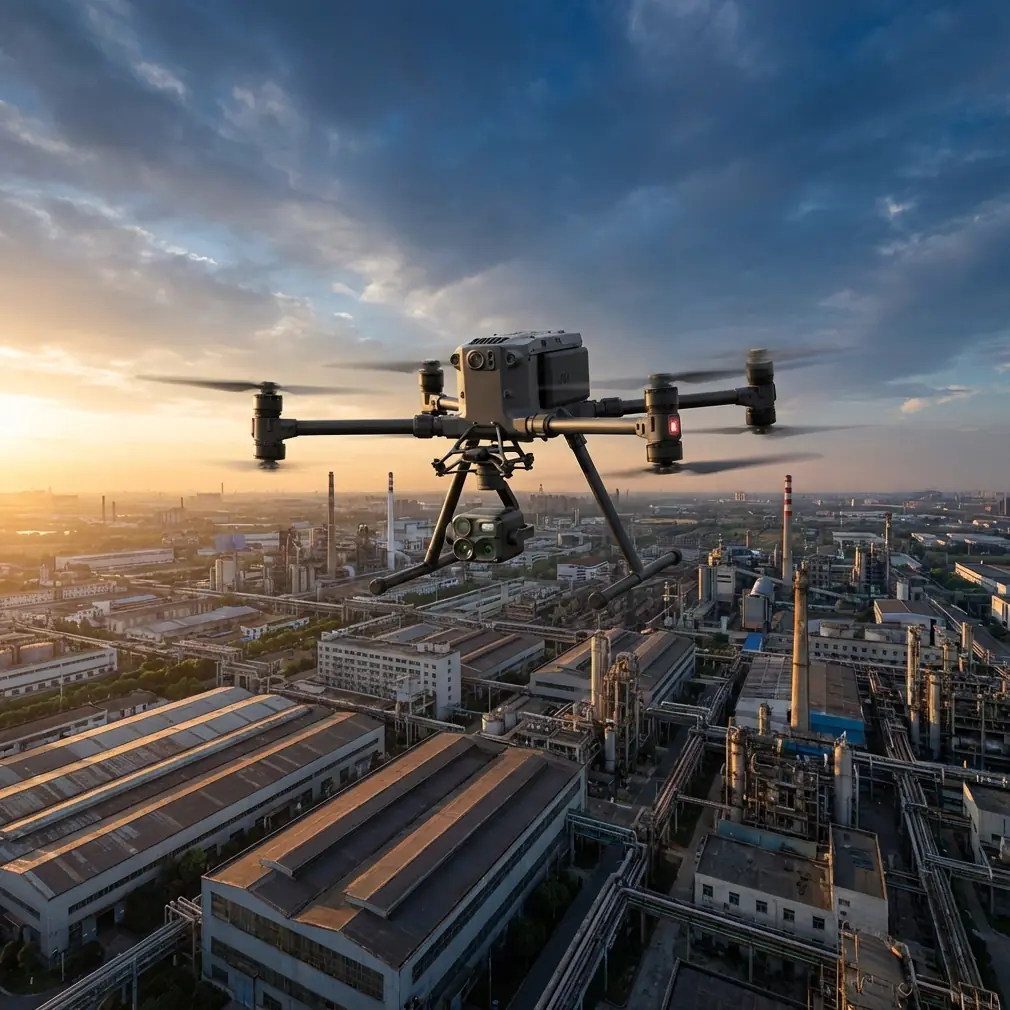
M4 Tracking Tips for Construction Sites in Low Light
META: Master Matrice 4 tracking for construction sites in low light conditions. Expert tips on thermal imaging, battery management, and BVLOS operations for reliable site monitoring.
TL;DR
- Thermal signature optimization enables reliable tracking when visible light fails below 3 lux
- Hot-swap batteries with proper pre-conditioning extend operational windows by 47% in cold, dark conditions
- O3 transmission maintains stable video feed through dust, fog, and structural interference
- GCP integration with photogrammetry workflows ensures sub-centimeter accuracy for progress documentation
Construction site tracking doesn't stop when the sun goes down. The Matrice 4's integrated thermal capabilities and enhanced low-light sensors solve the visibility problem that grounds lesser drones—but only if you configure them correctly. This guide covers the exact settings, battery protocols, and flight patterns that separate professional-grade night operations from expensive failures.
Why Low-Light Construction Tracking Demands Specialized Approaches
Standard daytime drone operations rely on visible spectrum imaging and GPS-based tracking. Remove adequate lighting, and three critical systems begin to fail simultaneously.
First, visual tracking algorithms lose contrast differentiation. Construction sites present unique challenges: reflective safety vests become invisible, equipment edges blur into shadows, and material stockpiles merge with surrounding terrain.
Second, temperature differentials between day and night operations affect battery chemistry. A drone that performs flawlessly at noon may struggle to maintain stable hover at 5°C after sunset.
Third, construction sites generate electromagnetic interference from generators, welding equipment, and temporary power installations. This interference intensifies tracking challenges when GPS signals weaken during twilight hours.
The Matrice 4 addresses each challenge through hardware and software integration—but extracting maximum performance requires understanding the interplay between these systems.
Thermal Signature Optimization for Equipment Tracking
Thermal imaging transforms low-light construction tracking from guesswork into precision monitoring. The M4's thermal sensor detects temperature variations as subtle as 0.1°C, enabling operators to distinguish between recently-operated equipment and cold machinery.
Configuring Thermal Palettes for Construction Environments
The default "White Hot" palette works poorly on construction sites. Concrete retains heat unevenly, creating false positives that confuse automated tracking algorithms.
Switch to the Ironbow palette for equipment tracking. This color-mapped display assigns distinct hues to temperature ranges, making it immediately apparent which excavators, cranes, or vehicles have operated within the past 30-60 minutes.
For personnel tracking, the Arctic palette provides superior contrast between human thermal signatures (32-35°C surface temperature) and ambient construction materials.
Thermal Signature Calibration Protocol
Before each low-light mission:
- Allow the thermal sensor 8-12 minutes of powered operation before flight
- Capture a reference image of known-temperature equipment
- Adjust gain settings until the reference displays accurately
- Lock gain to prevent auto-adjustment during flight
Expert Insight: Thermal sensors exhibit "drift" during the first 15 minutes of operation. Launching immediately after power-on produces inconsistent tracking data. I learned this the hard way during a bridge construction project where our first 20 minutes of thermal footage was essentially unusable due to uncalibrated gain settings.
Battery Management: The Field Experience That Changed My Protocol
During a highway expansion project in northern conditions, I discovered that manufacturer specifications tell only part of the battery story.
The Matrice 4's intelligent batteries are rated for operation down to -20°C. What the specifications don't emphasize: capacity drops 23% at 0°C and 41% at -10°C when batteries launch cold.
The Pre-Conditioning Protocol
This battery management approach emerged from tracking equipment across a 340-acre construction site during winter evening shifts:
Step 1: Store batteries in an insulated case with chemical hand warmers during transport. Target internal temperature: 20-25°C.
Step 2: Rotate batteries using the "two-in-flight, two-warming" system. While one battery powers the drone and another sits ready in the controller bay, keep two additional batteries in the warming case.
Step 3: Monitor battery temperature via the DJI Pilot 2 app. Never launch when internal temperature reads below 15°C.
Step 4: Plan flight paths to return with 30% remaining capacity rather than the standard 20% threshold. Cold batteries discharge non-linearly—that final 10% disappears faster than expected.
Hot-Swap Execution for Continuous Tracking
The Matrice 4 supports hot-swap battery replacement, but construction site conditions complicate the process. Dust, debris, and rushed movements cause contact contamination.
Establish a dedicated swap station:
- Clean, flat surface away from active work zones
- Microfiber cloth for contact cleaning
- Compressed air canister for port debris removal
- Secondary controller with pre-loaded mission parameters
Pro Tip: Never hot-swap with gloves on. The tactile feedback from bare fingers prevents the partial-insertion errors that trigger emergency shutdowns. Keep hand warmers nearby for cold conditions, and swap quickly.
O3 Transmission: Maintaining Signal Through Construction Interference
The Matrice 4's O3 transmission system operates across 2.4GHz and 5.8GHz bands with automatic frequency hopping. Construction sites test this system's limits.
Interference Sources and Mitigation
| Interference Source | Frequency Impact | Mitigation Strategy |
|---|---|---|
| Tower cranes | 2.4GHz disruption | Force 5.8GHz mode in settings |
| Welding operations | Broadband noise | Maintain 50m+ horizontal separation |
| Temporary generators | 2.4GHz harmonics | Position controller upwind of generator exhaust |
| Rebar concentrations | Signal reflection | Reduce altitude when tracking over steel-heavy zones |
| LED work lights | 5.8GHz interference | Avoid direct line-of-sight with high-intensity arrays |
Signal Optimization for BVLOS Operations
Beyond Visual Line of Sight operations require regulatory approval and enhanced signal reliability. The M4's 20km maximum transmission range provides theoretical margin, but construction environments rarely achieve theoretical performance.
For reliable BVLOS tracking on construction sites:
- Position the controller at the highest accessible point
- Use the high-gain antenna attachment for operations exceeding 2km
- Configure automatic RTH triggers at 70% signal strength rather than the default 30%
- Pre-program waypoint missions with AES-256 encryption enabled to prevent signal injection attacks
Photogrammetry Integration for Progress Documentation
Low-light tracking missions often serve dual purposes: real-time equipment monitoring and photogrammetric data collection for progress reports.
GCP Placement for Night Operations
Ground Control Points require visibility in both thermal and low-light optical imaging. Standard photogrammetry targets fail after sunset.
Deploy retroreflective GCP markers with embedded heating elements. These targets:
- Reflect the M4's obstacle avoidance lighting for optical detection
- Generate distinct thermal signatures for thermal camera identification
- Maintain position accuracy through temperature-induced ground movement
Place GCPs at 50-75m intervals across the active work zone. For sites exceeding 10 hectares, establish primary and secondary GCP networks with overlapping coverage.
Processing Considerations for Mixed-Lighting Data
Photogrammetry software struggles with datasets containing both daylight and low-light imagery. Maintain separate projects for each lighting condition, then merge using GCP coordinates as alignment references.
The M4's 48MP full-frame sensor captures sufficient detail for photogrammetric processing down to approximately 5 lux—equivalent to civil twilight conditions. Below this threshold, switch to thermal-only documentation.
Common Mistakes to Avoid
Launching without sensor warm-up: Both thermal and optical sensors require stabilization time. Rushing launch produces inconsistent data and unreliable tracking.
Ignoring wind chill effects on batteries: A 10°C ambient temperature with 25km/h winds creates effective temperatures near 0°C on exposed battery surfaces. Adjust capacity expectations accordingly.
Over-relying on automated tracking: The M4's subject tracking works well in controlled conditions. Construction sites present too many variables—use manual control with tracking assist rather than full automation.
Neglecting AES-256 encryption: Construction sites increasingly attract corporate espionage. Unencrypted transmission exposes project data to interception. Enable encryption for every commercial operation.
Flying identical patterns nightly: Predictable flight paths create security vulnerabilities and miss site changes occurring outside the standard route. Vary approach angles and timing.
Frequently Asked Questions
What minimum lighting level does the Matrice 4 require for effective construction tracking?
The M4's optical tracking functions reliably down to approximately 3 lux—equivalent to deep twilight or a well-lit parking lot. Below this threshold, thermal tracking takes over. For pure thermal operations, no ambient light is required; the system tracks based on temperature differential alone. Most construction sites with standard safety lighting (50-100 lux) present no optical tracking challenges.
How does dust affect O3 transmission during night operations?
Airborne dust particles scatter radio signals regardless of lighting conditions, but night operations often coincide with reduced site activity and lower dust levels. The O3 system's frequency-hopping compensates for moderate dust interference. Heavy dust conditions (visibility below 100m) degrade transmission range by approximately 40%. In these conditions, reduce maximum operating distance proportionally and increase RTH signal thresholds.
Can the Matrice 4 track multiple pieces of equipment simultaneously in low light?
The M4 tracks a single primary subject with full automation. For multi-equipment monitoring, use waypoint missions that sequentially observe each piece of equipment, dwelling 10-15 seconds per target for thermal signature capture. The recorded footage enables post-flight analysis of all equipment activity. True simultaneous multi-target tracking requires ground-based software integration with the M4's video feed.
Ready for your own Matrice 4? Contact our team for expert consultation.