
Matrice 4 at High Altitude: What Actually Matters
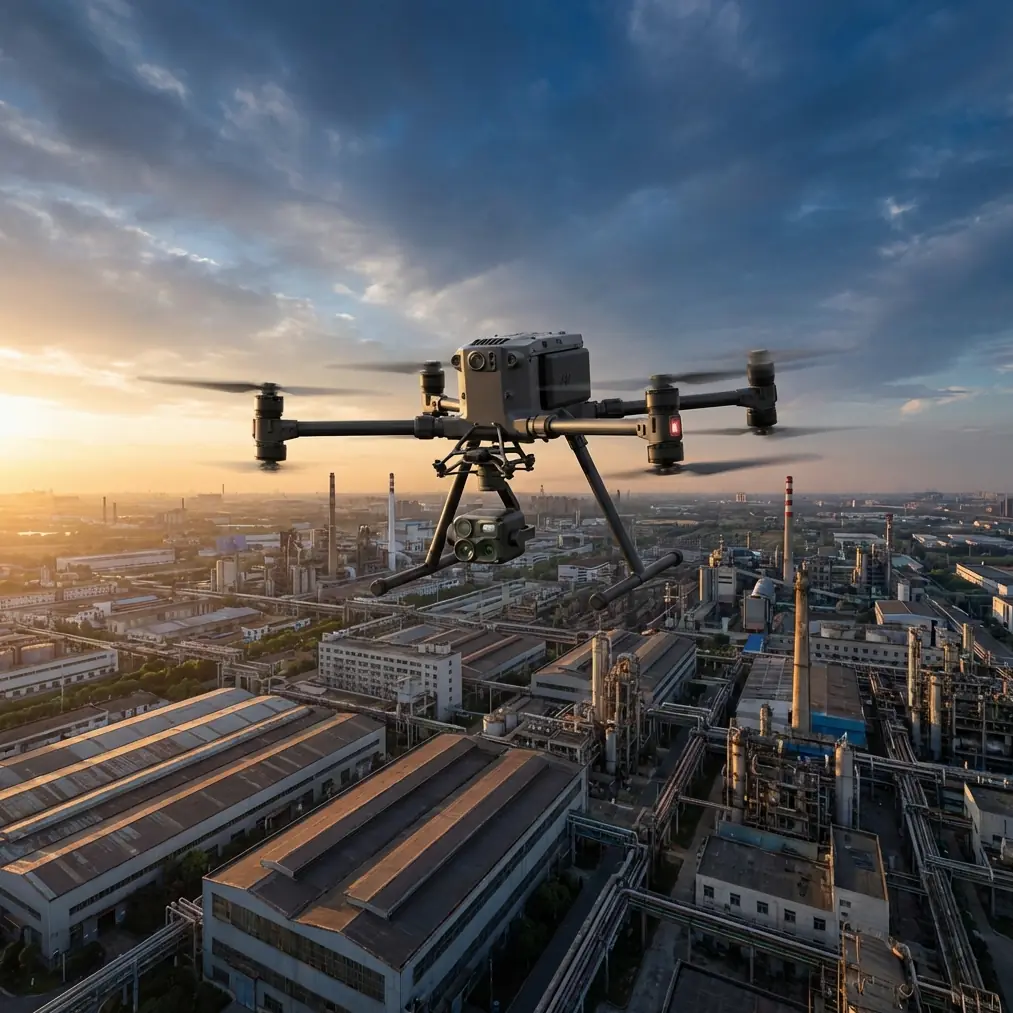
Matrice 4 at High Altitude: What Actually Matters on Construction Sites
META: A field-focused look at how Matrice 4 fits high-altitude construction tracking, with practical insight on landing loads, material durability, thermal work, photogrammetry, and transmission reliability.
High-altitude construction sites punish weak workflow design long before they punish the aircraft.
Thin air reduces performance margins. Mountain weather shifts quickly. Launch areas are often improvised, uneven, and dusty. Teams need repeatable map data, stable thermal signature capture, and dependable links back to the pilot station. On paper, many enterprise drones claim they can do this. In practice, the difference comes down to structural discipline, mission continuity, and how well the platform handles imperfect field conditions.
That is where the Matrice 4 deserves a more technical conversation.
I’m not interested in treating it as just another inspection drone with a zoom camera and a thermal payload. For high-altitude construction tracking, the real question is simpler: does the aircraft support accurate, frequent, low-drama operations when the site itself is rough on hardware and unforgiving about rework?
The answer depends on details many buyers overlook.
High-altitude tracking is not only about flight time
Construction monitoring in elevated terrain usually blends three jobs into one cycle. First, teams need photogrammetry for progress measurement. Second, they need visual documentation for contractors, owners, and safety planners. Third, they increasingly rely on thermal signature review to spot water ingress, curing inconsistencies, overloaded temporary electrical runs, or insulation defects in partially enclosed structures.
Each of those tasks has a different tolerance for interruption.
A missed orbit around a tower crane can be re-flown. A broken mapping sequence over an earthworks zone can distort progress calculations. A thermal pass at the wrong time of day may be useless for comparison later. So when people ask whether Matrice 4 is a good fit for mountain construction projects, I start with continuity and control, not headline specs.
Hot-swap batteries matter here for a reason. At altitude, crews often stage from access roads or terraces where every relaunch costs time. Battery change speed is not a convenience feature; it is a survey integrity feature. If the aircraft can return, swap, and relaunch with minimal downtime, the team is far more likely to preserve consistent light conditions and site activity windows across a long capture session.
Competitors often advertise endurance first. I would argue that for construction tracking, turnaround discipline frequently matters more than absolute single-pack duration. A drone that integrates smoothly into a repeatable battery workflow usually produces better weekly datasets than one that merely looks stronger on a spec sheet.
Why landing design logic matters more than people think
This is where the reference material becomes unexpectedly useful.
One of the cited helicopter design passages describes a severe “nose-low landing” load case in which the front landing gear strikes first while the main gear is momentarily unloaded. It also notes combined vertical and drag loads as a serious design condition for the fuselage, tail boom, and forward landing gear. Another section describes side-load landing conditions and, for skid-type gear, a case where horizontal drag load reaches 50% of the vertical load during forward-speed landing.
You are not flying a helicopter. But the engineering lesson transfers cleanly to enterprise UAV operations on mountain construction sites.
Why? Because many high-altitude launch points are not clean pads. They are compacted gravel shelves, steel decking, temporary concrete pours, or uneven staging platforms beside cut slopes. In these environments, a drone’s practical survivability is tied to how well its airframe and landing system tolerate non-ideal touchdown geometry, mild slide tendency, and uneven reaction forces.
That has direct operational significance for Matrice 4 users. If your drone can repeatedly absorb awkward but routine field landings without knocking camera alignment, degrading calibration stability, or introducing subtle frame stress, your mapping results remain trustworthy over time. If not, the error appears later—through inconsistent imagery overlap, soft vibration artifacts, or the need for repeated maintenance checks.
This is one reason serious construction teams prefer aircraft families designed for enterprise duty rather than lighter prosumer models adapted into industrial use. The platform is not only carrying sensors; it is preserving measurement consistency after dozens or hundreds of field cycles.
At altitude, that distinction widens.
Material resilience is not an abstract topic
The second reference looks at plastics and plastic products used in aircraft-related design data, including rigid PVC tube properties and chemical resistance. Several numbers stand out. The material density is listed at 1.40 to 1.60 g/cm³. Vicat softening point is given as at least 79°C. The text also references pressure resistance around 34.3 MPa, and chemical exposure benchmarks involving sodium hydroxide, nitric acid, sulfuric acid, hydrochloric acid, and even acetone immersion without blistering or cracking under the test condition.
No, this does not mean your Matrice 4 is built from rigid PVC pipe. That would be a lazy reading of the source. The real value is what it reminds us to evaluate: whether exposed non-metallic components, cable protection elements, storage accessories, and ground-support hardware can tolerate construction chemistry and temperature cycling.
That matters on elevated sites more than many drone teams admit.
Construction environments expose UAV equipment to cement dust, alkaline runoff, curing compounds, fuels, cleaning agents, adhesives, and sudden sun loading. A softening threshold like 79°C is a useful benchmark because dark surfaces in direct mountain sun can get surprisingly hot, especially when gear is stored on truck beds or temporary platforms. Likewise, chemical resistance is relevant when aircraft cases, cable sheathing, or accessory mounts encounter corrosive residue from jobsite materials.
For Matrice 4 operations, this changes how I recommend building the kit around the aircraft. The drone itself may be enterprise-grade, but the mission fails if your peripheral setup is fragile. Battery handling trays, landing pads, antenna mounts, GCP marker storage, and cable routing should be chosen with the same seriousness as the aircraft. The source data’s acetone and alkali resistance figures are a good reminder that high-altitude construction logistics are chemistry problems as much as they are aviation problems.
Where Matrice 4 can genuinely pull ahead
Many competing platforms can capture site photos. Fewer are convincing when the mission requires simultaneous confidence in transmission, security, and mixed-sensor output under difficult terrain conditions.
That is where Matrice 4 stands out for this reader scenario.
If you are tracking a project across benches, retaining works, access roads, and rising steel or concrete packages, O3 transmission is not just a convenience label. In steep terrain, line-of-sight can degrade quickly with terrain masking, equipment movement, and structural interference. A stronger enterprise transmission stack gives pilots more confidence when repositioning over partially obstructed work zones or following corridor-style site geometry. On sites where a pilot must work from a safe staging area rather than the geometric center of the operation, transmission quality becomes mission architecture.
Add AES-256 into that discussion and the benefit becomes clearer for major infrastructure clients. Construction monitoring often involves sensitive plans, progress documentation, and thermal findings tied to contractor performance or defect tracking. Secure link protection is not theoretical. It is part of compliance, bid trust, and internal reporting hygiene.
This is one area where Matrice 4 can outperform lighter competitors that are easier to deploy but weaker in enterprise governance. Plenty of smaller aircraft are adequate for casual visual updates. They are less persuasive when the data flow itself needs to satisfy serious project controls.
Thermal work at altitude needs discipline, not just a sensor
Thermal signature capture on mountain projects is often misunderstood. Teams assume a thermal payload automatically creates value. It does not.
Useful thermal work depends on repeat conditions, stable flight behavior, and clean geospatial context. A warm electrical junction on a temporary power run means more when it can be tied to a consistent inspection route. Heat loss in a partially enclosed structure is more actionable when mapped against visible imagery and site progress. Moisture pathways are easier to interpret when you can compare present thermal readings to past orthomosaics and contractor sequencing.
Matrice 4 is strongest when used as part of that layered workflow rather than as a standalone “thermal drone.”
For example, a weekly cycle might combine:
- GCP-backed photogrammetry for measurable progress,
- targeted oblique imagery for claims and coordination,
- thermal passes during the right environmental window,
- and secure transfer into the project’s reporting pipeline.
The GCP point is worth stressing. High-altitude construction often includes steep grade transitions and tall vertical elements. Ground control helps keep photogrammetry honest where terrain complexity can magnify small positional errors. If the aircraft platform lets you execute those repeat flights reliably, the value of each control point rises because the dataset is more consistent from mission to mission.
BVLOS conversations should stay practical
BVLOS is often discussed too loosely in drone marketing. For construction readers, the useful question is not whether BVLOS sounds advanced. The useful question is whether the platform supports the planning, link reliability, and operational discipline needed for long linear or spread-out site capture where visual access is imperfect.
In high-altitude projects, that may include haul roads, pipeline-adjacent works, power corridor interfaces, or dispersed geotechnical zones. Matrice 4 becomes compelling when it is part of a lawful, well-structured operation with robust procedures for route planning, observer use where required, and secure data handling. The aircraft is an enabler, not a shortcut around regulatory or safety logic.
A smarter problem-solution model for site teams
Here is the actual problem most mountain construction teams face:
They do not lack cameras. They lack a repeatable aerial system that preserves data quality under rough launch conditions, variable terrain, and demanding reporting schedules.
Matrice 4 answers that problem best when deployed as a disciplined documentation platform:
- photogrammetry for progress and quantities,
- thermal signature review for condition insight,
- O3 transmission for terrain-challenged operations,
- AES-256 for secure enterprise workflows,
- and hot-swap batteries to keep time-sensitive capture windows intact.
The hidden advantage is not one spectacular feature. It is the reduction of operational friction.
That reduction matters because high-altitude projects generate enough uncertainty already. Wind shifts. Access roads close. Concrete pours move. Cranes alter your launch geometry. You need a drone system that lets the team adapt without sacrificing consistency.
If you are comparing Matrice 4 against smaller competitors, that is the lens I would use. Ask not which aircraft looks more agile in a demo. Ask which one is more likely to deliver your twelfth weekly dataset with the same spatial reliability as the first, after repeated uneven landings, dusty staging areas, and long days in alpine sun.
That is a harder test. It is also the right one.
Practical deployment notes for construction managers
A few field habits make Matrice 4 far more effective on elevated sites:
First, standardize launch and recovery zones whenever possible. The helicopter landing-load references discussed earlier are a reminder that touchdown geometry affects long-term structural confidence. Even minor reduction in side-load and drag exposure improves repeatability.
Second, treat accessories and ground gear as part of the airworthiness ecosystem. The material data in the plastics reference is a useful benchmark for evaluating chemical and thermal tolerance in support equipment, especially around alkaline dust and hot storage conditions.
Third, design missions around comparison value. A thermal flight that cannot be meaningfully compared with prior data often wastes the sortie. Tie thermal, visible, and photogrammetry outputs into the same site calendar.
Fourth, lock down communications. On larger jobs with multiple contractors, secure transfer and documented chain of custody for imagery can save real headaches later.
If you want to discuss site-specific deployment constraints with a specialist, this direct project coordination chat is a sensible place to start.
The bottom line
Matrice 4 makes the most sense in high-altitude construction when the operator cares about endurance of process, not just endurance of aircraft.
The reference material on landing load cases points to a truth many drone buyers miss: field aircraft live or die by how they handle imperfect contact with the real world. The materials reference points to another: non-metallic components and support systems must survive heat, chemistry, and repeated handling, not just look good in storage. Put those lessons beside Matrice 4’s enterprise strengths—O3 transmission, AES-256, hot-swap battery workflow, and mixed imaging utility—and the platform becomes easier to judge fairly.
Not as a gadget. As a jobsite instrument.
Ready for your own Matrice 4? Contact our team for expert consultation.