
Matrice 4 for Field Tracking in Low Light: An Expert How-To
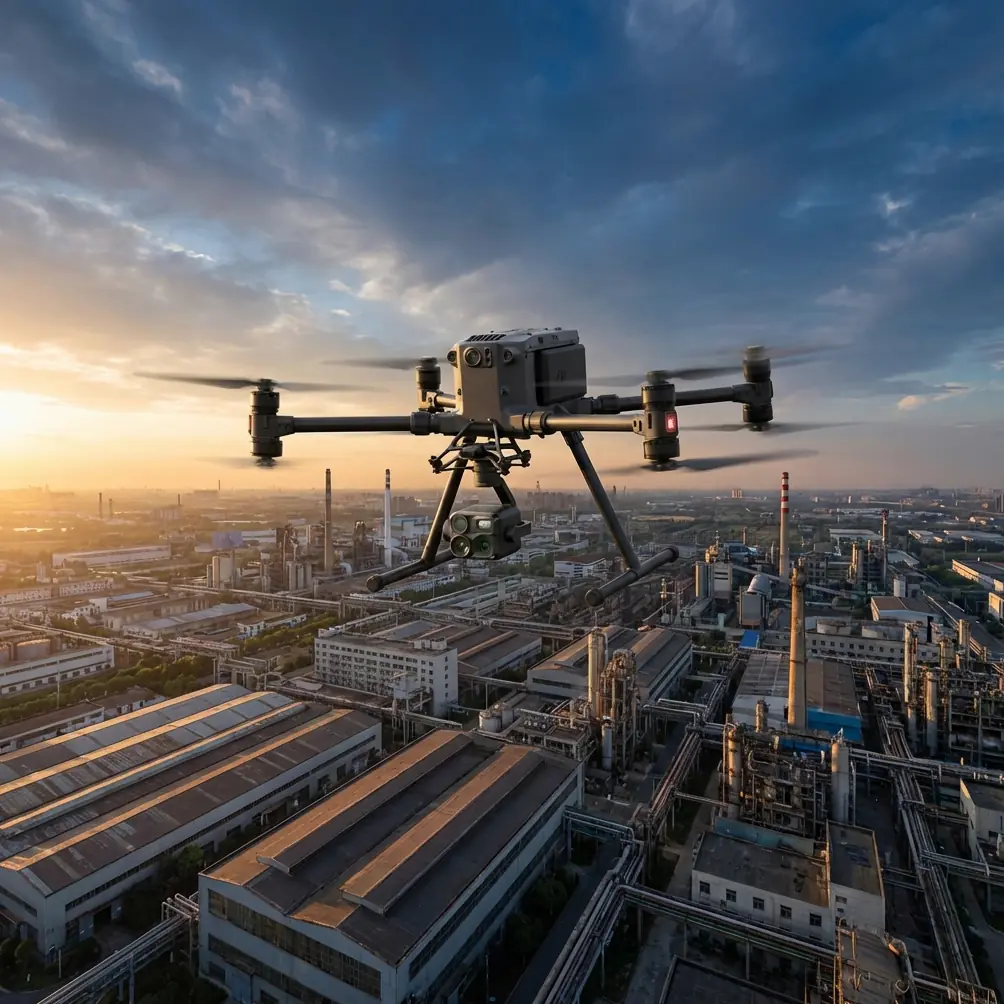
Matrice 4 for Field Tracking in Low Light: An Expert How-To
META: Learn how to use the DJI Matrice 4 for low-light field tracking with thermal workflows, pre-flight cleaning, photogrammetry discipline, secure O3 transmission, and battery planning.
Low-light field work exposes every weakness in a drone operation. Dust on a sensor becomes a false hotspot. A rushed takeoff becomes a broken map. Weak battery discipline can turn a smooth scouting session into an incomplete dataset that tells you very little.
That is exactly why the Matrice 4 deserves a practical discussion, not a glossy one.
If your goal is tracking fields at dusk, before sunrise, under cloud cover, or during the kind of shoulder-light conditions where crop stress and irrigation issues become harder to spot with the naked eye, the Matrice 4 sits in an interesting place. It brings together thermal signature detection, visible imaging, modern encrypted transmission, and field-ready battery workflows in a way that can support repeatable agricultural and land-management operations. But getting useful results depends less on the brochure and more on how you prepare the aircraft, configure the mission, and interpret what the sensors are actually showing you.
This guide is built around that reality.
Start with the part most pilots skip: cleaning before power-on
For low-light field tracking, the first safety step is not checking your route. It is cleaning the aircraft properly.
That sounds minor until you think about how the Matrice 4 is often used: dusty roads, pollen-heavy farmland, damp grass, fertilizer residue in the air, and repeated landings near loose soil. In those conditions, contamination can interfere with obstacle sensing, image quality, thermal interpretation, and even cooling efficiency.
Before each sortie, wipe down the forward and downward sensing areas with a clean lens-safe cloth. Then inspect the visible camera optics and the thermal window carefully. Smudges matter more in low-light work than many operators realize. A faint film on the lens can lower contrast in visible imagery, while debris on a thermal sensor window may create misleading temperature artifacts that look like stressed plants, warm equipment, or livestock movement at the field edge.
The significance is operational, not cosmetic. If you are relying on a thermal signature to separate wet and dry zones, identify irrigation leaks, or track animal intrusion along a boundary, a dirty sensor can distort the pattern enough to trigger the wrong follow-up action. And if obstacle sensing is impaired by grime, your safety margin shrinks exactly when you are flying in the hardest visual conditions.
A clean drone is not about presentation. It is part of sensor integrity.
Define the mission before choosing the sensor
Many field operators make the same mistake with low-light flights: they launch first and decide what they are trying to measure later.
With the Matrice 4, you should decide the mission objective before selecting the imaging mode. There are three common low-light field scenarios:
1. Thermal scouting for anomalies
This is where thermal signature becomes the lead data source. You are looking for unusual heat retention or loss patterns across a field, along irrigation lines, around pumps, near livestock areas, or at storage zones.
Thermal works well when the question is comparative: where is the field behaving differently?
2. Visible-light documentation in weak ambient light
Here, the purpose is visual confirmation. You may have seen a thermal anomaly and want a visible reference image. Or you may be documenting row conditions, storm damage, standing water, or access conditions at first light.
3. Mapping for later analysis
If your goal is a stitched orthomosaic or terrain product, then low-light flying becomes much less forgiving. Photogrammetry depends on crisp overlap, stable exposure, and consistent geometry. In these cases, the Matrice 4 can still do useful work, but the operator has to be more disciplined.
This distinction matters because thermal inspection and photogrammetry are not the same workflow. A thermal scan can tolerate a little more spontaneity. Mapping cannot.
Build a low-light flight plan that respects overlap and orientation
For field tracking, low-light success usually comes down to consistency. The Matrice 4 may provide the platform, but your map quality still depends on mission design.
If you are collecting imagery for photogrammetry, keep your altitude, speed, and overlap fixed across the mission. Changing those variables halfway through a field run often creates inconsistent datasets that are difficult to process. Ground control points, or GCPs, become especially valuable in these conditions because low-light imagery can give processing software fewer distinct visual tie points, particularly over uniform crops or bare ground.
That is the real significance of GCP use here. They are not just for high-accuracy survey teams. In weak light, GCPs help stabilize reconstruction when the imagery itself offers less contrast and fewer easy reference features. If the field has repeated patterns, such as identical crop rows, they can make the difference between a trustworthy map and a warped one.
For practical operations, place your GCPs before the light drops too far, make them easy to distinguish, and log them carefully. Then fly a route with enough frontlap and sidelap to preserve alignment. Low-light mapping punishes shortcuts.
Use thermal as a decision layer, not a magic answer
Thermal imagery is powerful in agricultural and land monitoring, but it needs context.
A warm patch is not automatically a problem. A cool strip is not automatically healthy. Soil moisture, recent machinery use, irrigation timing, crop canopy density, retained heat in rocks, and even the angle of sunlight from earlier in the day can influence what you see after sunset or before dawn.
The better way to use the Matrice 4 is to treat thermal as a triage tool. Let it reveal where conditions differ, then validate those areas with visible imagery, field notes, and if needed, a follow-up daylight pass.
That approach reduces false assumptions. It also helps you use the aircraft more efficiently. Instead of trying to solve the entire agronomy question from the air, you use the drone to narrow the search area to the parts of the field that deserve attention.
For low-light field tracking, that can be a major time saver. A broad acreage scan may highlight just a few zones that need boots-on-the-ground inspection the next morning.
Transmission reliability matters more than people admit
Low-light operations increase workload. The pilot is already dealing with reduced visual cues, subtle terrain changes, and the temptation to focus too heavily on the payload feed.
That is why O3 transmission is more than a spec-sheet talking point. A stable live feed supports safer decision-making when the ambient scene is difficult to read directly. If you are crossing irregular field boundaries, tree lines, irrigation pivots, or drainage corridors, maintaining reliable video and control link quality becomes part of your risk management.
The same is true for AES-256 encryption. In commercial field operations, you are often dealing with sensitive imagery tied to crop performance, land management, infrastructure condition, or client property layouts. Strong encrypted transmission protects that data in transit and helps operators align with stricter information security expectations from farms, agribusinesses, survey clients, and infrastructure stakeholders.
Those two details—O3 transmission and AES-256—matter because low-light field work is both a flight challenge and a data-handling challenge. You need confidence in what you are seeing, and confidence that the feed and captured information are being handled responsibly.
Battery discipline is how you keep the dataset usable
Low-light flights often happen in compressed windows. Dawn comes fast. Twilight fades fast. The temptation is to stretch every battery to the limit.
That is exactly how operators end up with a field half-scanned under one set of conditions and half-scanned under another.
If your Matrice 4 workflow supports hot-swap batteries, use that capability strategically rather than reactively. Pre-stage your battery sequence so the transition between packs is fast and orderly. Keep the mission segmented in a way that lets you stop and resume without creating coverage gaps or duplicate tracks. And never let a battery change become an improvised reset of your whole plan.
The operational significance of hot-swap batteries is continuity. On a large field, the ability to change power sources quickly helps preserve the consistency of your thermal or visible dataset during a narrow environmental window. If the temperature gradient you are tracking changes quickly after sunrise, every unnecessary delay reduces comparability between the first and last passes.
In other words, battery management is also data management.
Be realistic about BVLOS discussion
Many operators hear BVLOS and immediately imagine bigger acreage and easier coverage. In agricultural and industrial contexts, the appeal is obvious.
But with low-light field tracking, BVLOS should be approached as a planning concept tied to regulations, waivers, visual conditions, staffing, terrain, and operational maturity. It is not a shortcut. Even where beyond visual line of sight operations become legally and operationally viable, low-light conditions demand tighter procedures, stronger communication, and a clearer understanding of environmental hazards.
For most teams, the practical lesson is this: build a line-of-sight workflow first that produces clean, repeatable results. Then scale only when the operational framework supports it.
A simple low-light field workflow for the Matrice 4
Here is a professional sequence that works well for many civilian field-monitoring jobs:
Step 1: Inspect and clean
Check propellers, arms, landing gear, vents, and sensor windows. Clean obstacle sensing areas and imaging surfaces before startup.
Step 2: Confirm the objective
Is this a thermal anomaly hunt, a documentation flight, or a mapping mission? The answer changes your route and settings.
Step 3: Prepare reference control
If you are mapping, place and record GCPs early. Do not wait until visibility drops.
Step 4: Evaluate launch environment
Look for moisture, dust, nearby wires, tree lines, uneven ground, and reflective water features that can confuse visual interpretation at low light.
Step 5: Run a short calibration pass
Do a brief pass over a known area first. Review thermal and visible imagery before committing to the whole field.
Step 6: Fly for consistency
Hold altitude and speed steady. In photogrammetry work, protect overlap. In thermal work, preserve a repeatable scan pattern.
Step 7: Swap batteries deliberately
Use hot-swap procedures to maintain mission tempo and avoid coverage breaks during critical temperature windows.
Step 8: Review in layers
Compare thermal results with visible imagery, field observations, and previous datasets. Avoid making operational calls from one image source alone.
Where the Matrice 4 is strongest in this scenario
For low-light field tracking, the Matrice 4 is at its best when it is used as a disciplined sensing platform rather than a general-purpose flying camera.
Its value shows up in situations like:
- identifying irrigation irregularities before they become obvious in daylight
- checking field access routes and standing water at first light
- scanning broad acreage for thermal anomalies that deserve agronomic follow-up
- documenting repeated field conditions for time-series comparison
- supporting mapping workflows where careful overlap and GCP use are already part of the process
That last point matters. The aircraft can support serious documentation and analysis, but only if the operator respects the underlying method. Low light does not excuse sloppy capture. It punishes it.
One final field habit that saves trouble later
After the flight, clean the aircraft again before packing it away.
Residue left on sensors, lenses, cooling surfaces, and landing gear after a damp or dusty mission tends to become tomorrow’s problem. Dried moisture spots affect optics. Fine dust can build up around sensing areas. Organic material from field operations is not something you want sitting on a thermal window before the next deployment.
Pilots often think of pre-flight cleaning as preparation. In reality, post-flight cleaning is what makes the next pre-flight inspection meaningful.
If you are building a repeatable Matrice 4 operation for low-light agriculture or land management, that small discipline carries more weight than most people expect.
And if you want to compare workflows for your own acreage, mapping routine, or thermal inspection setup, you can message an experienced drone team here.
The Matrice 4 can be an excellent field tool in weak light. Not because it removes the need for judgment, but because it rewards it. Clean optics, a clear mission goal, secure transmission, battery planning, and careful use of thermal and photogrammetry techniques turn the aircraft from a flying sensor package into a dependable source of field intelligence.
Ready for your own Matrice 4? Contact our team for expert consultation.