
Tracking Fields in Low Light with Matrice 4
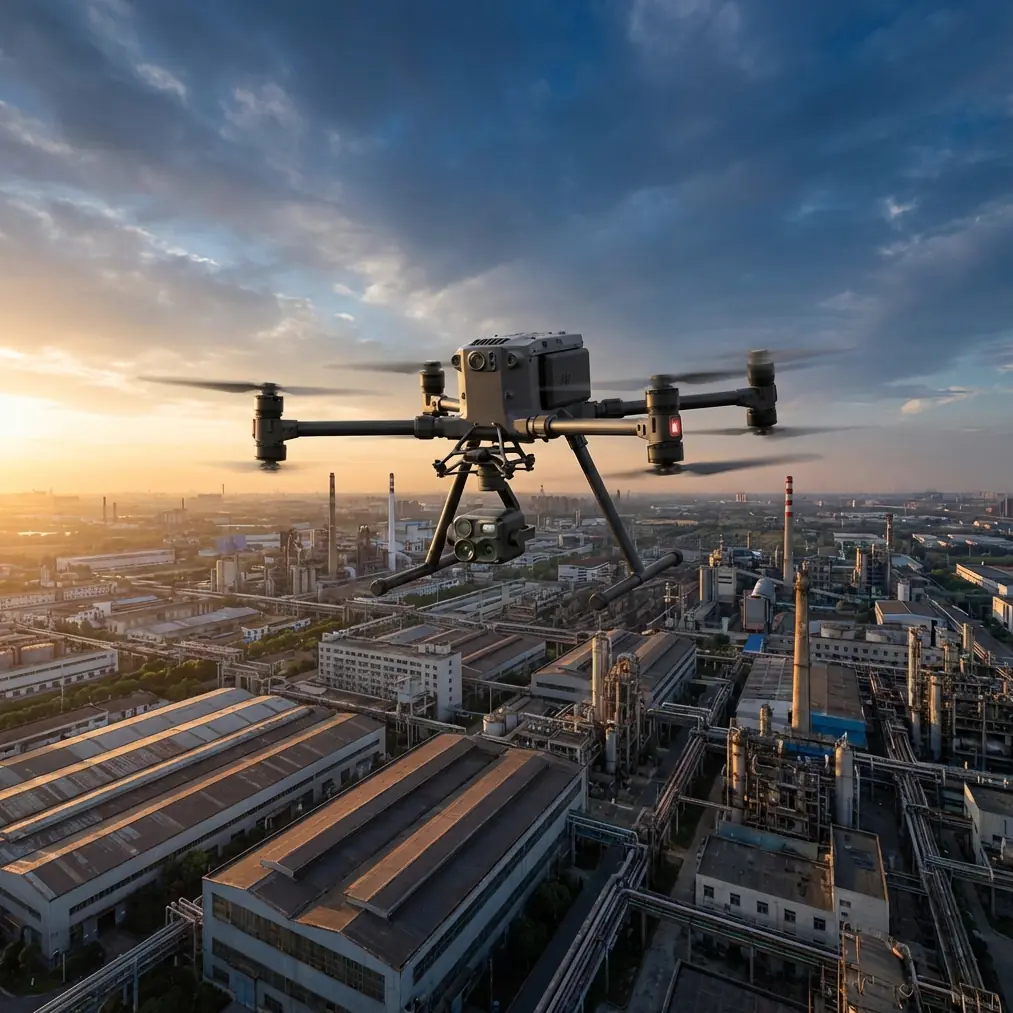
Tracking Fields in Low Light with Matrice 4: A Field Report from the Edge Cases
META: A specialist field report on using Matrice 4 for low-light field tracking, with practical insight on thermal signature, photogrammetry, GCP workflow, transmission stability, and why vibration and heat behavior still matter in real operations.
A few seasons ago, I was asked to help document irrigation drift and crop stress across several large field blocks just before sunrise. The timing was non-negotiable. By 8 a.m., thermal contrast would flatten, workers and vehicles would start moving through the site, and the cleanest window for pattern detection would be gone.
The problem was not simply seeing in the dark. It was getting usable data when the aircraft, the payload, the environment, and the mission profile were all working against consistency.
That experience is exactly why low-light field tracking with Matrice 4 deserves a more serious discussion than the usual checklist of camera features. When people say they need a drone for early-morning agriculture or perimeter crop observation, they often mean they need a platform that stays behaviorally predictable while sensors are operating at their limits. That is a different standard.
What low-light field tracking actually demands
In daylight, a competent aircraft can hide a lot of operational weaknesses. You can re-fly a line, visually confirm overlaps, and catch errors before they snowball. Low light removes that safety net. Small instabilities become visible in the data first, not in the air.
For field users, the real task usually blends three things:
- spotting thermal irregularities before sunlight reshapes them,
- maintaining enough positional consistency for repeatable mapping or photogrammetry,
- and preserving a reliable link over distance when the aircraft is flying low over large, texture-poor agricultural surfaces.
That is where Matrice 4 has to be judged. Not by spec-sheet theater, but by whether it makes difficult field mornings simpler.
The hidden lesson from rotorcraft dynamics
One of the most overlooked truths in drone fieldwork comes from older helicopter engineering rather than modern marketing. In a design handbook section on rotorcraft dynamics, the authors describe how adding tethering constraints or altered landing support conditions can change the vibration behavior of the aircraft system. In the most technical cases, alternating tension and slack can introduce nonlinear effects that are hard to model purely on paper. Their practical answer is blunt: test the full machine in realistic conditions and measure its dynamic response rather than assuming the baseline behavior still applies.
That principle matters more than it first appears.
Matrice 4 operators working fields in low light often launch from improvised surfaces: compacted soil, trailer beds, staging mats, roadside shoulders, and occasionally weighted or constrained setups during pre-flight checks in gusty conditions. The old rotorcraft lesson is that once you change the support condition, you may also change the vibration signature of the entire airframe system. For a field mission, the consequence is not academic. Vibration influences image sharpness, thermal edge definition, and the repeatability of overlapping data captures.
The handbook also states that testing should simulate real geometry and preload conditions. Operationally, that translates into something simple but valuable: if your Matrice 4 mission depends on pre-dawn consistency, do not validate it from a perfect concrete pad and assume the same behavior will carry over to a field entrance with uneven ground and a loaded vehicle nearby. Recreate the real launch context. That is how you protect data quality.
Why this matters for thermal signature work
Low-light agricultural tracking is often less about “finding heat” than distinguishing weak thermal differences before they wash out. Crop rows with moisture imbalance, blocked flow near irrigation lines, stressed edges, recent equipment tracks, and animal intrusion can all present subtle thermal signatures. The aircraft does not need drama. It needs steadiness.
Another detail from the rotorcraft source is especially useful here: changing mass and rotational inertia can reduce the natural frequency of the system and lower the threshold at which instability appears. In manned rotorcraft, adding weight for ground testing could create resonance issues that were not present before. The drone-world parallel is obvious enough for experienced operators. Every field add-on changes the behavior envelope a little—payload configuration, accessory lighting, alternate mounts, external marking aids, or even dust and moisture accumulation during repeated sorties.
For Matrice 4 users, this becomes a discipline question. If you are building a repeatable low-light field program, keep the aircraft configuration stable across missions. Thermal comparison across dates only works when your platform setup is equally controlled. The goal is not merely to fly. The goal is to trust that a difference in the image belongs to the field, not to the aircraft state.
The thermal side is only half the story
People tracking fields in low light usually split into two groups. The first wants immediate situational awareness: where is the stress, the heat leak, the animal path, the pooling water, the missing stand? The second needs a defendable record that can be compared over time. That is where photogrammetry still enters the conversation, even if the mission begins in darkness.
The engineering formulas in the second reference document may look distant from drone operations, but they point to something practical. Heat transfer is governed by measurable relationships, and thermal behavior changes with geometry, material layers, and time. The document highlights steady heat conduction, multilayer resistance, and radial heat flow in cylindrical and spherical forms. For field operators, the operational takeaway is straightforward: thermal signatures are not static labels. They are physical events shaped by soil moisture, plant density, buried lines, container walls, irrigation hardware, and changing air conditions.
That matters because Matrice 4 users often over-read a single thermal image. A warm patch could be stress, exposed infrastructure, residual heat from machinery, reduced evapotranspiration, or simply a boundary condition created by a different material. The more disciplined workflow is to use thermal detection first, then anchor interpretation with visible imagery, repeat passes, and if needed, georeferenced mapping.
This is where GCP-based validation still earns its place. If the job involves comparing a low-light event across multiple days or tying observed anomalies to exact field locations for intervention crews, GCPs can turn a useful flight into an operationally decisive one. Even where the onboard positioning is good, repeatability improves when the workflow treats ground truth as part of the mission rather than an afterthought.
How Matrice 4 changes the morning workflow
The biggest improvement a platform like Matrice 4 brings is not just sensor access. It is the reduction of friction between observation and decision.
On those older pre-dawn missions, we spent too much time managing compromises. Transmission confidence would dip at the wrong moment. Battery swaps interrupted the best thermal window. Teams tried to verbally describe anomalies because the shared map context was weak. Every extra minute allowed sunlight to erase the evidence we were chasing.
A more mature Matrice 4 workflow solves that in layers.
Stable field-to-operator communication
When you are scanning low-contrast terrain before sunrise, link reliability is not a luxury. O3 transmission matters because fields are deceptive environments. They look open, but they often introduce low-angle interference problems, moisture haze, and long visual corridors that tempt crews to push farther than their data certainty should allow. A more robust transmission pipeline gives the pilot and observer confidence to hold line spacing, verify suspected anomalies, and decide whether a second pass is necessary while the signal chain is still clean.
For larger properties or future BVLOS-aligned programs under the right regulatory framework, that reliability becomes even more valuable. Not because distance itself is the prize, but because agricultural missions are often spread across disconnected parcels that punish weak coordination.
Secure handling of sensitive field data
AES-256 is not just an IT talking point. In agriculture and land management, low-light flights can reveal irrigation layouts, access patterns, equipment staging, crop condition trends, and operational timing. That information can be commercially sensitive. If you are documenting field health for a grower, cooperative, consultant, or insurer, secure data handling is part of professional practice. The aircraft is collecting more than pictures. It is collecting operational intelligence about the land.
Hot-swap batteries preserve the short thermal window
This is one of those features that only feels dramatic after you have worked without it. The best pre-dawn thermal contrast can be brief. If you land, power down, reset, and lose several minutes during the handoff, the field may no longer look the same by the time you are back in the air. Hot-swap batteries are operationally significant because they protect continuity. For a multi-block mission, that means one team can hold tempo across adjacent sectors and keep the data set internally consistent.
That consistency is often worth more than headline flight time numbers.
A practical low-light field method that works
When I brief teams on Matrice 4 for low-light tracking, I do not start with the aircraft. I start with the sequence.
Pre-stage on the actual surface you will use.
This sounds mundane, but it follows the exact logic found in rotorcraft dynamic testing: simulate real conditions. If your launch point is rough or flexible, validate there. Vibration surprises show up early when you stop pretending the field is a laboratory.Fly a fast thermal reconnaissance pass first.
Do not chase every anomaly immediately. Build a thermal pattern map of the entire area while contrast is strongest.Mark suspect zones for visible or mixed-sensor revisit.
Some signatures are meaningful only after a second look from a different angle or altitude.Use GCPs when repeatability matters more than speed.
For intervention mapping, drainage analysis, or multi-date agronomy review, that extra discipline pays for itself.Keep aircraft configuration fixed across comparative flights.
Same payload arrangement, same flight profile where possible, same launch logic. Consistency beats improvisation.Plan battery transitions around the environment, not the aircraft.
With hot-swap capability, the question becomes how to preserve the field’s thermal story, not simply how to keep flying.
The detail most teams miss
A lot of pilots think low-light success comes down to sensor sensitivity. That is only partly true. The larger difference comes from whether the operator understands that aircraft behavior, thermal physics, and mapping logic are connected.
The helicopter design reference makes this plain in a very different context: when support conditions and restraint geometry change, the aircraft’s dynamic character changes too, and proper assessment depends on measured response in realistic setups. The heat-transfer reference adds the second half of the lesson: temperature patterns are governed by physical pathways, material structure, and time-dependent exchange, not by visual guesswork.
Put those together and you get a better Matrice 4 field doctrine.
Do not read thermal anomalies as isolated images. Read them as the result of platform stability plus heat behavior plus geospatial context.
That is the difference between a drone flight and a field decision.
When Matrice 4 is the right fit
For readers specifically evaluating Matrice 4 for tracking fields in low light, I would frame it this way:
It is most valuable when the mission requires continuity, not just capture.
If you need to move from early anomaly detection to georeferenced verification, maintain transmission confidence over broad agricultural layouts, secure sensitive field data, and minimize interruption during the briefest thermal windows, the platform solves real problems. It does not magically remove the need for field method. But it removes enough friction that good method can finally show its value.
That was not always the case. On older field mornings, we spent too much energy compensating for the platform. With Matrice 4, more of that energy can go into interpretation, crew coordination, and follow-up action.
If you are building a low-light workflow and want to compare mission planning notes or deployment scenarios, you can message our field team directly here.
For serious operators, that is the real test: does the aircraft let you focus on the field instead of babysitting the flight?
Matrice 4 gets closer to that standard than most.
Ready for your own Matrice 4? Contact our team for expert consultation.