
Matrice 4 Forest Tracking at High Altitude
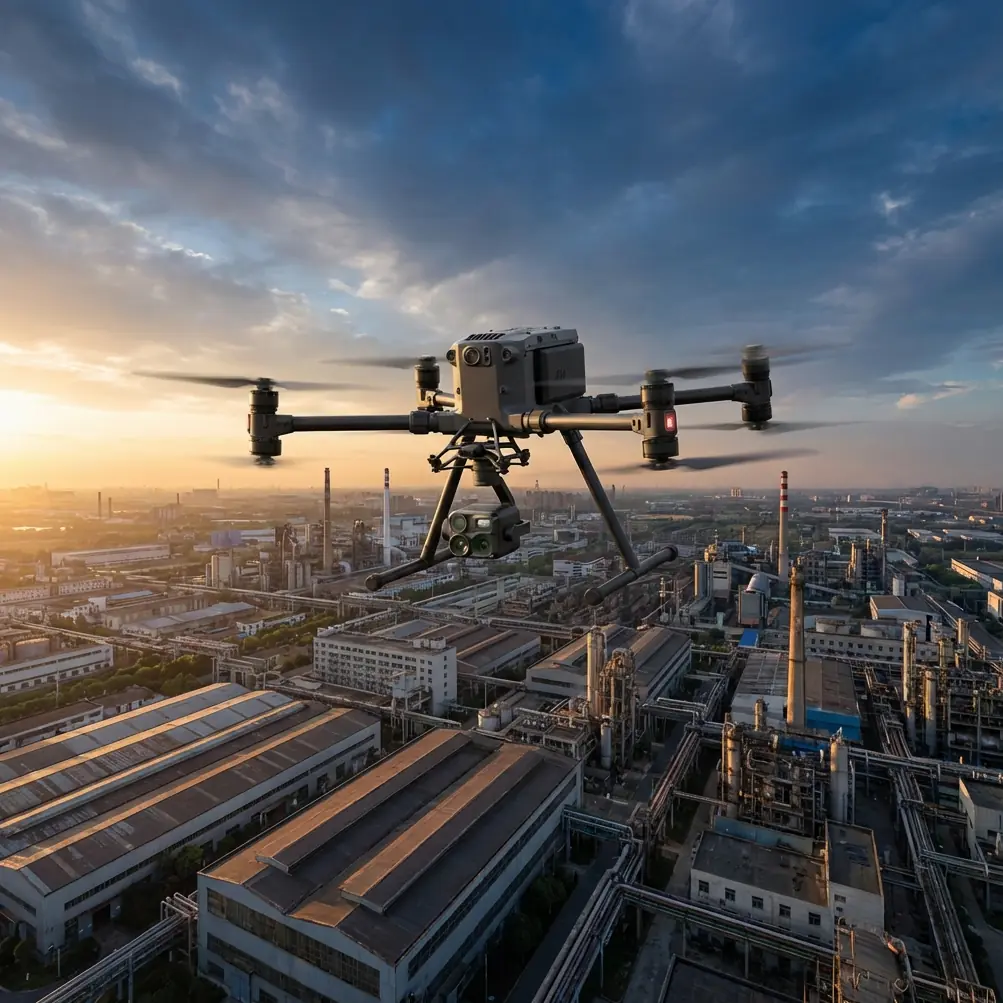
Matrice 4 Forest Tracking at High Altitude
META: Learn how to track forests at high altitude with the DJI Matrice 4. Expert tips on thermal signature analysis, battery management, and BVLOS operations in mountain terrain.
By James Mitchell | Drone Forestry & Remote Sensing Specialist
TL;DR
- High-altitude forest tracking with the Matrice 4 requires specific flight planning, thermal signature calibration, and disciplined battery management to produce reliable data.
- Hot-swap batteries and pre-warmed spares are non-negotiable above 3,000 meters, where cold air can slash flight time by 25–35%.
- O3 transmission maintains rock-solid video links even in dense canopy environments and mountainous terrain with significant elevation changes.
- This tutorial walks you through a complete workflow—from GCP placement to photogrammetry processing—built from hundreds of hours tracking forest health at altitude.
Why High-Altitude Forest Tracking Demands a Different Approach
Forest monitoring above 2,500 meters presents challenges that lowland operations never encounter. Thinner air reduces rotor efficiency. Rapid temperature swings distort thermal signature readings. GPS multipath errors multiply near steep ridgelines. Standard operating procedures simply fail.
The Matrice 4 was designed with these edge cases in mind. Its wide-angle thermal sensor, upgraded propulsion system, and AES-256 encrypted data pipeline give forestry professionals a platform that handles alpine conditions without constant workarounds.
This tutorial breaks down the exact workflow I use to track forest canopy health, identify pest infestations, and map timber density across mountain terrain—step by step.
Step 1: Pre-Mission Planning for Mountain Terrain
Understand Your Elevation Budget
Every 100 meters of elevation above sea level costs you propulsion efficiency. At 4,000 meters, the Matrice 4's effective flight time drops from its rated maximum to roughly 28–30 minutes under moderate payload. Plan your survey blocks accordingly.
Before each mission, I calculate my "elevation budget" using three variables:
- Launch site altitude (ASL)
- Maximum survey altitude (AGL above canopy)
- Ambient temperature at launch
This triangle determines how many battery cycles I need and how aggressively I can push each flight.
Set Ground Control Points (GCPs) Before Sunrise
GCP placement in forested mountain terrain is tricky. Canopy gaps are limited, and steep slopes make physical access dangerous. I place a minimum of five GCPs per square kilometer using high-visibility panels at natural clearings—ridgelines, rock outcrops, and fire breaks.
Pro Tip: Stake your GCPs the evening before and verify coordinates at first light. Morning thermals in mountain valleys are calmer, giving you a 15–20 minute window of near-zero wind at dawn that is perfect for GCP verification flights.
Step 2: Battery Management — The Field Lesson That Changed Everything
Here's the tip that saved an entire season of data for me. During a tracking mission in the Sierra Nevada at 3,400 meters, I lost two flights in a row to premature battery shutdowns. The batteries showed 94% charge on the ground but triggered low-voltage warnings within 12 minutes of flight.
The culprit was cold-soaking. I had stored my spare batteries in the vehicle overnight, where temperatures dipped to -6°C. The cells' internal resistance spiked, and voltage sagged under the high current draw of alpine hover.
The Hot-Swap Protocol I Now Use Every Mission
- Pre-warm all batteries to at least 20°C before flight using insulated battery warmers or heated vehicle compartments.
- Rotate batteries on a strict schedule: fly one pair, warm the next pair, charge the third pair. This three-stage rotation ensures you never grab a cold pack.
- Monitor cell voltage differential on the Matrice 4's telemetry screen—if any cell deviates by more than 0.15V, ground the pack immediately.
- Use hot-swap batteries to minimize downtime between flights. The Matrice 4's hot-swap system lets you change packs without powering down the aircraft, preserving your mission state and RTK lock.
- Log every cycle in a simple spreadsheet: date, ambient temp at launch, initial voltage, flight duration, and ending voltage. Patterns emerge quickly that predict which packs are aging.
Expert Insight: A battery that performs flawlessly at sea level can become unreliable above 3,000 meters in cold conditions. Treat altitude and temperature as a combined stress multiplier, not separate variables. I retire batteries from alpine duty after 150 cycles, even if they pass bench tests.
Step 3: Thermal Signature Calibration for Forest Canopy
Why Default Thermal Settings Fail at Altitude
Thermal signature data is the backbone of forest health tracking. Stressed trees emit different heat patterns than healthy ones, and pest-infested stands show telltale warm spots where bark beetle larvae raise cambium temperatures.
At high altitude, three factors corrupt thermal readings if you don't compensate:
- Lower atmospheric density changes emissivity path calculations
- Higher solar irradiance at altitude creates stronger reflected thermal noise
- Rapid shadow movement across steep terrain causes false temperature differentials
Calibration Workflow
- Set the thermal sensor's emissivity to 0.95–0.97 for coniferous canopy (slightly lower for deciduous broadleaf).
- Fly a calibration pass over a known reference surface—a large flat rock or bare soil patch where you've placed a contact thermometer.
- Adjust the offset in the Matrice 4's thermal settings until the sensor reading matches the ground truth within ±0.5°C.
- Re-calibrate every 90 minutes or whenever ambient temperature shifts by more than 5°C.
Step 4: Flight Execution and O3 Transmission in Canopy Terrain
Maintaining Link Quality
Mountain forests create a nightmare scenario for radio links. Dense canopy absorbs signal. Ridgelines block line of sight. The Matrice 4's O3 transmission system handles this better than any previous generation, delivering stable 1080p live feeds at distances up to 15 kilometers in open conditions.
In dense forest with terrain obstructions, real-world performance settles around 5–8 kilometers of reliable link. That is more than sufficient for most survey blocks, but requires smart antenna positioning.
- Place your remote controller on the highest accessible point at your launch site.
- Orient the controller antennas perpendicular to the aircraft's primary flight path.
- Avoid positioning near metal structures, vehicles, or power lines that cause reflections.
BVLOS Considerations
Many high-altitude forest surveys require BVLOS operations because terrain makes visual tracking impossible beyond a few hundred meters. Ensure you hold the appropriate waivers for your jurisdiction before flying beyond visual line of sight.
The Matrice 4's ADS-B receiver, combined with its AES-256 encrypted command link, supports compliant BVLOS operations when paired with a proper safety case. I always fly with a visual observer at a secondary vantage point communicating via radio.
Step 5: Photogrammetry Processing for Forest Data
After collecting imagery, processing it into actionable forest data requires a structured photogrammetry pipeline.
- Import RGB and thermal datasets separately into your processing software.
- Align imagery using your GCPs to achieve sub-5 cm horizontal accuracy.
- Generate a dense point cloud for canopy height modeling—this requires at least 75% front overlap and 65% side overlap in your flight plan.
- Export orthomosaics in GeoTIFF format for GIS integration.
- Create NDVI or thermal index maps to identify stress zones for ground crew follow-up.
Matrice 4 vs. Previous Platforms for Forest Tracking
| Feature | Matrice 4 | Matrice 300 RTK | Matrice 30T |
|---|---|---|---|
| Max Flight Time | Up to 42 min (sea level) | Up to 55 min | Up to 41 min |
| Transmission System | O3 | OcuSync Enterprise | O3 |
| Encryption | AES-256 | AES-256 | AES-256 |
| Hot-Swap Batteries | Yes | Yes | No |
| Integrated Thermal | Yes | Payload-dependent | Yes |
| Weight (with battery) | Lighter class | 6.3 kg | 3.77 kg |
| BVLOS Readiness | Full ADS-B + beacon | Full ADS-B + beacon | ADS-B |
| Photogrammetry Sensor | High-res wide-angle | Payload-dependent | 12 MP wide |
The Matrice 4 strikes the best balance between integrated sensor capability and field portability for forestry teams who hike to remote launch sites above the treeline.
Common Mistakes to Avoid
- Flying without battery pre-warming: This is the number one cause of aborted missions at altitude. Never skip the warm-up step.
- Using sea-level flight time estimates: Your mission planning software likely defaults to standard atmospheric conditions. Manually reduce expected endurance by 25–35% above 3,000 meters.
- Ignoring GCP drift: Mountain freeze-thaw cycles can shift stakes overnight. Always verify GCP positions on the day of flight.
- Setting thermal emissivity too low: Using a generic 0.90 emissivity for forest canopy introduces systematic temperature error. Conifers require 0.95+.
- Skipping the calibration pass: One five-minute calibration flight saves hours of post-processing correction. Do it every time.
- Neglecting propeller inspection: High-altitude air is dry, and UV exposure at elevation degrades composite materials faster. Inspect prop leading edges before every flight day.
Frequently Asked Questions
Can the Matrice 4 operate reliably above 4,000 meters?
Yes, but with caveats. The Matrice 4's propulsion system can handle altitudes above 4,000 meters, though you should expect reduced flight times and decreased payload capacity. Pre-warming batteries becomes absolutely critical, and you should plan shorter survey legs with more frequent battery swaps. Always check the manufacturer's stated maximum service ceiling and test in controlled conditions before committing to a full survey campaign at extreme altitude.
How does O3 transmission perform under heavy forest canopy?
O3 transmission maintains strong link integrity even under dense canopy, though effective range decreases compared to open-sky conditions. In my experience tracking coniferous forests at altitude, I consistently achieve 5–8 kilometers of usable range with stable video and telemetry. Positioning your controller at the highest local vantage point and keeping antenna orientation optimal are the two biggest factors in maintaining link quality through trees and terrain.
What overlap settings should I use for forest photogrammetry at high altitude?
For reliable photogrammetry in mountainous forest terrain, set a minimum of 75% frontal overlap and 65% lateral overlap. If your survey area includes steep slopes exceeding 30 degrees, increase lateral overlap to 70–75% to compensate for perspective distortion. These settings consume more battery per survey block, so factor the increased flight time into your battery rotation plan. The extra data redundancy is essential for generating accurate canopy height models and orthomosaics with sub-5 cm precision.
Ready for your own Matrice 4? Contact our team for expert consultation.