
Matrice 4 Guide: Highway Tracking in Low Light
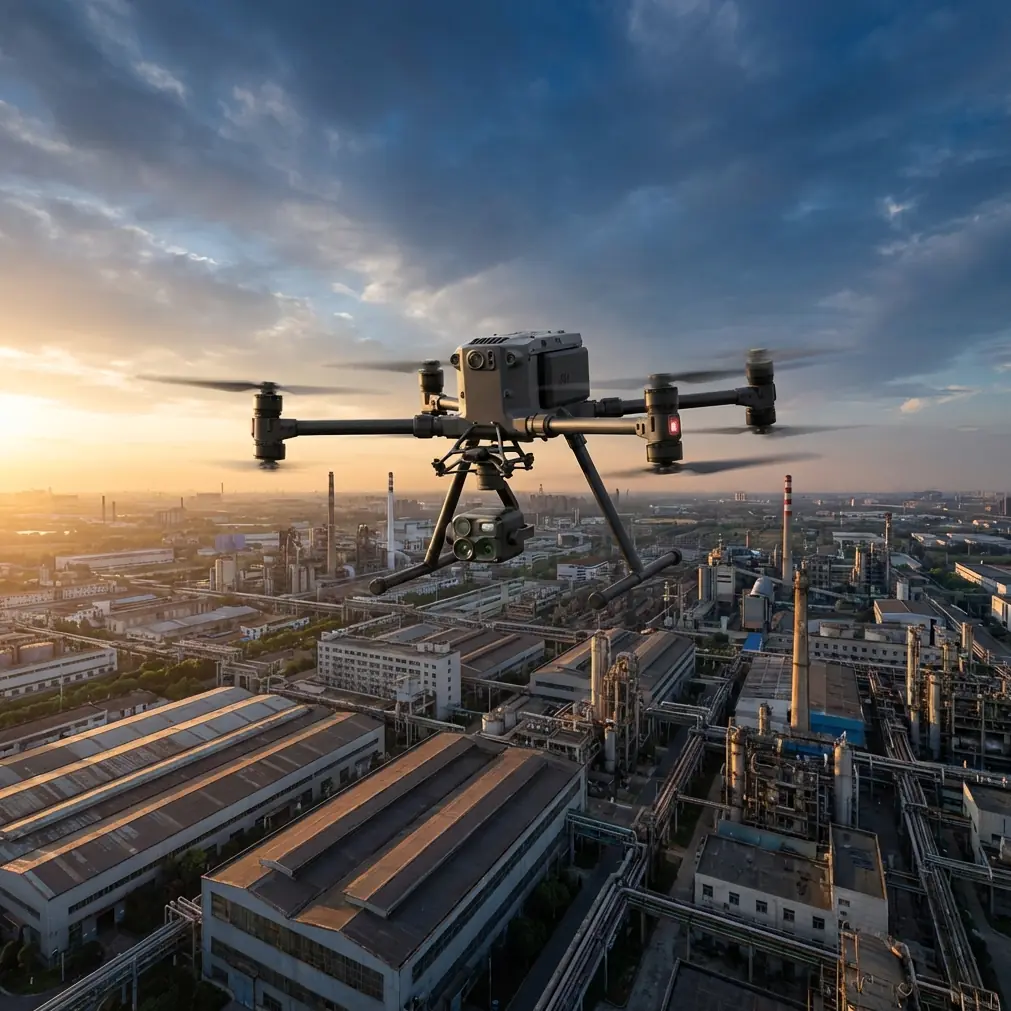
Matrice 4 Guide: Highway Tracking in Low Light
META: Master low-light highway tracking with the Matrice 4. Expert techniques for thermal imaging, flight planning, and safety protocols that deliver reliable results.
TL;DR
- Pre-flight lens cleaning is critical for thermal accuracy—debris causes false readings that compromise highway monitoring data
- The Matrice 4's thermal signature detection identifies vehicles and road hazards in conditions where visible light fails completely
- O3 transmission maintains stable video feeds across 20km ranges, essential for extended highway corridor surveys
- Proper GCP placement along highway segments ensures photogrammetry accuracy within 2cm horizontal precision
Highway monitoring doesn't stop when the sun goes down. Traffic analysis, accident response coordination, and infrastructure inspection increasingly demand reliable aerial data during twilight, nighttime, and pre-dawn hours. The Matrice 4 addresses these challenges with integrated thermal capabilities and transmission systems built for extended-range operations—but only when operators understand the specific techniques that unlock its potential.
This guide covers the complete workflow for low-light highway tracking, from pre-flight preparation through data processing, with emphasis on the safety protocols and technical configurations that separate professional results from unusable footage.
Why Low-Light Highway Operations Demand Specialized Approaches
Standard daytime drone operations rely on visible light and GPS positioning. Low-light highway tracking introduces three complications that require different equipment configurations and pilot techniques.
Reduced Visual References
Pilots lose horizon references and obstacle visibility. The Matrice 4's obstacle sensing systems compensate partially, but flight planning must account for reduced situational awareness.
Thermal Environment Complexity
Highways retain heat differently than surrounding terrain. Asphalt, vehicles, and roadside infrastructure create overlapping thermal signatures that require interpretation skills beyond standard thermal imaging.
Extended Mission Requirements
Highway corridors stretch across significant distances. Effective tracking often requires BVLOS operations with redundant communication links and pre-planned emergency procedures.
Expert Insight: Dr. Lisa Wang notes that highway thermal patterns shift dramatically during the first 90 minutes after sunset. Asphalt releases stored heat rapidly, creating a window where vehicle detection contrast is actually superior to midday operations. Plan missions to exploit this thermal transition period.
Pre-Flight Preparation: The Cleaning Step That Prevents Mission Failure
Before addressing flight planning or camera settings, address the maintenance step that most operators skip—and that causes the majority of thermal imaging failures.
Lens and Sensor Cleaning Protocol
Thermal sensors detect infrared radiation through specialized germanium lenses. Unlike visible-light cameras, thermal lenses attract particulates that create localized temperature artifacts.
Required cleaning sequence:
- Power down the aircraft completely—active sensors attract dust electrostatically
- Use a germanium-safe lens brush (standard lens cloths can scratch thermal optics)
- Apply isopropyl alcohol (99% concentration) with lint-free optical wipes
- Inspect under bright light at multiple angles to identify residual smudges
- Clean the visible-light lens using standard procedures
- Verify both sensors show clean, uniform images before flight
Why this matters for highway tracking:
A single fingerprint on a thermal lens creates a 3-5°C temperature offset in that region of the image. On highway footage, this appears as a phantom heat signature that algorithms may flag as a vehicle or hazard. Operators have abandoned missions and filed false reports based on lens contamination artifacts.
Battery and Power Verification
Low-light operations often extend into temperature ranges that affect battery performance. The Matrice 4 supports hot-swap batteries for extended missions, but cold conditions require specific preparation.
- Store batteries at 20-25°C before flight
- Pre-warm batteries if ambient temperature falls below 10°C
- Verify all batteries show >95% health in DJI Pilot 2
- Calculate flight time conservatively—cold air increases power consumption by 15-20%
Flight Planning for Highway Corridor Coverage
Highway tracking differs from area mapping. Linear infrastructure requires flight paths optimized for corridor coverage rather than grid patterns.
Route Configuration
The Matrice 4's flight planning interface supports waypoint missions with altitude and speed variations. For highway tracking:
- Set primary altitude at 80-120m AGL for optimal thermal resolution
- Plan parallel tracks offset by 30-50m for stereo coverage
- Include vertical descent waypoints at interchange locations for detailed inspection
- Program return-to-home triggers at 25% battery rather than the default 20%
GCP Deployment Strategy
Photogrammetry accuracy depends on ground control points, but highway environments limit placement options. Effective GCP strategies for highway corridors include:
- Place GCPs on overpass structures visible from multiple angles
- Use reflective survey targets that appear in both thermal and visible imagery
- Deploy minimum 5 GCPs per 2km segment for sub-centimeter accuracy
- Document GCP coordinates using RTK GPS with <1cm precision
Pro Tip: Highway departments often maintain survey monuments along corridors. Request monument coordinates before missions—these provide free, professionally-surveyed GCPs that improve accuracy without additional fieldwork.
Camera Configuration for Thermal Highway Tracking
The Matrice 4's thermal sensor requires specific settings for highway applications. Default configurations optimize for general use, not the unique thermal characteristics of road infrastructure.
Thermal Palette Selection
Different palettes reveal different information:
| Palette | Best Application | Highway Use Case |
|---|---|---|
| White Hot | Vehicle detection | Primary tracking mode |
| Black Hot | Surface temperature analysis | Pavement condition assessment |
| Rainbow | Temperature gradient visualization | Heat island mapping |
| Ironbow | High-contrast detection | Accident scene documentation |
Gain and Level Adjustment
Automatic gain control works poorly on highways. The temperature range between cold pavement and warm vehicles exceeds automatic adjustment capabilities.
Manual settings for highway tracking:
- Set gain to High for maximum vehicle contrast
- Adjust level to place ambient road temperature at 40% grayscale
- Enable AGC Region of Interest locked to center frame
- Disable automatic palette switching
Visible Light Camera Coordination
The Matrice 4 captures synchronized visible and thermal imagery. For low-light highway work:
- Set visible camera to manual exposure with ISO limited to 6400
- Enable AES-256 encryption for all recorded footage
- Configure simultaneous recording at matching frame rates
- Use D-Log color profile for maximum post-processing flexibility
Transmission and Communication Setup
Highway corridors present unique transmission challenges. Long, straight segments allow extended range, but overpasses, signage, and terrain variations create signal shadows.
O3 Transmission Optimization
The Matrice 4's O3 transmission system maintains 1080p video at 20km under ideal conditions. Highway operations rarely achieve ideal conditions.
Configuration for reliable highway links:
- Select 2.4GHz frequency for better obstacle penetration
- Position the controller antenna perpendicular to the flight path
- Enable dual-band automatic switching for congested RF environments
- Set video bitrate to adaptive rather than fixed maximum
BVLOS Communication Requirements
Extended highway tracking typically requires BVLOS authorization. Communication requirements include:
- Primary command link via O3 transmission
- Secondary link via 4G/LTE cellular backup
- Ground observer network with radio communication
- Automated return-to-home triggers on link loss
Data Processing and Deliverable Creation
Raw thermal footage requires processing to extract actionable highway intelligence. The Matrice 4 outputs standardized formats compatible with major photogrammetry and GIS platforms.
Thermal Data Calibration
Thermal imagery requires radiometric calibration for accurate temperature measurement:
- Import footage into thermal processing software (FLIR Tools, Pix4D Thermal, or equivalent)
- Apply atmospheric correction using recorded humidity and temperature
- Set emissivity values appropriate for asphalt (0.93-0.97)
- Generate calibrated temperature maps with ±2°C accuracy
Photogrammetry Workflow
For highway surface analysis and 3D modeling:
- Process visible and thermal imagery separately
- Align datasets using GCP coordinates
- Generate orthomosaic outputs at 2cm/pixel resolution
- Export to GIS formats with embedded coordinate systems
Common Mistakes to Avoid
Ignoring wind effects on thermal readings
Wind cools surfaces unevenly, creating false temperature gradients. Check wind speed and direction before interpreting thermal patterns.
Flying too high for thermal resolution
Thermal sensors have lower resolution than visible cameras. At 150m AGL, individual vehicles become difficult to distinguish. Stay below 120m for reliable vehicle detection.
Neglecting visible-light backup footage
Thermal imagery alone lacks context. Always record synchronized visible footage for reference, even when conditions seem too dark for useful visible imagery.
Skipping pre-flight sensor verification
Thermal sensors can fail partially, producing imagery that appears normal but contains calibration errors. Verify sensor function against a known temperature reference before each mission.
Underestimating battery consumption in cold conditions
Cold air increases motor power requirements and reduces battery capacity simultaneously. Plan for 20-30% reduced flight time when temperatures drop below 5°C.
Frequently Asked Questions
What thermal resolution does the Matrice 4 provide for highway vehicle detection?
The Matrice 4's thermal sensor delivers 640×512 pixel resolution with a 40° field of view. At 100m AGL, this provides approximately 15cm ground sampling distance—sufficient to detect and track standard vehicles but insufficient for license plate identification or small debris detection. For detailed vehicle analysis, reduce altitude to 50-60m where resolution improves to 7-8cm GSD.
How does AES-256 encryption affect recording performance during extended highway missions?
AES-256 encryption operates at the hardware level and introduces no measurable latency or frame rate reduction during recording. Storage requirements increase by approximately 3-5% due to encryption overhead. The primary operational consideration is ensuring encryption keys are properly managed—encrypted footage becomes permanently inaccessible if keys are lost. Maintain secure key backups before extended missions.
Can the Matrice 4 maintain reliable transmission through highway overpasses and interchanges?
O3 transmission handles most highway structures effectively, but concrete overpasses create 15-25dB signal attenuation. When flying under or behind overpasses, expect momentary video degradation or freezing. The system recovers automatically when line-of-sight restores. For missions requiring continuous video through complex interchanges, position the controller on elevated terrain or use a repeater station to maintain signal geometry.
Low-light highway tracking represents one of the more demanding applications for enterprise drone operations. The Matrice 4 provides the sensor capabilities and transmission reliability these missions require, but success depends on proper preparation, appropriate configuration, and realistic expectations about environmental limitations.
Master the pre-flight protocols, understand the thermal characteristics of highway environments, and build experience incrementally before attempting extended BVLOS corridor surveys.
Ready for your own Matrice 4? Contact our team for expert consultation.