
Tracking High-Altitude Power Lines with Matrice 4
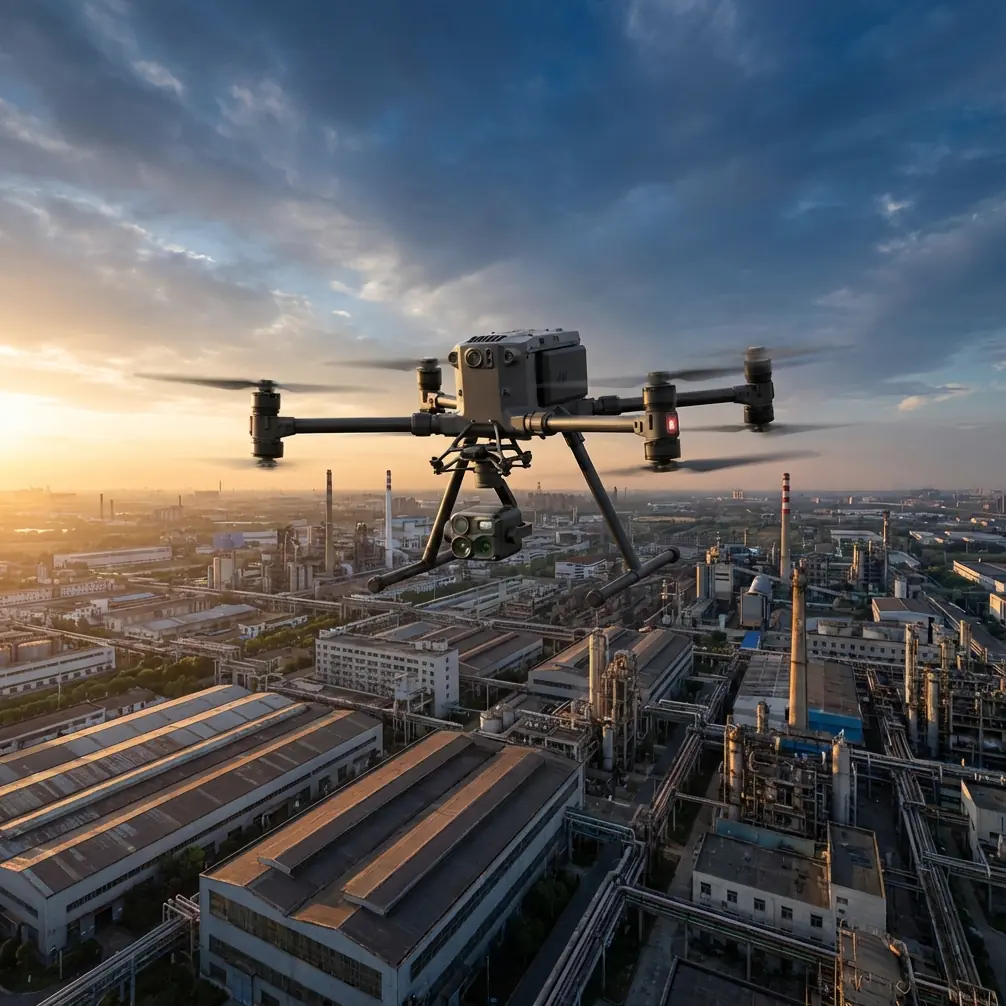
Tracking High-Altitude Power Lines with Matrice 4: Flight Altitude, Thermal Detail, and Data Discipline
META: Expert how-to for using Matrice 4 to inspect high-altitude power lines, with practical flight altitude guidance, thermal workflow tips, O3 transmission considerations, AES-256 security, GCP strategy, and battery planning.
Power-line work at elevation punishes vague planning.
The air is thinner. Wind behaves differently along ridgelines and towers. Transmission assets stretch across long corridors where signal stability, battery turnover, and image consistency matter more than brochure-level specs. If your goal is to track power lines in high altitude terrain with a Matrice 4, the mission is not just about getting airborne. It is about choosing a flight altitude that preserves conductor visibility, thermal reliability, and repeatable mapping geometry from one span to the next.
I approach this as an inspection problem first and a drone problem second.
The Matrice 4 platform is attractive here because the job demands a blend of persistent visual awareness, thermal signature interpretation, dependable transmission, and secure handling of infrastructure data. Terms like O3 transmission and AES-256 are not decorative in this context. They directly affect whether a mountain corridor inspection remains controlled and whether the resulting data can be handled responsibly across internal review teams and utility stakeholders.
What follows is a practical field framework for high-altitude line tracking, centered on one question operators ask constantly:
What is the optimal flight altitude for this scenario?
The honest answer is not a single number. It is a working range tied to what you need to see.
Start with the inspection objective, not the aircraft ceiling
Power-line missions typically split into three different outputs:
- Corridor awareness — confirming route condition, vegetation encroachment patterns, tower alignment, and access issues.
- Asset-level inspection — examining insulators, clamps, connectors, spacers, and conductor condition.
- Thermal anomaly identification — detecting hotspots, load imbalance clues, or unusual heating patterns at connection points.
Each output drives a different altitude decision.
For broad corridor tracking at high altitude, you generally want enough separation to hold a stable lateral relationship to the line while keeping the full span readable. In many mountain inspections, that usually means working in a moderate band above the line rather than pushing unnecessarily high. A practical starting point is often 30 to 60 meters above the conductor plane, then adjusting for terrain rise, wind shear, and the focal length needed for the target defect class.
Why this range works:
- At roughly 30 meters above the line, you can preserve stronger visual detail on fittings and local thermal differences while keeping safer clearance from structures and conductor movement.
- Closer to 60 meters above the line, you gain smoother corridor context and better consistency in rough terrain, but very small defects become harder to interpret unless your zoom workflow is disciplined.
For photogrammetry-style corridor documentation, the answer changes again. If the goal is usable geometry for a model rather than component-level diagnosis, you need repeatable image overlap, stable perspective, and a clear plan for ground control points, or GCPs, where practical and safe. In that case, altitude is chosen less for “best view” and more for reconstruction quality.
So the first rule is simple: do not ask for the best altitude in isolation. Ask which defect, pattern, or deliverable the altitude must support.
The high-altitude trap: flying too high because the terrain feels big
Operators in alpine or plateau environments often overestimate the altitude required. The landscape looks enormous, and the instinct is to climb for comfort. That usually hurts inspection quality.
Flying too high introduces three problems:
- Thermal signatures get less decisive. Small temperature differences on connectors or clamps can become less meaningful when the target occupies too few pixels.
- Perspective on line components weakens. You still see the line, but not well enough to diagnose.
- Wind exposure often worsens. Higher is not automatically safer around saddles, escarpments, and exposed ridges.
With Matrice 4, the smarter move is usually to maintain a controlled relative altitude above the asset rather than a fixed absolute altitude above launch point. In steep terrain, that means terrain-aware planning and active monitoring as the corridor rises and falls. A fixed mission height can be misleading when one section of line cuts across a valley and the next traverses a shoulder near the aircraft.
For most high-altitude tracking flights, my preference is to divide the route into segments and assign target altitude bands per terrain section. That keeps image scale more consistent, which helps both manual review and any later photogrammetry workflow.
Thermal work changes the altitude equation
Thermal signature reading is where many teams either gain a real maintenance advantage or collect a lot of ambiguous heat maps.
At high altitude, ambient conditions can improve contrast in some cases, but that does not guarantee useful thermal interpretation. Sun angle, reflective surfaces, conductor loading, wind cooling, and distance from target all influence what the sensor tells you. If your aircraft is too far from the conductor hardware, a warm fitting can look like a soft blur rather than a meaningful anomaly.
That is why, when thermal is a core mission objective, I usually recommend beginning lower within the inspection envelope, often near that 30-meter-above-conductor mark, then climbing only when terrain or safety margins require it. This gives the thermal sensor a better chance to isolate small heat irregularities at joints and attachment points.
Operationally, this matters because a thermal hit is only useful if the maintenance team can trust it enough to prioritize a follow-up. False uncertainty wastes far more time than a conservative altitude choice.
A good thermal pass also should not stand alone. Pair it with visible imagery from the same geometry as closely as possible. That makes anomaly verification faster and reduces the chance that reviewers misread environmental effects as equipment defects.
O3 transmission matters more in mountain corridors than on flatland jobs
Long linear inspections expose every weakness in your link.
In high-altitude power-line tracking, the value of O3 transmission is not just range on paper. It is about signal resilience when the route bends around terrain features, dips into partial occlusion, or forces the aircraft into angles where line-of-sight quality changes rapidly. In practical terms, that can mean fewer interruptions in live assessment and more confidence when holding a stable path over a long corridor.
This is one of those reference details that carries real operational significance. A robust transmission system lets the pilot and visual observer team make earlier decisions about rerouting, camera adjustments, or terminating a leg before conditions become marginal. That is especially useful in mountainous infrastructure work where the topography can degrade link quality unexpectedly.
Some operators jump from “good transmission” to casual BVLOS thinking. That is the wrong mindset. BVLOS operations require regulatory approval, rigorous risk assessment, and specific procedures. Even where BVLOS is permitted, corridor missions need disciplined route design, communications planning, emergency contingencies, and terrain-based signal analysis. Good transmission technology supports that process. It does not replace it.
AES-256 is not a side note when you are handling utility infrastructure data
Inspection teams sometimes focus so heavily on optics and endurance that they overlook data handling. For grid operators and contractors, that is a mistake.
The mention of AES-256 matters because power-line inspections produce sensitive infrastructure records: tower locations, hardware condition, thermal abnormalities, access constraints, and maintenance priorities. Encryption helps protect that information in transit and within operational workflows. In a utility environment, this can simplify internal acceptance of drone operations because cybersecurity teams are more likely to support a platform that aligns with controlled data practices.
That operational significance is straightforward: if your captured intelligence cannot move securely through the organization, the inspection program slows down. Secure transmission and storage practices are not abstract IT concerns. They are part of mission continuity.
Hot-swap batteries are not about convenience. They protect corridor consistency
Mountain line tracking often involves staggered launches, awkward access roads, and narrow weather windows. Losing continuity every time you cycle batteries creates avoidable data gaps and workflow friction.
That is why hot-swap batteries are so useful in this type of inspection. The benefit is not just faster turnaround. It is preserving mission rhythm. When you can replace power quickly and get back on the next leg with minimal downtime, you reduce shifts in sun angle, wind pattern, and thermal environment between route segments. For thermal and visual comparison work, that consistency matters.
I advise teams to think of battery changes as handoff points in a corridor, not interruptions. Predefine them based on terrain access, expected hover reserve, and return margins rather than waiting for battery percentage to dictate the mission. In high-altitude conditions, where cold and wind can affect endurance, this discipline becomes even more important.
When photogrammetry is part of the deliverable, altitude must support reconstruction
Some utility clients do not want only defect imagery. They also want measurable corridor models, tower context, or vegetation analysis. That is where photogrammetry enters the picture.
Photogrammetry around power infrastructure is more demanding than many generic mapping missions because the subject includes thin linear features, repeating geometry, and vertical structures. If your altitude is too high, conductors can become weak elements in the reconstruction. If too low, your coverage becomes inefficient and overlap control suffers over long distances.
A practical strategy is to separate inspection flights from mapping flights unless the corridor is simple and the deliverable can tolerate compromise. For mapping-oriented sorties:
- Use a more consistent relative altitude over terrain.
- Maintain disciplined overlap.
- Add GCPs where site access and safety permit.
The GCP detail is significant because high-altitude corridors often traverse terrain where GNSS-only outputs can drift enough to affect engineering usefulness. Ground control is not always feasible along active power infrastructure, but where it can be safely established, it improves confidence in the dataset and reduces disputes over spatial accuracy later.
That accuracy question is not academic. Vegetation clearance analysis, tower settlement review, and route change documentation all depend on trustworthy geometry.
A workable altitude playbook for Matrice 4 on mountain line patrols
If I were briefing a crew for a civilian utility inspection with Matrice 4 in high terrain, I would use this altitude logic:
1. Corridor familiarization pass
Fly a wider overview line to understand wind behavior, terrain transitions, and signal quality.
Target: a higher but still controlled relative altitude, enough to read route context without sacrificing line visibility.
2. Primary visual inspection pass
Drop into the band where hardware remains meaningfully inspectable.
Target starting point: around 30 to 40 meters above the conductor plane.
3. Thermal verification pass
Hold similar geometry to the visual pass when possible.
Target: stay on the lower side of the safe inspection envelope for cleaner thermal interpretation.
4. Mapping or reconstruction pass
If photogrammetry is required, fly a separate mission optimized for overlap and geospatial consistency.
Target: chosen for model quality, not spot inspection.
This layered method is slower than a one-pass mentality, but the data is dramatically better. It also gives the review team clean categories of evidence rather than one mixed capture set that tries to do everything and does none of it particularly well.
Crew workflow matters as much as aircraft settings
High-altitude line tracking is a crew discipline exercise.
One person should watch aircraft position relative to terrain and structures. Another should monitor live imagery for component readability and thermal relevance. If a route is long, segment management should be written down before launch: expected battery swap points, signal-risk areas, emergency return logic, and image naming standards for each tower or span.
If you are refining a corridor workflow and want a quick field discussion before committing to a procedure, I would suggest using this direct project chat option: https://wa.me/85255379740.
Even excellent aircraft performance cannot rescue a mission that lacks labeling discipline. Utilities need traceable outputs. If the team cannot tie a hotspot or image set back to a specific span, the value of the flight drops immediately.
The best altitude is the one that preserves decisions
That is the real answer.
For high-altitude power-line tracking with Matrice 4, the optimal flight altitude is usually not the maximum view and not the minimum possible clearance. It is the height at which inspectors can still make reliable maintenance decisions from the captured data. In many practical scenarios, that starts around 30 to 60 meters above the conductor plane, then shifts according to terrain, wind, target defect size, and whether thermal or photogrammetry is the priority.
Keep the aircraft close enough for trustworthy interpretation. High enough for safe separation and stable route management. Consistent enough that each leg of the corridor can be compared with the next.
That is where Matrice 4 becomes genuinely useful on mountain utility work: not as a generic drone, but as a structured inspection platform whose O3 transmission, AES-256 data protection, hot-swap battery workflow, and support for thermal and mapping tasks can be turned into a repeatable field method.
Ready for your own Matrice 4? Contact our team for expert consultation.