
Matrice 4 in Windy Venues: How to Keep Tracking Reliable
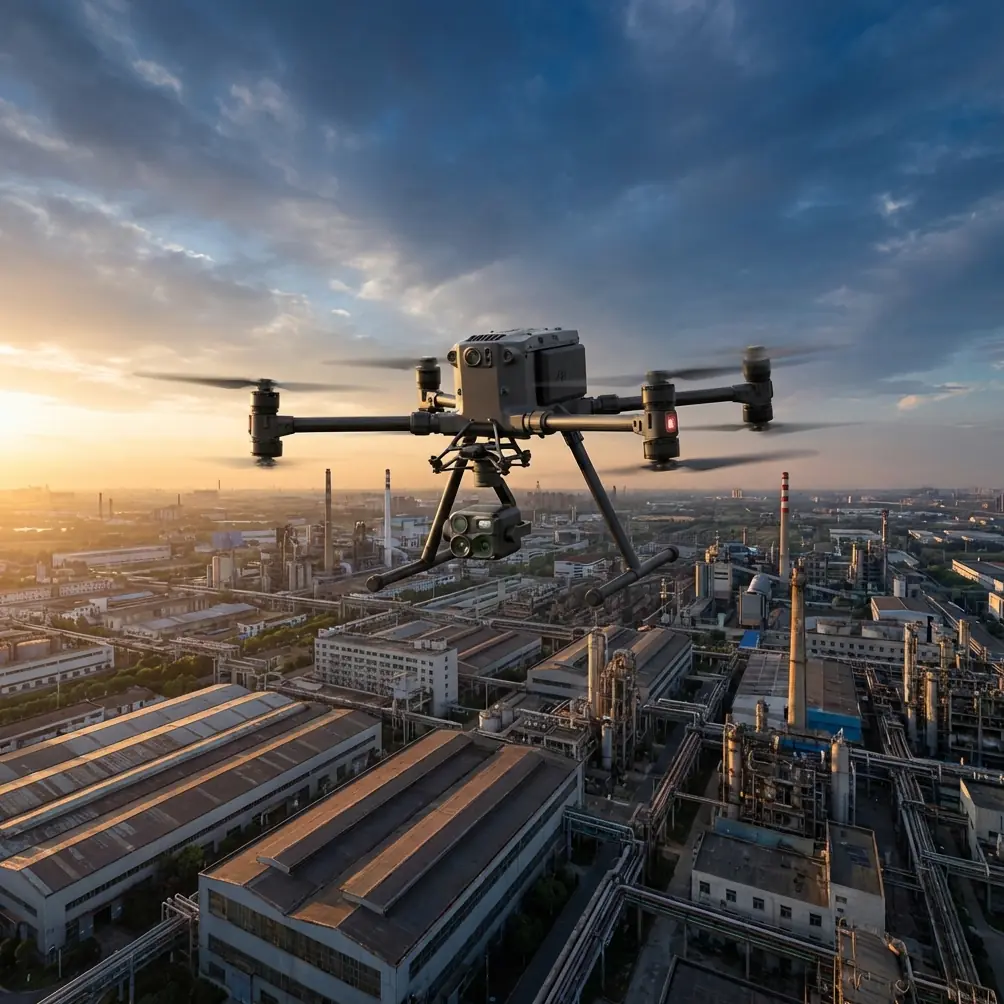
Matrice 4 in Windy Venues: How to Keep Tracking Reliable When the Air Won’t Sit Still
META: A field-focused look at using Matrice 4 for venue tracking in windy conditions, with practical insight on thermal signature work, O3 transmission, AES-256 security, hot-swap batteries, photogrammetry, and accessory choices.
Wind changes everything.
At a venue, that usually means the drone mission gets harder just when the footage, thermal pass, or mapping update matters most. Open stadium edges create turbulence. Waterfront event spaces funnel gusts between structures. Temporary stages, rigging, lighting towers, fencing, and moving vehicles all complicate airflow and visual line-of-sight. If the objective is to track activity across a large site, maintain situational awareness, and still collect usable data, the aircraft cannot simply be “good in wind.” The entire workflow has to stay stable when conditions are not.
That is where the Matrice 4 conversation becomes interesting.
Not because the platform magically erases weather, but because it brings together several capabilities that matter specifically in venue tracking: secure transmission, payload flexibility, thermal signature interpretation, long-area observation, and the kind of battery architecture that helps teams keep operating through time-sensitive windows. For commercial operators managing events, construction-adjacent venues, industrial campuses, training grounds, or outdoor facilities, the difference between a successful windy-day mission and a wasted launch is rarely one spec in isolation. It is how the system behaves when the venue itself becomes part of the problem.
The real problem with windy venue tracking
Most operators first think about stability. Fair enough. If gusts are pushing the aircraft off line, every downstream task gets worse. But in venue work, wind creates three separate problems at once.
The first is image inconsistency. Even when the aircraft remains controllable, small shifts in yaw, angle, and altitude can weaken tracking continuity. If you are observing vehicle flow, monitoring temporary infrastructure, or documenting crowd-adjacent logistics zones from a safe civilian operations standpoint, those inconsistencies reduce the value of the flight record.
The second is sensor interpretation. Wind changes surface temperature behavior. Materials cool unevenly. Heat plumes move. Equipment housings that looked obvious on a calm morning can blend into the background by afternoon. For operators using a thermal signature to identify overloaded electrical assets, roof moisture patterns, or heat-emitting equipment around a venue, interpretation becomes less straightforward once airflow starts redistributing temperature.
The third is operational tempo. Windy days often force more repositioning, more hover checks, and more conservative route planning. That consumes power. If the venue manager wants recurring updates over several hours, battery handling becomes a mission-planning issue, not a checklist detail.
This is why a Matrice 4 setup for windy tracking should be treated as a system, not an aircraft.
Why the Matrice 4 platform suits this kind of work
The Matrice 4 attracts serious users because it bridges observation and data collection without forcing a one-size-fits-all workflow. In venue tracking, that matters. One team might need visual overwatch of delivery routes and roof conditions. Another might need thermal scans of electrical cabinets and HVAC equipment. A third might need photogrammetry outputs to update a site model after temporary structures are installed.
Those are different jobs. Wind exposes weak links between them.
A practical Matrice 4 workflow benefits from O3 transmission, which matters operationally far more than people sometimes admit. In a venue, radio environments are messy. Wi-Fi congestion, metallic structures, lighting systems, broadcast equipment, and moving obstructions all compete for clean signal pathways. Reliable transmission is not a luxury when you are tracking a changing site in gusty conditions. It is what allows the pilot to maintain confidence in framing, route corrections, and hover decisions rather than flying defensively because the feed feels unstable.
Security also matters more than it gets credit for. Venue operators, industrial clients, and infrastructure managers are increasingly sensitive to how aerial data is handled. AES-256 encryption is not just a technical label to drop into a brochure. In practical terms, it supports workflows where sensitive site layouts, logistics movements, or maintenance records are being observed from the air and may later be incorporated into internal reporting. For commercial teams working on high-profile venues or private facilities, that level of transmission security strengthens trust and can simplify approval conversations before the aircraft ever takes off.
Then there is battery continuity. Hot-swap batteries are one of those features that sound ordinary until the weather turns. In windy venue operations, the best capture window is often short: before gates open, between contractor movements, or during a lull in atmospheric turbulence. Hot-swapping lets a team turn aircraft around quickly and preserve mission continuity. That means less downtime between passes, fewer interruptions to recurring observation patterns, and better consistency in data collection across the same site.
If you are trying to track changes over time, continuity is the product.
Wind makes thermal work more valuable, and more demanding
Thermal is often discussed as though it behaves independently of weather. It does not.
At venues and large outdoor facilities, thermal payload use in wind can actually become more valuable because moving air may reveal system behavior that calm conditions hide. HVAC strain, electrical imbalance, insulation issues, rooftop water intrusion, and heat leakage around temporary power setups can become more visible when the environment is stressing equipment. But that only helps if the operator understands how wind alters the scene.
With the Matrice 4, thermal signature analysis should be approached comparatively, not theatrically. You are not looking for abstract heat pictures. You are looking for repeatable anomalies tied to known assets.
For example, if a venue has temporary generator banks and cable runs supporting lighting or broadcast infrastructure, a thermal pass can help civilian maintenance teams spot irregular heating patterns before they become operational failures. In a windy setting, the operator may need multiple angles or a slower, more deliberate orbit because airflow can cool one side of a housing while leaving another side relatively elevated. The significance is simple: what looks minor from one approach may be more distinct from another, and a stable platform with dependable live transmission makes that assessment easier in real time.
This is where Matrice 4’s strength is less about one dramatic thermal frame and more about repeatability. The aircraft has to let the pilot revisit the same target area, maintain enough consistency for comparison, and capture evidence that a facilities team can actually use.
Photogrammetry in a windy venue is not just possible—it is useful if planned correctly
A lot of people assume photogrammetry should wait for perfect weather. That is often unrealistic.
Venue operators regularly need updated site models before or during active operations. Temporary seating, stage structures, traffic barriers, signage zones, access corridors, and contractor compounds alter how a site functions. A current map helps planners coordinate movement, safety spacing, and maintenance access even if the venue is in flux.
This is where Matrice 4 can support a useful photogrammetry workflow, especially when paired with disciplined mission planning and GCP deployment. Ground Control Points matter because wind introduces enough variability that external reference improves confidence in the final model. If the deliverable is being used to assess clearances, equipment placement, drainage behavior, or temporary structure footprints, accuracy is not optional.
The operational significance of GCPs in windy conditions is straightforward: they help anchor the model when image overlap and aircraft attitude may not be as clean as on a calm day. You are reducing the chance that site managers make decisions from geometry that drifted during acquisition.
For venue tracking, that can be the difference between a nice-looking 3D output and something engineers, planners, or facilities teams can rely on.
A useful practice is to split the mission. Use one sortie for broad mapping and another for targeted inspection zones. That way, the aircraft is not trying to satisfy two competing goals under difficult air conditions. Matrice 4’s ability to support multi-role operations gives teams that flexibility.
The accessory choice that quietly improves results
The most useful upgrades are often not flashy.
In windy venue tracking, one of the best third-party additions is a high-visibility landing pad with weighted edges from an industrial accessory supplier. It sounds modest. It is not. On rough surfaces, gravel service roads, or temporary event compounds, wind can kick dust and debris into the air during takeoff and landing. A stable, visible pad gives the crew a cleaner launch point, helps preserve sensor cleanliness, and reduces the chance of repeated aborted takeoffs because the aircraft’s immediate environment is unstable.
That matters even more on repeated battery cycles. If you are using hot-swap batteries to maintain operational tempo, every landing and relaunch becomes part of the efficiency equation. A better ground interface means faster resets and fewer contamination issues on optics.
I have also seen teams improve windy-site tracking by adding a third-party RTK/GNSS field workflow kit for GCP logging and quality control. Strictly speaking, the aircraft can fly without it. In practice, accessory ecosystems often make the difference between “we flew the mission” and “we produced defensible data.”
Transmission, privacy, and venue trust
Venue tracking sits at an awkward intersection of visibility and sensitivity. You may be documenting roof conditions, perimeter assets, service roads, temporary infrastructure, drainage issues, or contractor logistics in plain sight, yet the client may still regard the dataset as private. That is one reason the Matrice 4 feature set aligns well with serious commercial work.
Again, AES-256 is not trivia. It supports the wider argument that operational data should be handled responsibly, especially where venue plans, infrastructure layouts, or maintenance vulnerabilities are involved. Pair that with solid O3 transmission, and the crew gets two practical benefits at once: confidence in control and confidence in data handling.
When operators brief clients properly, these details help shift the conversation from “Can the drone fly in wind?” to “Can this workflow produce secure, dependable outputs under real field conditions?” That is the better question.
If your team is planning a site-specific setup for difficult weather, it helps to discuss payload mix, battery rotation, and accessory selection before the first mission. For direct field coordination, I’d suggest using this WhatsApp channel for mission planning questions.
What about BVLOS?
BVLOS is often mentioned too casually, so let’s keep it grounded.
For large venues, industrial corridors, and expansive campuses, Beyond Visual Line of Sight concepts are attractive because they promise more efficient coverage. But windy conditions raise the bar for planning, risk assessment, communications integrity, and regulatory compliance. The Matrice 4 platform has the kind of transmission and operational architecture that makes advanced workflows worth considering, yet the real takeaway is not that a windy venue should automatically become a BVLOS mission.
It is that the aircraft can fit into organizations that are building toward more scalable inspection and tracking programs over time, provided those programs remain lawful, safe, and operationally mature. For current venue work, many teams will still get the best result from well-positioned visual operations supported by repeatable routes, disciplined battery swaps, and strong data management.
A field-tested way to think about Matrice 4 in wind
The wrong way to assess the Matrice 4 is to ask whether it “handles wind.”
A better way is to ask what kind of work still holds together when the venue turns chaotic. Can the live view remain dependable enough for tracking decisions? Can thermal interpretation still identify meaningful anomalies? Can mapping outputs remain useful when supported by GCPs? Can teams sustain recurring flights through hot-swap battery cycles without losing momentum? Can the client trust the transmission and data security architecture?
For this class of work, those are the real benchmarks.
Matrice 4 stands out because it supports a layered workflow. You can observe, inspect, map, and document with one platform strategy instead of patching together separate tools that break down under pressure. In windy venues, that matters more than raw headline performance. The aircraft earns its place when it helps the crew stay methodical while the environment refuses to cooperate.
That is the test commercial drones actually face in the field.
Ready for your own Matrice 4? Contact our team for expert consultation.