
Matrice 4 for Coastal Venue Tracking: Why Control Logic
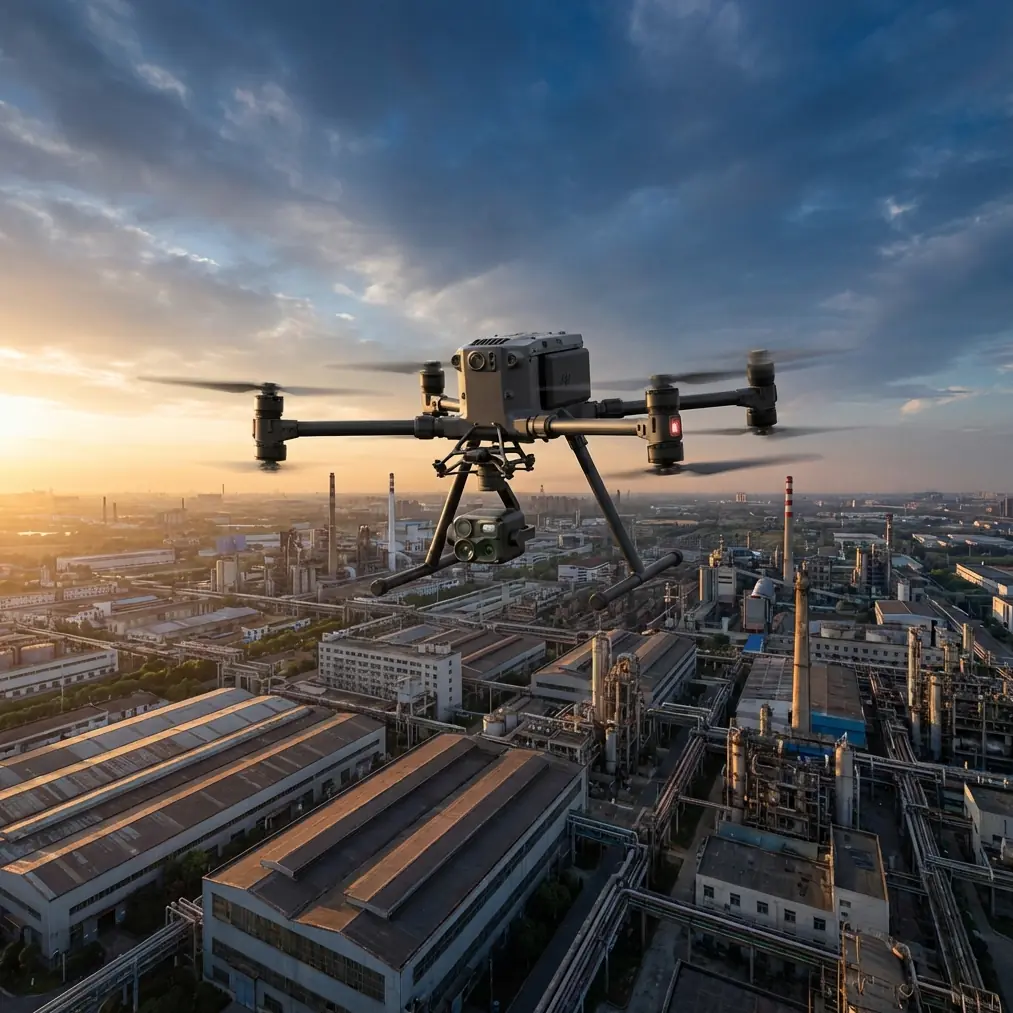
Matrice 4 for Coastal Venue Tracking: Why Control Logic Matters More Than Spec Sheets
META: Expert analysis of Matrice 4 best practices for coastal venue tracking, focusing on flight-control software, simulation, wind resilience, sensor workflows, and safer commercial operations.
Coastal venue tracking looks simple until the shoreline starts lying to your aircraft.
Water reflects light unevenly. Gusts roll in without warning. Sand, salt haze, and thermal contrast shift hour by hour. Add moving crowds, temporary structures, service vehicles, wildlife buffers, and long perimeter routes, and the job stops being a basic drone flight. It becomes a control-and-management problem.
That is the right lens for understanding how to use a Matrice 4 effectively in this environment.
Most buyers focus on payloads, camera resolution, or transmission range first. Those matter, of course. But the deeper truth comes from a much older and more foundational UAV principle: the aircraft’s control laws operate at the execution layer, while control and management strategies sit above them, coordinating the system as a whole. That distinction, drawn clearly in the reference material on unmanned flight control and management, is not academic. It explains why two crews can fly the same platform at the same venue and get very different results.
One crew captures clean, repeatable, court-defensible imagery and stable tracking data. The other burns battery fighting wind, loses consistency on repeat passes, and ends up with imagery that is difficult to align in photogrammetry.
For coastal venue work, the Matrice 4 should be treated as an integrated decision platform, not just a camera in the sky.
The real problem at coastal venues
Venue tracking in coastal areas usually combines several mission types into one workflow:
- perimeter inspection
- temporary infrastructure monitoring
- thermal signature review around mechanical or electrical assets
- crowd-flow observation for civilian event planning
- shoreline change documentation
- repeatable photogrammetry for planning, insurance, or maintenance records
Each of those tasks places different demands on the aircraft. Photogrammetry wants consistency. Thermal work wants timing and angle discipline. Tracking activity across a broad venue wants smooth sensor handoff and stable transmission. If you are operating near the waterline, the atmosphere itself keeps changing the mission.
This is where the reference material becomes surprisingly relevant to Matrice 4 field operations. It argues that many UAV issues are tied not simply to raw control capability, but to the quality of the control and management strategy design. In plain terms: the aircraft may be capable, yet the mission can still fail if the logic governing mode changes, route handling, sensor tasking, and pilot intervention is weak.
That is exactly what happens at the coast.
A Matrice 4 mission might begin as a wide-area scan using visible imaging, switch to thermal to identify abnormal heat sources in utility enclosures, then transition into a low-speed orbit for closer documentation, all while preserving safe separation from cranes, lighting rigs, dunes, or protected bird areas. The challenge is not just flying. The challenge is orchestrating transitions.
Why software discipline matters on Matrice 4 missions
One of the strongest points in the source material is that in modern digital flight control and management systems, most control and management functions are implemented through software. It goes further: software is a decisive factor in system function, performance, and reliability.
For Matrice 4 operators, that should shape how missions are built.
At a coastal venue, software discipline shows up in practical ways:
1. Mission profiles must be designed around environmental transitions
A beachfront concert venue at 7:00 a.m. is not the same airspace at 2:00 p.m. Wind profile, thermal lift, glare, and ground temperature all change. If your route logic does not account for those changes, your image overlap can drift, your thermal interpretation can become noisy, and your tracking reliability drops.
2. Sensor workflows need management, not improvisation
The aircraft may be able to gather visible, zoom, and thermal data in one sortie, but that does not mean it should do so casually. Switching tasks without a predefined logic chain often produces incomplete datasets. For example, a thermal signature observed over rooftop HVAC near a venue kitchen may need an immediate follow-up visual pass from a matching angle to determine whether the anomaly is mechanical, reflective, or simply solar loading. That handoff should be planned, not guessed mid-flight.
3. Reliability comes from process before takeoff
The reference text is blunt on a point many crews still ignore: testing alone cannot uncover every software problem. Quality has to be built through design, implementation, testing, and controlled change management. In Matrice 4 terms, that means every recurring venue operation should use versioned checklists, route templates, payload settings, and geospatial naming standards.
If you update waypoint logic, GCP placement conventions, or transmission settings, document it. Otherwise, your time-series comparison breaks down, and so does trust in the data.
Simulation is not optional if the venue is exposed to wind
The best insight in the source set for coastal readers is the emphasis on simulation.
The article on flight control and management highlights digital simulation and hardware-in-the-loop simulation as critical tools for verifying not only expected control performance, but behavior under steady wind, gusts, turbulence, and changing aerodynamic parameters. That matters enormously for Matrice 4 crews working near the sea.
Coastal operators often assume they can compensate for wind in the field with pilot skill alone. That is the wrong habit. Rehearsing a mission digitally before launch gives you something far more valuable than confidence: it gives you boundaries.
You learn:
- where oblique image capture begins to degrade
- how much yaw correction is likely on exposed legs
- which altitudes preserve cleaner overlap for mapping
- whether return paths should be reversed to reduce side-load
- when battery reserve margins become too tight for safe continuation
If you are planning BVLOS-adjacent workflows within the limits of your local rules and company approvals, simulation becomes even more significant. Long coastal perimeters can tempt crews into stretching routes. Testing mission logic in advance helps identify choke points where link quality, visibility, or wind could degrade at the same time.
That is not theory. It is risk reduction.
The 30 cm lesson: precision is earned through system integration
The second reference document is about a very different use case, and its sensitive context should not be imported directly into civilian operations. But one technical lesson is still useful and entirely transferable: a visual positioning workflow achieved pose-estimation performance within 30 cm, and a PID-controlled process stabilized the final alignment during hardware-in-the-loop validation.
Why does that matter to a Matrice 4 operator tracking venues on the coast?
Because it shows that precision in drone operations does not come from one sensor alone. It comes from the chain: perception, estimation, control adjustment, and validation.
For civilian commercial work, that translates neatly into practical tasks such as:
- repeated facade inspections on waterfront event buildings
- alignment of photogrammetry passes over temporary venue structures
- precise thermal rechecks of electrical cabinets or generator zones
- repeat observation of erosion-control barriers or drainage features
If your visual reference, pose estimation, and control response are not working together, your repeatability suffers. And repeatability is what separates useful venue intelligence from one-off imagery.
This is also where GCP strategy still matters. Even when the Matrice 4 captures excellent data and onboard positioning is strong, coastal surfaces can be deceptive. Uniform sand, reflective boardwalk materials, and low-texture paved areas make consistent reconstruction harder. Good GCP placement anchors the mission to reality. Without that, your photogrammetry may look sharp while still drifting enough to weaken measurements.
A wildlife moment every coastal operator should anticipate
On one shoreline venue survey, the most valuable sensor decision had nothing to do with the event infrastructure.
A flock of gulls rose from behind a catering compound just as the aircraft began a lateral pass toward the open promenade. The visible feed showed motion first, but the thermal view made the separation problem clearer: several birds were crossing a warmer rooftop backdrop, while others were nearly lost against the cooler sea haze. Instead of pressing the route, the operator paused the pass, widened the lateral offset, and resumed from a safer angle.
That is a small moment, but it captures the larger point. Coastal tracking is dynamic. Wildlife can enter the scene suddenly. Sensor choice affects not only data quality, but the operator’s ability to make safe, fast judgments. A Matrice 4 workflow that blends thermal signature awareness with disciplined route management is often better suited to these environments than a purely visual strategy.
Transmission and data handling are part of the mission, not an afterthought
In venue tracking, especially over broad coastal properties, transmission stability is operationally significant. O3 transmission capability can help maintain consistent situational awareness across complex grounds, but signal strength alone should not lull crews into complacency. The control-and-management perspective from the reference material reminds us that the link is one subsystem inside a larger coordinated system.
If your team is streaming to operations staff, logging observations, and capturing imagery for later photogrammetry, you need a communication plan as carefully structured as the flight route itself.
That includes:
- what gets monitored live
- what gets tagged for post-flight review
- when thermal anomalies trigger a revisit
- who authorizes route deviations
- how AES-256 protected workflows are handled for sensitive commercial site data
Coastal venues often involve private infrastructure, event staging layouts, utility nodes, and public-adjacent spaces. Secure transmission and disciplined file handling are not decorative features. They are part of professional delivery.
Hot-swap batteries change field tempo, but only if the workflow supports them
Hot-swap batteries are especially useful on coastal assignments because shoreline conditions punish delays. Light changes quickly. Wind windows open and close. Tides can alter access routes and visual references over the course of a morning.
But battery efficiency is not just about shorter turnaround. It is about preserving continuity between sorties.
If your second launch starts with different camera parameters, a shifted route line, or an inconsistent overlap plan, the time saved on the ground is partly wasted in the data. The best Matrice 4 teams treat battery swaps as a controlled continuation, not a reset. Same naming convention. Same altitude logic. Same sensor sequence unless a documented operational reason justifies a change.
That is how you build a dataset you can trust a month later.
The platform should fit the aircraft, not the other way around
Another useful point from the source material is that flight control and management systems are often specific to the aircraft’s aerodynamic characteristics and control requirements rather than universally transferable. For Matrice 4 users, the takeaway is simple: avoid lifting procedures from another platform and assuming they will work unchanged.
A coastal venue workflow tuned for a smaller aircraft may not suit Matrice 4 sensor behavior, endurance profile, or route cadence. Likewise, a heavier enterprise routine from another airframe may be unnecessarily rigid. Build around the actual platform.
That means:
- calibrating overlap and speed for the Matrice 4 payload in use
- validating thermal inspection windows against the venue’s heat behavior
- setting waypoint behavior based on coastal gust patterns
- rehearsing emergency logic with realistic shoreline obstacles and recovery areas
If you want help shaping that workflow, this direct Matrice 4 planning channel is a practical place to discuss route design, sensor matching, and operational setup.
What good Matrice 4 coastal tracking actually looks like
A strong operation is rarely dramatic. It is structured.
The crew has already simulated the route. Wind-facing legs have been reviewed. GCPs are placed where surfaces are otherwise ambiguous. Thermal passes are scheduled when contrast is useful, not convenient. Visible and thermal captures are paired so anomalies can be interpreted, not merely spotted. Wildlife buffers are respected. Battery swaps preserve mission continuity. Transmission security is treated as part of data quality. Post-flight outputs are organized so the venue team can compare one survey against the next without confusion.
That is where Matrice 4 becomes valuable for coastal venue tracking.
Not because it flies. Plenty of aircraft fly.
It matters because, when used with disciplined control logic and validated workflows, it can turn a messy shoreline environment into repeatable operational intelligence.
And that is the difference between footage and information.
Ready for your own Matrice 4? Contact our team for expert consultation.