
Matrice 4 in Windy Venue Tracking: The Altitude, Fastener
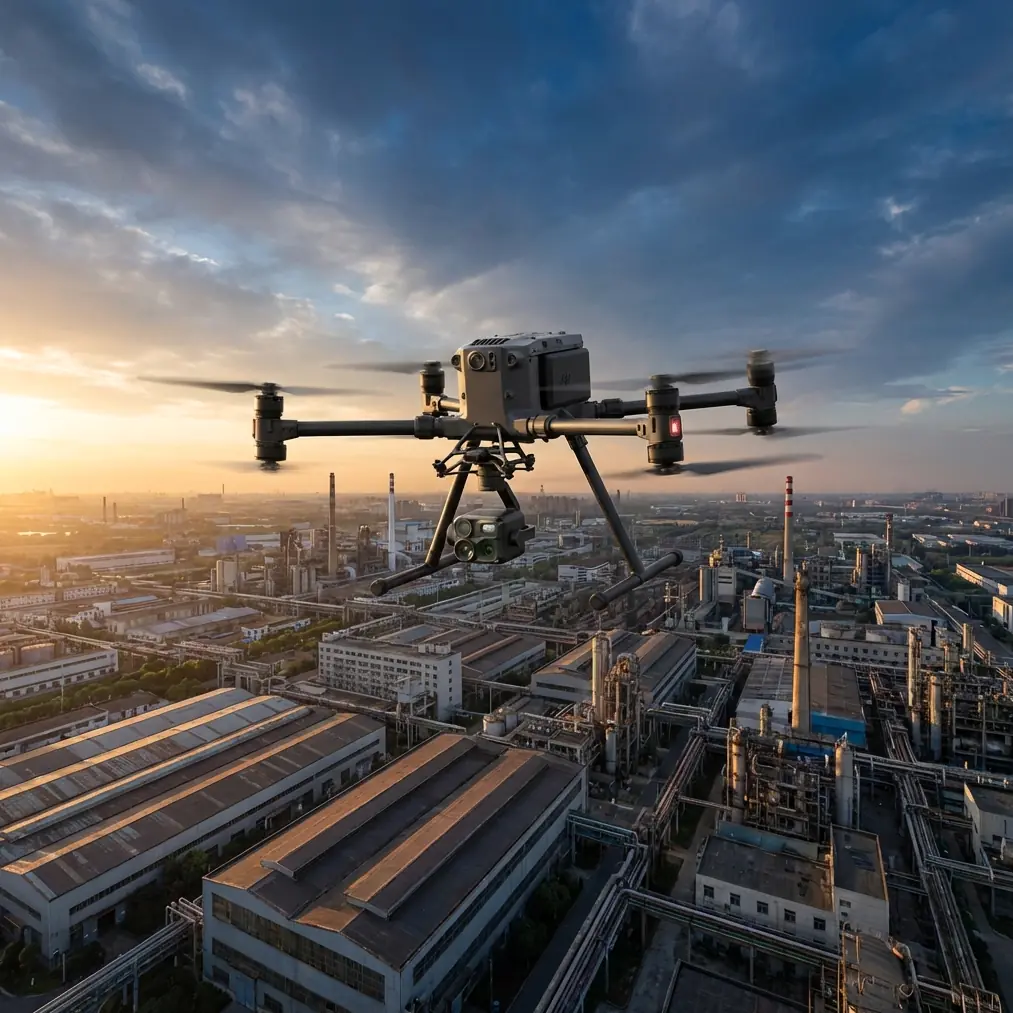
Matrice 4 in Windy Venue Tracking: The Altitude, Fastener, and Maintenance Logic Most Pilots Skip
META: Expert Matrice 4 tracking guide for windy venues, with practical altitude strategy, structural load insight, and maintenance planning for safer, cleaner civilian operations.
Wind changes everything in venue tracking.
A Matrice 4 can hold a line, keep a subject framed, and deliver stable data in conditions that would ruin a lighter platform’s output. But windy-site performance is not only a flight-control question. It is also a structural question and a maintenance question. That matters if you are documenting a stadium exterior, monitoring temporary event infrastructure, inspecting roof installations around a large venue, or following moving assets across an open commercial site where gusts roll through corridors between buildings.
The mistake I see most often is simple: pilots treat wind as a pure stick-and-gimbal problem. In reality, windy tracking quality depends on three layers working together:
- flight profile,
- mechanical load path,
- maintenance verification.
That framework may sound more like aircraft engineering than drone operations. Good. It should.
I want to build this around one practical issue from the field: what is the best flight altitude for Matrice 4 when tracking activity around a windy venue?
There is no single magic number, but there is a right way to choose it. And the answer becomes clearer when you look at two engineering ideas pulled from classic aircraft design references: how bolted joints behave under external load, and how maintainability should be verified through representative sampling rather than guesswork.
Why windy venues are uniquely difficult for Matrice 4 tracking
Venue environments create messy air.
An open stadium bowl, grandstand edges, roof overhangs, lighting structures, temporary truss, nearby towers, and service roads all disturb airflow. Even when regional wind speed looks manageable, local turbulence can be much worse. The aircraft may not be fighting a constant headwind. It may be hit by lifting flow near façades, descending wash off rooflines, and lateral gusts in open pedestrian zones.
That changes your tracking altitude decision.
Fly too low, and the aircraft enters the most chaotic mechanical turbulence generated by barriers, parked vehicles, fencing, and crowd-control structures. Fly too high, and you may lose the angle, pixel density, or thermal signature separation needed to follow a subject or document activity cleanly. If your purpose includes photogrammetry, a poor altitude choice also affects overlap geometry, ground sampling consistency, and the usefulness of any GCP workflow.
So the altitude question is not “how high can I go?” It is “where is the least turbulent air that still gives me the data I need?”
That is where Matrice 4 planning needs to become more deliberate.
My practical altitude rule for venue tracking in wind
For windy venue tracking, the best starting altitude is usually above the strongest obstacle-driven turbulence but below the point where subject detail collapses.
In plain terms: do not hug the venue unless your task absolutely requires it.
For most civilian tracking jobs around venues, I recommend beginning with a scouting pass that tests three bands:
- a low band just above surrounding structures,
- a mid band that clears the highest major roofline by a safe margin,
- a higher band used only if air becomes smoother and image requirements still hold.
The operational sweet spot is often the mid band, because it gets the aircraft out of the most aggressive recirculating air while preserving enough subject scale for visual tracking, thermal signature interpretation, or scene reconstruction.
Why this works is easy to see in logs. At very low altitude near structural edges, the drone is constantly correcting. Yaw and lateral compensation increase. Framing becomes less consistent. Battery draw rises. Even if the aircraft remains fully controllable, your output quality degrades. Once you climb above the obstacle layer, the air often becomes more predictable. Not calm. Just cleaner.
If you are using the Matrice 4 to track movement across a venue perimeter, service route, or roof work zone, that cleaner air often produces better footage than flying lower and fighting turbulence every second.
Short version: in wind, fly for air quality first, framing second, and only then convenience.
What aircraft structural design teaches us about windy drone operations
This is where the first reference becomes useful.
The structural design material explains that in a preloaded bolted joint, adding an external load does not mean the bolt immediately takes the entire load increase. Part of the change appears as bolt load growth, while part of the original clamping force is relieved. Only when separation occurs does the bolt effectively carry the full applied load. The reference also notes that bolt-load calculations may include an added safety factor of 1.25, with some calculation principles using 1.15, and then another uncertainty factor of 1.1.
For Matrice 4 operators, this is not a cue to start doing airframe redesign. It is a reminder about how real structures behave under repeated gust loading.
A windy venue mission creates constant load cycling. Gimbal mounts, landing gear attachment points, payload brackets, and any field-installed accessories are exposed to alternating forces, not just static weight. The significance of the bolted-joint principle is this: structural security depends on preserving clamp integrity, not merely on whether the part “feels tight” during a quick preflight.
The same source also points out that practical preload must account for stress relaxation during service and relaxation caused by environmental temperature changes. That matters more than many drone teams realize. A Matrice 4 that moves between an air-conditioned vehicle, a hot rooftop, and a windy exterior environment experiences thermal shifts that can subtly alter joint behavior over time.
Operational significance:
- If you fly repeated windy missions, inspect any payload mounting interfaces and accessory fasteners on a schedule, not casually.
- If you swap payloads frequently, do not assume yesterday’s torque condition equals today’s.
- If your aircraft shows micro-vibration in imagery or small tracking instabilities that are not explained by wind alone, look for mounting relaxation before blaming software.
This matters for image quality as much as for hardware life. A tiny loss of joint stiffness can show up first as soft detail, drift in gimbal behavior, or inconsistent data alignment in photogrammetry.
That is one reason I advise teams doing recurring venue work to compare outputs, not just aircraft warnings. The airframe may still fly normally while the data quietly gets worse.
The maintenance principle that windy tracking teams should borrow from avionics programs
The second reference comes from avionics maintainability verification, and it offers a surprisingly relevant lesson.
It states that maintenance task samples should be allocated based on the complexity, reliability, and probability of verification error across subsystems, equipment, and LRUs. It also says that if enough maintenance events occur naturally during the verification period to meet the minimum sample requirement, you should use natural faults rather than forcing simulated ones. When fixed sample verification is used, proportional stratified sampling is recommended.
This is excellent discipline for Matrice 4 fleet management.
Most drone teams say they maintain by checklist. Fewer maintain by evidence.
If your Matrice 4 regularly works windy venues, you should not treat all post-flight checks as equal. Some areas deserve more attention because they carry more risk, more complexity, or more opportunity for hidden degradation. That is essentially the same logic as proportional stratified sampling in the avionics reference.
For example, on a windy tracking program, your maintenance sampling priority should skew toward:
- gimbal and payload interfaces,
- prop and motor condition trends,
- landing gear and folding-arm attachment areas,
- battery connector condition, especially with hot-swap battery workflows,
- transmission integrity if you are working at distance with O3 transmission,
- thermal payload calibration consistency if thermal signature interpretation is part of the mission.
Operational significance:
- Do not distribute inspection effort evenly just because that feels fair.
- Put more verification time where complexity and consequence are higher.
- Use naturally occurring faults and anomalies from actual windy missions as your best maintenance intelligence.
That last point is especially important. If a venue project has already produced enough real-world events—unexpected vibration, transmission interruptions, thermal drift, abnormal battery imbalance, or repeated tracking hiccups—those are more valuable than artificial bench scenarios. They reflect the environment you actually fly in.
In other words, the best Matrice 4 maintenance plan for windy tracking is not generic. It is weighted by mission stress.
How I would fly a Matrice 4 at a windy venue
Here is the workflow I recommend to commercial teams.
1. Start with a wind map, not a launch point
Study the site shape first. Roof edges, open corners, loading bays, stage structures, and façade gaps all create different air behavior. The launch point matters less than the airflow path over the venue.
If possible, take an initial high observation orbit outside the most disturbed area. Use that to identify where the aircraft experiences the fewest abrupt corrections.
2. Test altitude in layers
Do not commit to your working altitude before you sample the air.
Run short tracking segments at three elevations. Watch for:
- lateral correction frequency,
- heading stability,
- gimbal smoothness,
- power draw,
- transmission margin,
- thermal contrast retention if using thermal signature analysis.
In many venue scenarios, the best altitude is the lowest height where those corrections noticeably settle down.
3. Protect your image geometry
If the mission includes mapping or photogrammetry, windy compensation can distort capture consistency. A smoother altitude band usually produces more reliable overlap and less variable image angle. That directly helps model quality and reduces rework, especially if your deliverable has to tie back to GCP-marked control.
Pilots sometimes chase detail by flying lower. Then they lose consistency and have to refly. The smarter move is often to climb slightly, get cleaner passes, and preserve usable geometry.
4. Use thermal intelligently
Wind can either help or hurt thermal interpretation. A subject with a distinct thermal signature may stand out better in some situations, but convective cooling and changing viewing angle can also flatten useful contrast. Stable altitude helps because it gives you a consistent observation geometry.
If your mission combines visual and thermal tracking, pick the altitude that supports the weaker sensor mode. Usually that means not so high that thermal detail becomes ambiguous.
5. Respect transmission margins
Windy venues often involve partial obstruction, reflective surfaces, and longer stand-off positioning. O3 transmission performance is strong, but strong systems still benefit from clean geometry. A slightly higher altitude can improve link reliability by reducing multipath and obstruction. That may be enough to justify giving up a little subject magnification.
6. Build maintenance data from the mission, not after the season
After each windy operation, log which altitude band produced the best control stability and which hardware areas showed the most wear or anomalies. Over time, this becomes your own maintainability dataset.
If your team wants a structured workflow for this kind of mission planning, I usually suggest setting up a simple field debrief template first; if you need a practical version, you can message Dr. Lisa Wang’s team here.
A note on secure and long-duration operations
Two other factors often shape windy venue work: endurance and data protection.
If you are using hot-swap batteries, treat battery changes as a continuity tool, not an excuse to push marginal conditions. In wind, battery reserve disappears faster than many teams expect because the aircraft spends more time correcting. Build extra margin into every tracking leg.
On the data side, if your operation handles sensitive commercial venue documentation—construction staging, utility routing, private event infrastructure, or restricted facilities—AES-256-secured workflows are worth prioritizing. Not because cybersecurity is fashionable, but because venue operators increasingly expect controlled handling of aerial data.
What most pilots get wrong about “best altitude”
They think it is a fixed specification.
It is not.
The best altitude for a Matrice 4 tracking mission in wind is the altitude that balances five things at once:
- least turbulent air,
- enough subject detail,
- stable transmission,
- acceptable battery consumption,
- dependable data quality for the actual deliverable.
That answer changes with venue shape, wind direction, payload, and task type.
Still, the engineering principles behind the choice are stable. Structural load paths matter. Joint preload integrity matters. Sampling your maintenance effort where complexity and error risk are highest matters. These are not abstract textbook ideas. They are exactly the kind of discipline that separates a smooth drone program from one that slowly accumulates quality problems.
For Matrice 4 teams, that is the real takeaway.
When venue tracking gets windy, the winning move is rarely “fly lower and try harder.” More often, it is “climb into cleaner air, preserve the aircraft mechanically, and verify what the mission is teaching you.”
That is how you get usable outputs instead of merely surviving the flight.
Ready for your own Matrice 4? Contact our team for expert consultation.