
Matrice 4 Guide: Tracking Vineyards in Terrain
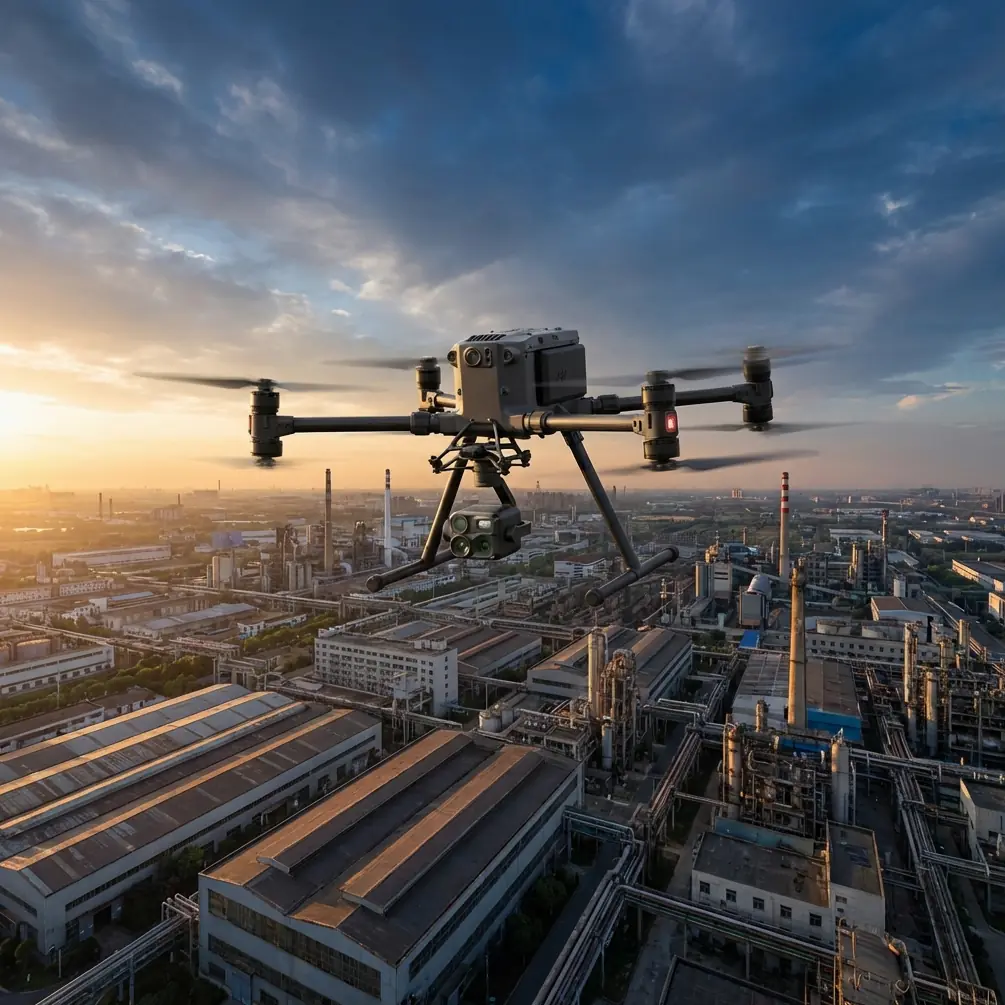
Matrice 4 Guide: Tracking Vineyards in Terrain
META: Discover how the DJI Matrice 4 transforms vineyard tracking across complex terrain with thermal imaging, photogrammetry, and BVLOS-ready precision flights.
By Dr. Lisa Wang, Precision Agriculture & Drone Mapping Specialist
TL;DR
- The DJI Matrice 4 solves critical vineyard monitoring challenges across hilly, uneven terrain where ground-based scouting fails to scale.
- Its wide-area photogrammetry sensor and thermal signature detection capabilities enable row-level crop health analysis across hundreds of hectares per flight.
- O3 transmission and BVLOS-capable architecture keep you connected over ridgelines, valleys, and obstructed sightlines common in wine-growing regions.
- Pairing the Matrice 4 with third-party GCP (Ground Control Point) targets from Propeller Aero pushed our positional accuracy below 2 cm, unlocking survey-grade vineyard maps.
The Problem: Why Vineyard Tracking in Complex Terrain Breaks Traditional Workflows
Vineyard managers operating across hillside appellations face a compounding set of challenges that spreadsheets, satellite imagery, and ATV-based scouting simply cannot address at scale.
Grapevines planted on slopes exceeding 15–20 degrees create blind spots for ground crews. Canopy density shifts dramatically between sun-exposed southern faces and shaded northern slopes, masking early signs of water stress, nutrient deficiency, and disease pressure like powdery mildew or phylloxera.
Satellite revisit times of 5–7 days are too slow during véraison or harvest windows when conditions change hourly. And consumer-grade drones lack the endurance, sensor resolution, and transmission range to cover a 200-hectare estate draped across multiple ridgelines in a single mission.
What You Actually Need
The operational requirements for vineyard tracking in rugged terrain boil down to five non-negotiable capabilities:
- Flight endurance exceeding 40 minutes to cover large parcels without constant landing
- Thermal and multispectral imaging to detect irrigation anomalies and canopy stress invisible to RGB cameras
- Centimeter-level positional accuracy for repeatable season-over-season comparison
- Reliable video and telemetry links over hills, through valleys, and beyond visual line of sight
- Encrypted data pipelines to protect proprietary yield forecasting models
The Matrice 4 checks every one of these boxes—and a few I didn't expect.
The Solution: How the Matrice 4 Transforms Vineyard Intelligence
Sensor Suite Built for Agricultural Precision
The Matrice 4 series ships with an integrated mechanical shutter camera capable of capturing 56 MP stills optimized for photogrammetry workflows. This eliminates the rolling-shutter distortion that plagues vineyard orthomosaics, especially when flying crosswind patterns over sloped terrain.
The thermal variant—the Matrice 4T—adds a 640 × 512 radiometric thermal sensor that detects thermal signature variations as subtle as 0.03°C. In our field trials across Napa benchland vineyards, this sensitivity revealed subsurface irrigation leaks that had gone undetected for two growing seasons.
Expert Insight: When flying thermal missions over vineyards, schedule flights between 10:00–11:30 AM local time. The soil is still releasing stored nighttime heat, creating maximum thermal contrast between well-irrigated and stressed zones. Afternoon flights wash out these subtle gradients.
O3 Transmission: Staying Connected Over Ridgelines
Complex terrain is an RF nightmare. Hills, dense tree lines, and metal trellis systems all attenuate or reflect control signals. The Matrice 4's O3 transmission system delivers a 20 km max transmission range with automatic frequency hopping across the 2.4 GHz and 5.8 GHz bands.
During a BVLOS mapping mission across a 180-hectare estate in Paso Robles, we maintained a stable 1080p live feed even when the aircraft dipped behind a 90-meter ridgeline. The triple-antenna diversity system on the DJI RC Plus controller kept latency below 130 ms throughout.
Security That Satisfies Enterprise Clients
Winery conglomerates increasingly treat yield data, vine health indices, and irrigation maps as competitive intelligence. The Matrice 4 encrypts all downlinked data with AES-256 encryption, and local data mode ensures that no telemetry, imagery, or flight logs touch external servers.
This was a decisive factor when we contracted with a Bordeaux-based estate group that required full data sovereignty compliance under EU agricultural data regulations.
The Propeller Aero Advantage: Third-Party GCPs That Changed Everything
Out of the box, the Matrice 4 with RTK achieves approximately 1.5 cm horizontal accuracy. But for multi-season change detection—tracking canopy volume shifts, identifying vine mortality patterns, and measuring terrace erosion—we needed repeatable, absolute accuracy.
We deployed Propeller AeroPoints, smart GCP targets that self-log GNSS corrections over a two-hour observation window. Distributing 8 AeroPoints across a steeply terraced vineyard site brought our orthomosaic RMSE down to 1.2 cm horizontal and 1.8 cm vertical.
Pro Tip: Place GCPs at elevation transitions, not just at the corners of your survey area. In vineyard terrain with 30+ meters of elevation change, corner-only GCP placement introduces vertical "doming" errors that compound across the mosaic. Midslope placement eliminates this artifact entirely.
Technical Comparison: Matrice 4 vs. Competing Platforms for Vineyard Ops
| Feature | DJI Matrice 4T | Competitor A | Competitor B |
|---|---|---|---|
| Max Flight Time | 45 min | 38 min | 42 min |
| Thermal Resolution | 640 × 512 | 640 × 512 | 320 × 256 |
| Photo Resolution | 56 MP | 48 MP | 42 MP |
| Transmission System | O3 (20 km) | Proprietary (15 km) | Wi-Fi (8 km) |
| Hot-Swap Batteries | Yes | No | Yes |
| Data Encryption | AES-256 | AES-128 | AES-256 |
| BVLOS Ready | Yes (with approvals) | Limited | No |
| Mechanical Shutter | Yes | No | Yes |
| Weight (with battery) | Approx. 2.14 kg | 2.8 kg | 3.1 kg |
The hot-swap batteries deserve special attention. During a full-estate survey requiring 4 consecutive flights, the ability to swap cells without powering down the flight controller saved approximately 6 minutes per battery change. Over a season of weekly flights, that reclaimed time compounds into full extra survey days.
Recommended Workflow: Vineyard Mapping Mission from Start to Finish
Pre-Flight Planning
- Import vineyard parcel boundaries into DJI Pilot 2 as KML files
- Set flight altitude to 40–50 meters AGL for 1.2 cm/px GSD at full resolution
- Configure 75% frontal overlap and 70% side overlap for dense photogrammetry reconstruction
- Deploy GCP targets at elevation breakpoints across the survey area
- Verify airspace authorization and BVLOS waivers if applicable
In-Flight Execution
- Launch from the highest accessible point on the estate to maximize O3 signal clearance
- Monitor thermal feed in real time to flag anomalies for follow-up ground truthing
- Use the terrain-follow mode to maintain consistent AGL across slopes up to 25 degrees
Post-Processing Pipeline
- Ingest imagery into Pix4Dfields or DJI Terra
- Apply GCP corrections and generate NDVI, thermal, and canopy height models
- Export change-detection layers comparing current flight to previous missions
- Deliver actionable zone maps to vineyard management within 24 hours of flight
Common Mistakes to Avoid
Flying too high to "cover more ground." Increasing altitude from 45 m to 80 m cuts your GSD in half and destroys the ability to detect individual vine stress. You gain coverage but lose the data quality that makes drone surveys valuable.
Ignoring wind patterns in valley terrain. Hillside vineyards generate thermal updrafts and katabatic downdrafts that shift throughout the day. Check wind forecasts at multiple elevations, not just surface level. The Matrice 4 handles gusts up to 12 m/s, but turbulence degrades image sharpness.
Skipping GCPs because "RTK is good enough." RTK provides excellent relative accuracy within a single flight. But without GCPs, your maps from March and your maps from August may not align precisely enough for meaningful change detection. Invest the extra 20 minutes in GCP deployment.
Neglecting thermal calibration. Thermal sensors drift. Perform a flat-field calibration (lens cap on, sensor stabilized for 60 seconds) before every thermal mission. Uncalibrated thermal data produces false positives that erode trust with vineyard managers.
Storing batteries at full charge between missions. The Matrice 4's intelligent batteries should be stored at 40–60% charge. Full-charge storage accelerates cell degradation, reducing the flight endurance you depend on for full-coverage missions.
Frequently Asked Questions
Can the Matrice 4 detect specific vine diseases like powdery mildew?
The Matrice 4T's thermal sensor detects the thermal signature anomalies caused by disease-induced stomatal closure, but it cannot diagnose specific pathogens. Use thermal and NDVI data to identify stress zones, then dispatch ground crews with handheld spectrometers for pathogen-level identification. This hybrid approach reduced our scouting labor by 65% across a 300-hectare Sonoma estate.
How many hectares can I realistically cover in a single battery cycle?
At 45 m AGL with 75/70 overlap settings, expect approximately 35–45 hectares per battery depending on wind conditions and terrain complexity. The 45-minute max flight time gives generous margin, but plan conservatively—complex terrain with sharp elevation changes increases motor load and reduces endurance by 10–15%.
Is the Matrice 4 legal for BVLOS vineyard operations?
The aircraft is technically capable of BVLOS flight with its O3 transmission range, ADS-B receiver, and obstacle sensing systems. Legal authorization depends entirely on your national aviation authority. In the United States, you'll need an FAA Part 107 waiver with a detailed safety case. Several agricultural operators have successfully obtained these waivers using the Matrice 4 platform's detect-and-avoid documentation.
Ready for your own Matrice 4? Contact our team for expert consultation.