
Matrice 4 in the Vineyard: A Specialist’s Field Approach
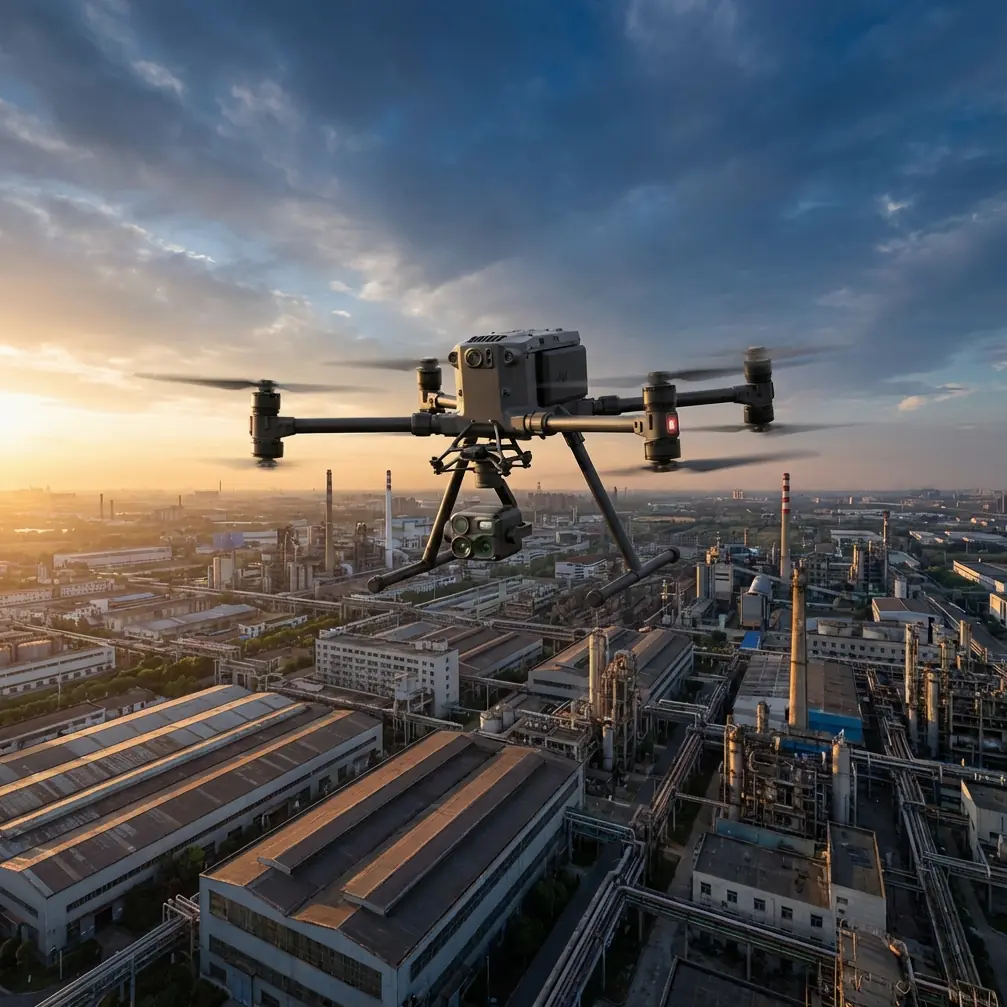
Matrice 4 in the Vineyard: A Specialist’s Field Approach to Extreme-Temperature Monitoring
META: Expert guide to using Matrice 4 for vineyard tracking in extreme heat and cold, with thermal workflows, photogrammetry, GCP planning, O3 transmission, and sensor-based field tactics.
Vineyards rarely fail all at once. They drift off target row by row, block by block, often under weather conditions that make ground scouting slower, less consistent, and occasionally misleading. Extreme heat can mask water stress until canopy damage is obvious. A cold snap can leave patchy injury that looks minor from the headland and severe once yield is already compromised. For operators tracking vine performance in those conditions, the drone is not there to provide pretty maps. It is there to shorten the time between symptom and decision.
That is where the Matrice 4 becomes interesting in practical viticulture.
I approach this platform less as a headline aircraft and more as a field instrument. In vineyards, especially when temperature swings are aggressive, what matters is not one spectacular sensor spec in isolation. It is the way the aircraft holds link integrity over long rows, how fast crews can turn batteries, whether thermal signatures can be trusted at the right hour, and how accurately imagery can be aligned with known ground control points so the same weak zone can be revisited without guesswork.
The problem is straightforward. Vineyard managers need reliable crop intelligence when the environment is least forgiving. The solution is a disciplined Matrice 4 workflow built around thermal detection, photogrammetry, repeatability, and safe remote operations.
Why extreme temperatures distort vineyard scouting
Heat and cold both create interpretation problems.
During hot periods, leaf temperature can rise for several reasons at once: water deficit, shallow rooting, compaction, irrigation irregularity, disease pressure, or simply exposure differences between rows. A scout on foot may notice curling leaves or color change, but by that point the stress response is already visible. Thermal signature analysis can surface weaker blocks earlier, before visual symptoms become uniform enough to flatten the diagnosis.
Cold conditions create a different trap. Frost injury often appears uneven, especially in rolling terrain where low spots hold dense air. One corner of a vineyard can look normal from a utility track while interior rows carry subtle tissue damage that will later affect vigor and fruit set. In these cases, the aircraft’s value lies in pattern recognition across the entire block, not just point observation.
With the Matrice 4, the operational gain comes from combining thermal sensing with structured mapping passes. Thermal flags the anomalies. Photogrammetry gives those anomalies spatial discipline. Together, they let a grower compare one flight against the next and ask a more useful question: is this problem spreading, stabilizing, or moving?
The Matrice 4 advantage is not just sensing, but continuity
A vineyard mission in extreme weather is often limited by continuity rather than ambition. The crew has a narrow environmental window, a large area to cover, and little tolerance for downtime.
Hot-swap batteries matter here more than most marketing copy admits. When crews can replace packs without shutting down the workflow, they preserve timing around critical thermal collection windows. That is operationally significant because thermal data quality changes fast as the sun angle shifts and canopy surfaces heat unevenly. If your aircraft sits idle during battery turnover, your comparison between one section and the next becomes less clean. A hot-swap design helps keep the dataset temporally consistent.
The same logic applies in cold weather. Battery performance is always a planning variable when temperatures drop, and efficient field handling reduces exposure time for both equipment and crew. In vineyard work, especially across distant blocks, shaving downtime is not a luxury. It is often the difference between finishing the block before conditions change and having to refly under a new thermal profile.
Then there is link performance. O3 transmission is not just a convenience when working long agricultural corridors. Vineyards present line-of-sight complications from terrain undulations, shelterbelts, utility structures, and the sheer geometry of extended row systems. A stable transmission link allows the pilot to maintain confidence while preserving image and telemetry continuity. For teams planning future BVLOS operations where regulations permit, that communications backbone becomes even more relevant. It is hard to build a serious remote-inspection program around an aircraft that performs well only when it stays visually close and operationally conservative.
Thermal signature is powerful, but only if you respect timing
One mistake I see repeatedly is treating thermal imagery as objective truth regardless of collection time. It is not. It is sensitive evidence.
In vineyards exposed to extreme temperatures, thermal signature mapping with the Matrice 4 works best when flights are planned around a clear diagnostic question. Are you trying to detect irrigation lag under heat stress? Verify frost recovery after dawn? Separate weak vine rows from healthy canopy before symptoms become visually obvious? Each of those objectives favors a slightly different window.
For midday heat tracking, thermal anomalies may reveal which zones are failing to regulate moisture effectively, but high ambient temperatures can also compress contrast if everything is already running hot. In early post-sunrise cold assessments, the operator may catch residual temperature differences tied to frost injury before the vineyard equalizes. In both cases, the aircraft is collecting clues, not verdicts.
That is why I recommend pairing thermal passes with visible-light photogrammetry in the same mission cycle whenever practical. The thermal layer identifies suspect rows or patches. The mapped visual layer provides context: missing canopy density, drainage patterns, wheel-track compaction, trellis irregularities, or changes along irrigation lines. Once the two are aligned, the grower gets something closer to an agronomic argument than a vague hotspot map.
Photogrammetry and GCPs turn flights into repeatable evidence
A single map is useful. A repeatable map series is far more valuable.
Photogrammetry gives the Matrice 4 a second role in vineyard work: not just detection, but measurement over time. If you are monitoring the same blocks through heatwaves or following recovery after a freeze event, you need your imagery to line up from mission to mission with minimal ambiguity. That is where GCP strategy matters.
Ground control points are not glamorous, but they are one of the most practical ways to improve consistency in agricultural mapping. In vineyards, GCPs help anchor outputs so that a stressed patch identified this week can be compared precisely with the same location next week, even if the aircraft launches from a different edge of the property or if flight geometry shifts slightly due to wind.
Operationally, that means fewer false narratives. Without sound spatial control, teams sometimes mistake alignment drift for crop change. With proper GCP placement and disciplined mission planning, the Matrice 4 can generate photogrammetric outputs that support meaningful comparisons between canopy development stages, irrigation interventions, and temperature-related damage.
This becomes especially useful on sloped vineyard parcels. Terrain variation influences both microclimate and map accuracy. A vineyard manager looking at a stitched image without reliable control may see uneven vigor, but not know whether that pattern is truly changing or simply being represented differently each time. A controlled workflow cuts through that uncertainty.
A real sensor story: the fox in the western rows
Wildlife does not show up in most equipment brochures, yet it often shapes the safest and smartest way to fly over vineyards.
On one cold-morning survey, a thermal sweep over a western block showed a moving heat source cutting across two rows just as the aircraft prepared to begin a lower-altitude verification pass. It turned out to be a fox moving along the cover-crop strip, likely hunting rodents after the night chill. The visible feed alone would have made the movement easy to miss against mixed ground texture. The thermal signature picked it up immediately.
That matters for two reasons. First, it prevented the crew from descending unnecessarily into an active wildlife corridor. Second, it reminded the grower that the area’s temperature pattern was influencing more than vines. Predators, pests, and habitat edges can all help explain localized canopy stress, especially where burrowing activity or uneven ground moisture is involved.
This is one of the underappreciated strengths of a sensor-rich aircraft in agriculture. The drone does not only detect crop symptoms. It can expose the environmental interactions behind them.
Security and data handling matter more than many growers expect
Vineyard monitoring increasingly intersects with proprietary farming data: block performance, irrigation behavior, seasonal problem zones, and operational maps that can reveal a great deal about farm strategy. For that reason, AES-256 is not a trivial checkbox. Strong encryption has operational significance when flight data, imagery, and transmitted information are part of a professional crop-monitoring program rather than an occasional hobby survey.
The same is true when multiple stakeholders are involved. Consultants, farm managers, winemaking teams, and remote analysts often need access to outputs, but not necessarily unrestricted exposure to all underlying data flows. If the Matrice 4 is being integrated into a larger precision-ag workflow, secure transmission and disciplined data management help protect information that carries both competitive and logistical value.
This becomes even more important as operators look toward BVLOS frameworks and larger estate monitoring programs. Expanding the scale of drone operations without hardening data practices is a weak trade. Range and efficiency only become true assets when the information stream remains trustworthy and controlled.
A practical problem-solution workflow for vineyard teams
If the central problem is detecting vineyard stress in extreme temperatures before it becomes expensive, the solution is not simply “fly more.” It is to fly with purpose.
A sound Matrice 4 workflow for this scenario looks like this:
Start with a thermal reconnaissance pass timed to the environmental question at hand. In heat, that may mean identifying rows that warm faster than adjacent sections under the same sun exposure. In cold, it may mean checking low-lying blocks soon after first light for residual frost impact.
Follow that with a photogrammetry mission over the flagged areas, using preplanned overlap and consistent altitude. If the site is one you will revisit regularly, establish GCPs early and keep them in a documented control scheme. This makes later comparisons far more defensible.
Use O3 transmission capability to maintain a stable operational link across long row systems, but do not confuse robust connectivity with permission to overextend. Where BVLOS is part of the roadmap, build toward it under the relevant legal structure and with a risk model that reflects terrain, people, roads, and wildlife movement.
Keep battery transitions tight. Hot-swap procedures are not just about speed; they preserve environmental consistency in the dataset. In extreme temperatures, even a short delay can alter the thermal story enough to muddy interpretation.
Finally, review anomalies against vineyard context. A warm patch may be irrigation stress. It may also be shallow soils, broken emitters, compaction, animal disturbance, or edge effects from a windbreak. The drone narrows the search. It does not replace agronomic judgment.
Where the Matrice 4 fits in a serious vineyard program
The Matrice 4 makes the most sense when vineyards stop thinking of drone flights as one-off inspections and start treating them as part of a repeatable evidence system. That means sensor planning, field timing, spatial control, secure handling of data, and mission design suited to the property’s real constraints.
For teams dealing with brutal summer canopies or sharp overnight cold events, the aircraft’s value is not theoretical. It lies in being able to identify stress earlier, revisit the exact same zone with confidence, and maintain operations across long parcels with fewer interruptions. Details such as hot-swap batteries, O3 transmission, thermal capability, GCP-supported mapping, and AES-256 security are not isolated feature bullets in this context. They form a chain. Break one weak link in that chain and the usefulness of the entire mission drops.
If you are designing a monitoring program around the Matrice 4 and want to compare workflows for mixed thermal and mapping operations, you can message the field team directly through this quick vineyard operations channel: https://wa.me/example
In vineyard management, the best drone data is the kind that changes what happens on the ground that same day. That may mean sending irrigation crews to one stressed block instead of three. It may mean confirming that frost damage stayed confined to a low basin. It may mean postponing a misleading visual assessment until thermal and photogrammetric evidence are aligned.
Under extreme temperatures, those distinctions are not academic. They affect labor, treatment timing, and ultimately fruit quality. Used properly, the Matrice 4 does not simplify vineyard complexity. It makes that complexity legible.
Ready for your own Matrice 4? Contact our team for expert consultation.