
Matrice 4 for Dusty Vineyard Tracking: A Field Tutorial
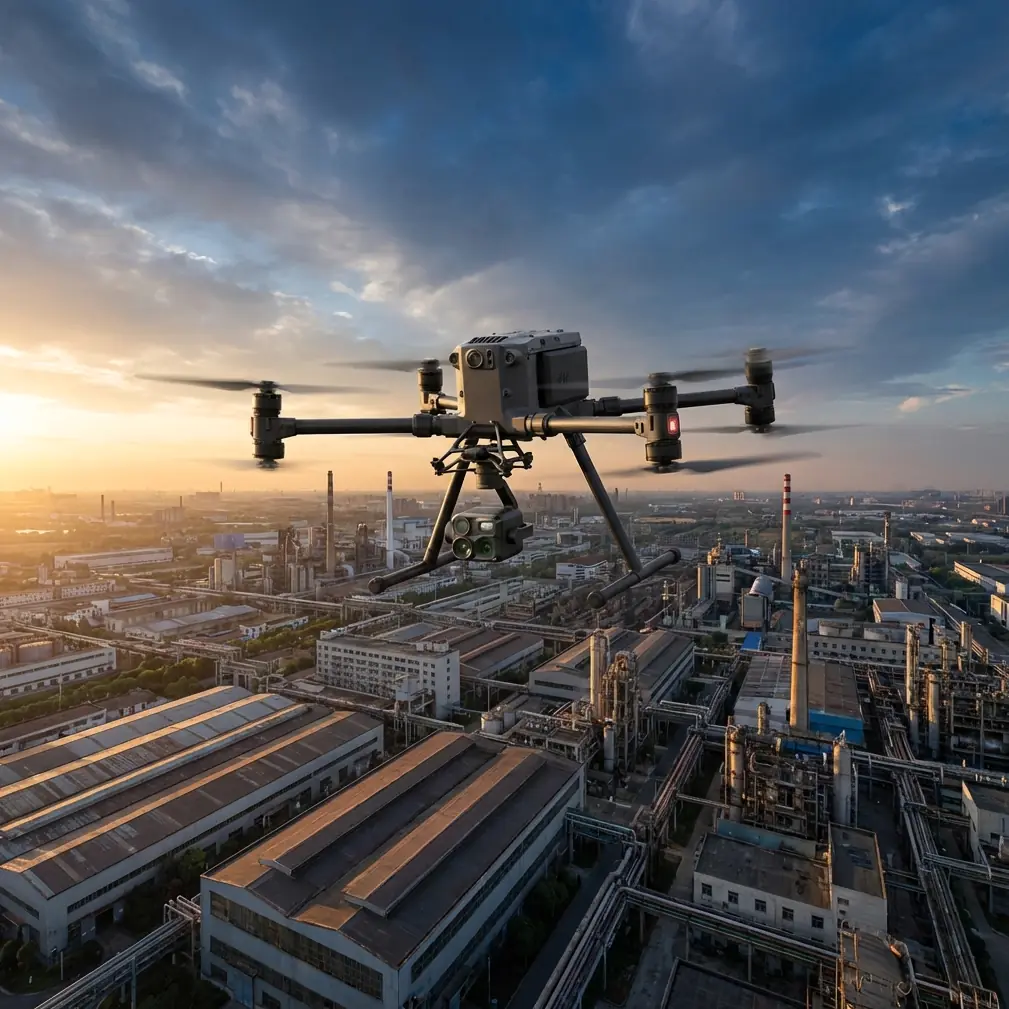
Matrice 4 for Dusty Vineyard Tracking: A Field Tutorial from an Operator’s Perspective
META: Expert tutorial on using Matrice 4 for vineyard tracking in dusty conditions, with practical workflow advice tied to aircraft design, power transmission reliability, thermal signature use, photogrammetry, and safer long-day operations.
A vineyard looks orderly from the road. Straight rows, controlled spacing, tidy edges. From the air, especially in dry season, it tells a different story. Dust hangs low over service tracks. Heat pools between rows. Small elevation changes distort what seemed obvious on foot. And when you are trying to track vine stress, irrigation irregularities, missing plants, or row-to-row variability, the aircraft matters as much as the sensor.
I learned that the hard way on a site where the conditions were deceptively simple: dry soil, repetitive terrain, long rows, and a client who wanted repeatable data every week. The challenge was not getting a drone into the air. The challenge was getting stable, usable results after hours of operation in dirty, heat-loaded conditions where downtime compounds fast.
That is where a platform like the Matrice 4 starts to make sense—not as a buzzword machine, but as a working tool for people who need consistency.
This guide is built around one practical question: how do you use a Matrice 4 efficiently for vineyard tracking when dust, heat, and repetitive acreage are the real operational constraints?
Why vineyard tracking punishes weak aircraft decisions
Vineyard work exposes every shortcut in an airframe and workflow.
Dust gets into everything. Long linear missions push endurance planning. Repeated flights over the same blocks highlight even small inconsistencies in positioning, image overlap, or gimbal stability. If you are capturing thermal signature data for irrigation assessment one day and photogrammetry for canopy measurement the next, you need a platform that stays predictable across mission types.
That is why I pay attention not just to camera specifications, but to the older engineering truths behind aircraft reliability.
One of the reference design sources here discusses casting alloys used for aircraft structures, including materials such as ZL101 and ZL104, noting characteristics like good flow during casting, low tendency toward hot cracking, and suitability for structurally meaningful parts. One detail stands out: ZL104 is described as suitable for complex parts carrying relatively large loads, while ZL101 is noted for good castability and solid corrosion stability. On paper, that sounds far removed from a vineyard drone. In practice, it points to something field crews already understand: if the structural parts in a flying platform are designed around manufacturability, corrosion resistance, and load-bearing complexity, the aircraft tends to behave better after repeated use in rough environments.
Dusty vineyards are rough environments. Fine particulate exposure, repeated landing cycles, vehicle transport, thermal expansion, and frequent battery changes all add up. A drone used for agriculture and inspection work does not need abstract aerospace poetry. It needs structural confidence.
What that means for a Matrice 4 workflow
For vineyard tracking, I split the Matrice 4 role into three jobs:
- Baseline visual mapping
- Thermal pass for plant stress indicators
- Targeted reinspection of anomalies
That sounds straightforward. The trap is trying to do all three with one generic flight pattern.
Step 1: Build a repeatable photogrammetry baseline
When tracking vineyards over time, consistency beats novelty. Start with a photogrammetry grid that you can replicate block by block and week by week. Use GCPs where the grower needs measurable trend analysis rather than just visual review. The point of GCP deployment is not ceremony. It is to reduce drift in comparative models so that a canopy change is actually biological, not a processing artifact.
In dusty conditions, altitude discipline matters. Fly high enough to avoid rotor wash kicking up debris during low turns near row ends, but not so high that your ground sampling distance loses the detail needed for missing-vine detection or canopy gap interpretation.
The Matrice 4 becomes useful here because it supports a professional mission cadence rather than improvised flying. If you are covering a large estate, you do not want to land, cool down, rethink the mission, and restart every time a block changes orientation. You want mission planning that respects geometry and lets the aircraft do repetitive work reliably.
This is also where O3 transmission matters in a practical way. In vineyards with changing topography, tree lines, sheds, and utility corridors, transmission stability is not just about convenience. It helps preserve operator confidence during long linear legs and when repositioning between blocks. For teams working under stricter operational rules or planning future BVLOS pathways where permitted, link reliability and signal clarity become operational foundations, not luxury features.
Step 2: Use thermal signature data at the right time, not just because you can
Thermal imagery in vineyards is often misused. Operators launch in the middle of the day, produce dramatic color palettes, and call it crop intelligence. That is not enough.
Thermal signature work is strongest when aligned with a specific agronomic question. Are you looking for irrigation non-uniformity? Clogged emitters? Delayed canopy development? Stress concentration on a slope? If you do not define that first, the thermal layer becomes decorative.
In dusty vineyards, thermal can actually become more valuable because dry conditions often amplify temperature contrast. But there is a catch: hot air shimmer, dust scatter near roadways, and inconsistent sun angle can muddy interpretation. I usually run thermal passes in a narrower time window and compare them against the visual baseline rather than treating thermal as standalone truth.
The Matrice 4 is most effective when you treat its sensor suite as a decision stack. First map. Then isolate anomalies. Then revisit those areas with a tighter inspection profile.
That workflow saves time, reduces unnecessary battery consumption, and gives the grower something actionable instead of a folder full of dramatic screenshots.
Step 3: Plan around power and serviceability like a real operator
There is another reference source worth paying attention to because it addresses a problem every vineyard crew faces, even if the language comes from traditional aircraft engineering.
The power-system design reference explains that an accessory transmission arrangement can either be mounted directly or through a separate driven unit, and that the assembly should include the shaft body, protective housing, sealing devices, lubrication system, power input, and power output components. More importantly, it states that the unit should continue operating properly at 125% of rated rotational speed, and that the shaft should function under overload conditions including 12 g perpendicular to the shaft centerline for 3 seconds and 3 g along the shaft axis for 3 seconds.
You are not flying a vineyard drone through fighter-style attitudes, and you should not. But those numbers tell us something operationally relevant: robust power transmission design is about surviving abnormal loads, transient stress, and misalignment without immediate failure.
Translate that into drone operations and you get three very practical priorities:
- smooth, repeatable power delivery during long mapping runs
- resilience during repeated takeoff and landing cycles on rough farm access points
- serviceability when field maintenance matters more than showroom appearance
For Matrice 4 operators, that means respecting the machine like a system, not a gadget. Check motor cleanliness. Inspect arm joints and landing surfaces for dust accumulation. Watch for seal wear around vulnerable access points. Keep battery contacts clean. Rotate packs logically rather than randomly.
If your platform supports hot-swap batteries, use that capability intelligently. In vineyard work, hot-swap is not just about speed. It preserves mission continuity. You can keep your flight window aligned with light conditions instead of sacrificing consistency because you had to power down and rebuild the mission flow from scratch. On heat-sensitive or time-sensitive thermal passes, that matters more than people admit.
Dust changes preflight priorities
In clean environments, pilots often focus on route, battery percentage, and weather. In dusty vineyards, preflight should expand.
My short version:
- check optics before every launch, not just the first launch
- confirm vents and surfaces are free of fine dust buildup
- verify landing zone choice for minimum prop wash contamination
- review overlap settings with the actual row direction in mind
- confirm return behavior won’t bring the aircraft down into a dust plume near vehicles or roads
This is where the Matrice 4 can save frustration if the broader platform design supports independent access to key systems and efficient field handling. One useful point from the aircraft power-system reference is the idea that accessories and their lines should be arranged so each one can be removed independently, without first removing others. That philosophy matters in drone fleets too. Field-ready equipment should not punish crews for basic maintenance, cleaning, or module changes.
For commercial operators running multiple flights per day, maintainability directly affects usable output.
Turning raw imagery into vineyard decisions
Data capture is only half the job. Vineyard managers usually care about four outcomes:
- where the vines are underperforming
- whether irrigation is behaving evenly
- how block conditions are changing over time
- which anomalies deserve boots-on-ground follow-up
So after the Matrice 4 flight, process the dataset with those questions in mind.
For photogrammetry, create orthomosaics and elevation products that help distinguish canopy density shifts from terrain-driven visual effects. For thermal, generate a layer that can be compared block to block under similar timing conditions. Where possible, tie the outputs back to scouting observations. A thermal hotspot without context may be water stress, disease pressure, exposed soil, or simply row-end disturbance.
The best workflows do not promise magic. They reduce ambiguity.
Security and operational discipline still matter on farms
Agricultural operators sometimes underestimate data security because the setting feels informal. It should not. Vineyard maps, irrigation patterns, block performance trends, and asset locations can be commercially sensitive.
If your Matrice 4 workflow includes AES-256 protected data handling or transmission security, that is not a spec-sheet footnote. It matters when sharing datasets across consultants, farm managers, and processing teams. Security is part of professionalism, especially when repeated seasonal surveys become a strategic record of farm performance.
A practical mission template I would use
If I were setting up a dusty vineyard tracking program with a Matrice 4 today, I would structure it like this:
Phase A: Site setup
Establish GCPs for the blocks that require measurable trend analysis. Mark takeoff zones away from loose roadside dust if possible.
Phase B: Visual baseline
Run a repeatable photogrammetry mission over each block with row-aware overlap planning. Keep this standardized across survey dates.
Phase C: Thermal verification
Fly targeted thermal signature missions during the most meaningful time window for the crop question at hand, not simply when the aircraft is available.
Phase D: Exception review
Use zoom or closer inspection passes to investigate irregular areas identified in the first two datasets.
Phase E: Field correlation
Walk the anomalies with the grower or agronomist. Confirm whether the issue is irrigation, vigor, missing plants, disease expression, or terrain effect.
That sequence keeps the Matrice 4 working as a decision tool instead of an image-collection machine.
The difference between flying and delivering value
A lot of drone content treats aircraft choice as the whole story. It isn’t. The aircraft only proves itself when the workflow holds up under real conditions.
Dusty vineyards expose weak workflows fast. They reward structural reliability, stable transmission, disciplined battery handling, sensible thermal timing, and photogrammetry that can be repeated without drama.
That is why those seemingly distant aircraft-design references matter. A note about ZL104 being suitable for complex, heavily loaded cast parts speaks to durability logic. A requirement for a transmission system to remain functional at 125% rated speed and under short overload conditions speaks to the engineering mindset behind dependable power delivery. Neither fact is a marketing claim. Both point toward the same operational truth: aircraft that are built with margin and maintainability are easier to trust when the work is repetitive, dusty, and commercially important.
And trust is what you need in vineyards. Not flashy flights. Not speculative analytics. Trust that the next mission will match the last one closely enough to reveal what changed on the ground.
If you are designing or refining a vineyard workflow and want to compare notes on mission planning, thermal interpretation, or repeatable mapping setups, you can message me here.
Ready for your own Matrice 4? Contact our team for expert consultation.