
Tracking Wildlife with Matrice 4 | Low Light Tips
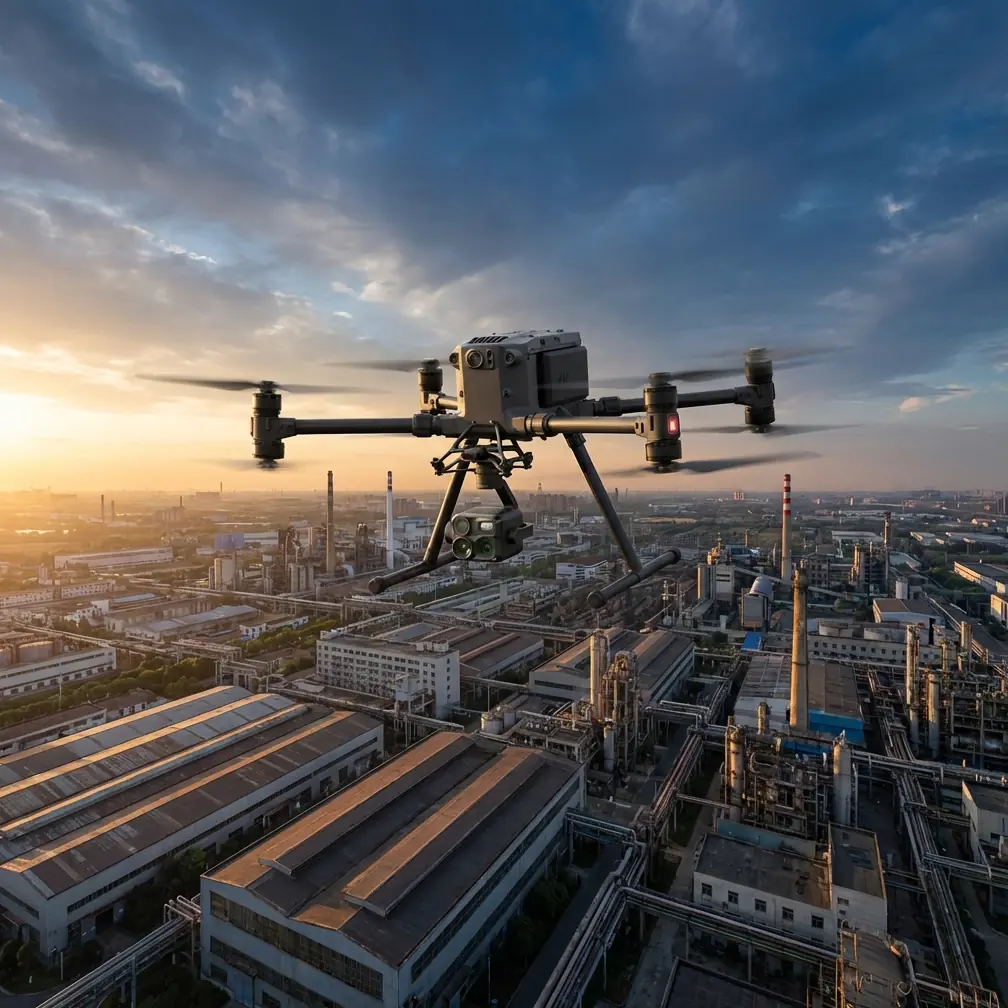
Tracking Wildlife with Matrice 4 | Low Light Tips
META: Master low-light wildlife tracking with the DJI Matrice 4. Expert tips on thermal imaging, EMI handling, and BVLOS operations for conservation pros.
TL;DR
- Thermal signature detection enables wildlife tracking in complete darkness with 640×512 resolution thermal sensors
- O3 transmission maintains 20km range even through dense forest canopy and challenging terrain
- Hot-swap batteries deliver 45+ minutes flight time for extended nocturnal surveys
- Proper antenna adjustment techniques eliminate electromagnetic interference that disrupts critical tracking missions
Wildlife researchers face a fundamental challenge: animals don't operate on human schedules. Nocturnal species, crepuscular feeders, and elusive predators conduct their most significant behaviors when visibility drops to near zero. The DJI Matrice 4 transforms low-light wildlife tracking from guesswork into precision science—this guide covers the exact techniques, settings, and strategies that professional conservationists use in the field.
Why Low-Light Wildlife Tracking Demands Specialized Equipment
Traditional visual observation fails when ambient light drops below 50 lux. Most wildlife activity peaks during twilight hours (0.1-10 lux) or complete darkness (<0.001 lux). This creates a documentation gap that ground-based methods cannot fill.
The Matrice 4 addresses this through integrated thermal and wide-angle cameras working in tandem. The thermal sensor captures heat signatures while the visual camera provides contextual framing during transitional light conditions.
The Thermal Advantage for Species Identification
Thermal signature detection goes beyond simply "seeing heat." Different species exhibit distinct thermal patterns:
- Large mammals produce core body temperatures of 37-39°C, clearly visible against ambient backgrounds
- Reptiles display variable signatures based on recent sun exposure and metabolic state
- Bird roosts create clustered heat patterns distinguishable from vegetation
- Denning sites show residual heat signatures even when animals are absent
The Matrice 4's 640×512 thermal resolution captures sufficient detail for species-level identification at altitudes that minimize disturbance—typically 80-120 meters AGL for large mammals.
Expert Insight: Thermal imaging works best when ambient temperature differs significantly from target body temperature. Schedule surveys during pre-dawn hours when ground temperatures drop to 15-20°C below typical mammalian body heat. This temperature differential creates maximum contrast for detection.
Handling Electromagnetic Interference: The Antenna Adjustment Protocol
Last month, a conservation team tracking endangered wolves encountered severe signal degradation near a remote research station. Their Matrice 4 lost video feed at just 400 meters—far below the expected 20km O3 transmission range. The culprit: electromagnetic interference from aging radio equipment at the station.
This scenario illustrates why understanding antenna adjustment matters for wildlife operations in remote areas.
Step-by-Step EMI Mitigation
When electromagnetic interference disrupts your signal, follow this systematic approach:
- Identify the interference source using the DJI Pilot 2 signal strength indicator
- Rotate the controller in 45-degree increments while monitoring signal bars
- Adjust antenna angle to create perpendicular orientation relative to the suspected EMI source
- Increase altitude by 20-30 meters to clear ground-level interference patterns
- Switch transmission channels if the interference persists on the default frequency
The Matrice 4's AES-256 encryption maintains data security during these adjustments, ensuring that wildlife location data remains protected even when troubleshooting connectivity.
Equipment Positioning for Optimal Reception
Ground station placement dramatically affects transmission reliability:
- Position the controller on elevated terrain when possible
- Maintain clear line-of-sight to the anticipated flight path
- Keep the controller 3+ meters from vehicles, generators, or radio equipment
- Use a tripod mount for the controller during extended tracking sessions
Pro Tip: Create a pre-mission EMI survey by flying a test pattern at your intended operating altitude before beginning wildlife observations. Document signal strength at cardinal points to identify potential dead zones in advance.
BVLOS Operations for Extended Wildlife Surveys
Beyond Visual Line of Sight operations unlock the Matrice 4's full potential for wildlife tracking. Animals don't stay within 400-meter visual range, and neither should your surveys.
Regulatory Compliance Framework
BVLOS wildlife operations require specific authorizations in most jurisdictions:
- Part 107 waiver (United States) with operational risk assessment
- Specific Operations Risk Assessment (SORA) for European operations
- Wildlife agency coordination for protected species monitoring
- Spectrum authorization for extended-range transmission systems
The Matrice 4's ADS-B receiver supports airspace awareness required for many BVLOS approvals, detecting manned aircraft within a 10km radius.
Flight Planning for Animal Behavior Patterns
Effective BVLOS wildlife tracking requires anticipating animal movement:
- Territorial species follow predictable patrol routes—program waypoints along known paths
- Migratory animals require corridor-based flight plans spanning 5-15km
- Denning or nesting species benefit from radial search patterns centered on known sites
- Herd animals demand flexible manual control for real-time path adjustment
Technical Comparison: Matrice 4 vs. Alternative Platforms
| Feature | Matrice 4 | Previous Generation | Consumer Thermal Drones |
|---|---|---|---|
| Thermal Resolution | 640×512 | 320×256 | 160×120 |
| Flight Time | 45 min | 38 min | 25 min |
| Transmission Range | 20km O3 | 15km | 8km |
| Hot-swap Batteries | Yes | No | No |
| AES-256 Encryption | Yes | Yes | No |
| Photogrammetry Integration | Native | Limited | None |
| Operating Temperature | -20°C to 50°C | -10°C to 40°C | 0°C to 35°C |
| Wind Resistance | 12 m/s | 10 m/s | 8 m/s |
Photogrammetry and GCP Integration for Habitat Mapping
Wildlife tracking generates more than animal locations. The Matrice 4's photogrammetry capabilities create detailed habitat maps that contextualize animal behavior.
Ground Control Point Placement
Accurate GCP deployment improves habitat model precision:
- Place minimum 5 GCPs distributed across the survey area
- Use high-contrast targets visible in both thermal and visual imagery
- Record RTK-corrected coordinates for each point
- Include GCPs at varying elevations for terrain modeling accuracy
This photogrammetric data reveals habitat features invisible to thermal alone: game trails, water sources, vegetation transitions, and human disturbance patterns.
Hot-Swap Battery Strategy for All-Night Operations
Nocturnal wildlife surveys often span 4-6 hours. The Matrice 4's hot-swap battery system enables continuous operation without returning to base.
Field Battery Management Protocol
- Bring minimum 6 battery sets for a full night operation
- Maintain batteries above 15°C using insulated cases with chemical warmers
- Rotate batteries through a charge-fly-rest cycle to optimize lifespan
- Mark batteries with flight count to track individual cell degradation
The 45-minute flight time per battery set means three complete battery rotations cover a standard 6-hour nocturnal survey window.
Common Mistakes to Avoid
Flying too low for thermal detection. Many operators assume closer means better thermal images. In reality, altitude creates the perspective needed to distinguish animals from terrain clutter. Maintain 80+ meters AGL for mammals.
Ignoring wind speed at altitude. Ground conditions don't reflect conditions at 100 meters AGL. The Matrice 4 handles 12 m/s winds, but thermal image stability degrades above 8 m/s. Check upper-level forecasts before nocturnal missions.
Neglecting visual camera coordination. Thermal alone limits species identification. Program the visual camera to capture synchronized frames during key detections, even in low light—modern sensors capture usable images down to 1 lux.
Skipping pre-flight calibration. Temperature differentials between storage and operating environments require 15-minute warm-up periods for thermal sensor accuracy. Cold-launching produces unreliable readings for the first several minutes.
Overlooking data encryption protocols. Wildlife location data—especially for endangered species—requires protection. Verify AES-256 encryption is active before capturing sensitive habitat coordinates.
Frequently Asked Questions
What thermal settings work best for detecting small mammals?
Set the thermal palette to White Hot and adjust the temperature span to 15-35°C for temperate environments. This narrow range maximizes contrast for small body heat signatures. The Matrice 4's 640×512 resolution resolves animals as small as rabbits at 60 meters AGL, though 40 meters provides clearer identification for species differentiation.
How does the O3 transmission handle dense forest canopy?
O3 transmission maintains reliable links through moderate canopy by using multi-frequency hopping and adaptive power adjustment. Expect 40-60% range reduction in heavily forested terrain compared to open areas. Position the ground station at clearing edges and maintain flight altitude above canopy height when possible. The system sustains usable video at 5-8km in challenging forest conditions.
Can the Matrice 4 operate in rain or fog?
The Matrice 4 carries an IP55 rating, allowing operation in light rain and misty conditions. Thermal performance actually improves in fog because water droplets don't block infrared radiation the way they scatter visible light. Avoid operations in rainfall exceeding 10mm/hour or winds above 10 m/s during precipitation.
Written by James Mitchell, wildlife conservation technology specialist with 12 years of field experience deploying drone systems across African savannas, North American forests, and Arctic tundra ecosystems.
Ready for your own Matrice 4? Contact our team for expert consultation.