
Tracking Urban Wildlife with DJI Matrice 4
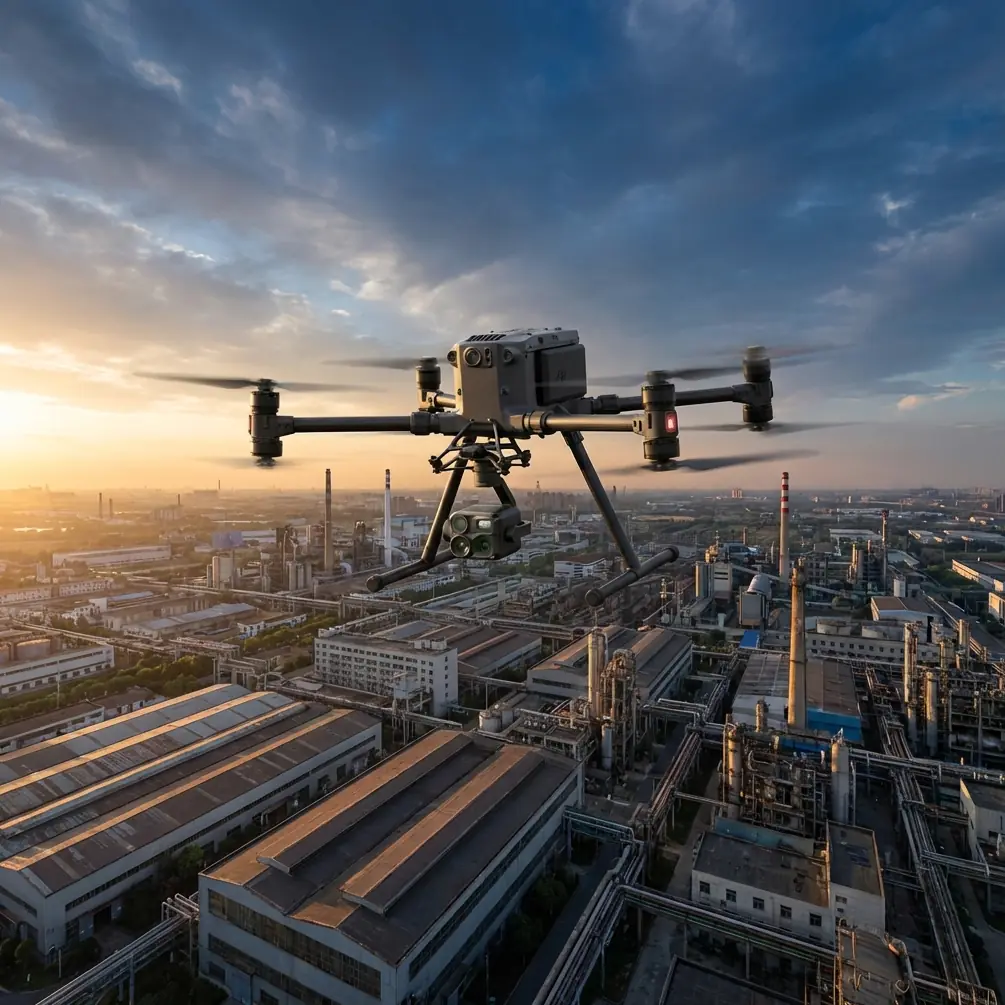
Tracking Urban Wildlife with DJI Matrice 4: A Field Report on Thermal Search, Battery Discipline, and Clean Data Capture
META: Field-tested insights on using Matrice 4 for urban wildlife tracking, including thermal signature detection, battery management, O3 transmission reliability, AES-256 security, and photogrammetry workflows.
Urban wildlife work looks simple from a distance. Put a drone in the air, spot the animal, collect imagery, go home. In practice, it is a chain of small technical decisions made under messy conditions: reflective rooftops, patchy tree cover, warm HVAC exhaust, radio noise between buildings, and animals that rarely move on cue.
That is where the Matrice 4 starts to make sense as more than a camera platform. For urban wildlife teams, its value is not just flight stability or image quality. It is the way several systems come together: thermal signature detection for finding animals in cluttered city environments, O3 transmission for maintaining usable situational awareness around structures, AES-256 for protecting location-sensitive data, and hot-swap battery workflow that keeps the aircraft useful during long observation windows.
I have seen this matter most in surveys involving bats near commercial roofs, fox movement along rail corridors, injured birds in industrial estates, and nocturnal mammal checks around urban wetlands. The challenge is usually not getting airborne. The challenge is getting reliable observations without adding stress to the animal, while preserving data quality well enough that ecologists, facilities managers, and local stakeholders can all trust the result.
Why urban wildlife tracking is different
Rural wildlife missions often give you space. Urban work gives you interference.
A fox crossing a warehouse yard at night can vanish behind a stack of containers in seconds. A gull nesting on a heated roof membrane may blend into the visual scene but stand out thermally at dawn. A colony emergence from a bridge expansion joint can be easy to miss unless the aircraft is positioned correctly before the movement starts.
The Matrice 4 workflow is valuable here because urban wildlife surveys depend on two things at once: live detection and later verification. You need to identify likely movement in real time, then return with defensible imagery, maps, or thermal records that support decisions such as habitat mitigation timing, access planning, or exclusion work outside sensitive periods.
That is where thermal signature work and photogrammetry stop being separate disciplines and become part of the same field method.
Thermal is not magic. It is pattern recognition with context.
People often overestimate thermal imaging in wildlife work. The camera does not “find animals” in a universal sense. It reveals heat contrast, and in urban settings heat contrast can be messy.
Concrete parapets retain warmth. Vents dump hot air. Sun-loaded brick walls radiate long after sunset. Rooftop plant equipment can create false positives all over the frame.
With the Matrice 4, the practical benefit is not simply having a thermal view. It is being able to compare thermal cues with the aircraft’s positional control and stable transmission link quickly enough to make judgments while the target is still present.
A small mammal moving along an alley edge usually appears first as a brief thermal inconsistency rather than a clean subject. You track the direction of travel, watch how it relates to surrounding structures, and confirm whether the heat source moves with biological behavior or stays fixed like plant equipment. That distinction matters. In a city, a false positive can waste half a battery cycle.
For teams doing dawn and dusk operations, this is where timing becomes operationally significant. The best thermal separation often happens when built surfaces have cooled enough that animal heat stands out, but before ambient conditions flatten the scene. In field terms, that usually means planning your launch window around the thermal behavior of the site, not just the behavior of the species.
The battery tip that saves missions
Here is the battery management habit I wish more pilots adopted in wildlife work: do not launch every sortie with the mindset of flying to “battery warning.” Instead, build your mission around an intentional reserve that accounts for hover-heavy observation.
Urban wildlife tracking is rarely a straight-line route. You pause. You reposition. You hold over a roofline. You orbit a tree stand slowly. You wait to confirm whether a thermal spot is an animal or a vent. Hover and frequent micro-adjustments can drain more than crews expect, especially in cool evening conditions where teams assume batteries will perform comfortably.
The advantage of a hot-swap battery workflow is obvious on paper, but in the field the real gain is continuity of observation. If the aircraft supports fast turnaround between flights, your team can keep visual pressure on a site during critical windows such as emergence counts or post-release monitoring. That is useful only if you manage packs properly.
My rule in urban wildlife operations is simple: rotate batteries in matched pairs by usage profile, not just by charge percentage. If one set has been used in repeated hover-intensive sorties, do not mix your expectations with packs used on smoother transit legs. Log which batteries were used for static watch versus mapping runs. It sounds obsessive until you are halfway through a thermal follow on a roof maze and the aircraft is returning earlier than the previous sortie pattern suggested.
The practical tip: stage the next battery set before landing, and treat the swap as part of your observation sequence, not a break in it. One crew member should continue watching the site from the ground while the pilot changes packs. That way, if the animal relocates during the turnaround, you are not rebuilding the search from zero.
O3 transmission matters more in cities than on spec sheets
Urban wildlife pilots do not need marketing language about signal systems. They need a live feed that remains trustworthy when buildings, steelwork, and dense Wi‑Fi environments try to degrade it.
That is where O3 transmission earns its keep operationally. In wildlife work, image lag and unstable signal quality do more than frustrate the pilot. They affect animal detection, route judgment, and crew confidence. If you are trying to maintain view of a hedgerow gap behind a row of service buildings, a transmission system that stays usable in clutter can be the difference between documenting movement and guessing.
This becomes especially relevant in edge-case urban environments: canal corridors, utility compounds, rooftop clusters, transport infrastructure, and fragmented green strips where wildlife often travels. These are exactly the places where line of sight is visually available in pieces but radio conditions can still deteriorate.
When teams talk about BVLOS ambitions in ecological monitoring, they often jump straight to regulation and airspace planning. Those are valid concerns, but the operational base layer is much simpler: can your aircraft maintain enough situational awareness to support safe, accurate data collection as the environment becomes more complex? In any future BVLOS-style conservation workflow, transmission resilience is not a luxury feature. It is part of the evidence chain.
AES-256 is not just an IT checkbox
Wildlife location data can be sensitive even in civilian work. Nest sites, roost access points, den locations, and movement corridors are not details that every stakeholder should casually circulate. In urban areas, this sensitivity can increase because the site may sit inside a redevelopment zone, on private industrial land, or near public foot traffic.
AES-256 matters here because survey data is not just imagery; it is often decision-grade habitat intelligence. If your files include geotagged thermal captures of a protected species using a structure, that information needs to be handled carefully from aircraft to controller to reporting archive.
For consultants and in-house environmental teams, the significance is practical. Secure handling reduces the chance of accidental exposure while supporting client trust and compliance workflows. It also makes cross-team collaboration easier because the technical platform aligns better with standard data governance expectations. In wildlife work, that can be the difference between a survey remaining useful in planning discussions or becoming a source of avoidable friction.
When photogrammetry helps a wildlife mission
Photogrammetry is usually discussed in relation to construction, stockpiles, and topographic surveys. In urban wildlife tracking, it can be just as valuable, just for different reasons.
Suppose a team is documenting roof access hazards around a gull nesting area, mapping tree canopy adjacency to likely squirrel routes, or recording a wetland edge where repeated animal movement is changing bank condition. A properly planned image set can produce a site model that explains the animal’s path in relation to walls, parapets, drainage channels, fencing, and vegetation breaks.
This is where GCPs can improve confidence. In a tight urban site, especially one where future mitigation or habitat adjustments may be debated, ground control points give your map products stronger positional reliability. That helps if the output will be used to compare seasonal changes, define buffer zones, or brief contractors on where activity should be avoided.
The key point is that photogrammetry should support the ecological question, not become a separate technical exercise. If the job is to understand how urban foxes move between two planted areas behind commercial units, your model should clarify route options, blind spots, barriers, and attractants. If the job is to assess a roof void used by bats, the model should help explain entry points, maintenance constraints, and surrounding thermal clutter.
A real-world workflow that fits Matrice 4
A good urban wildlife mission with the Matrice 4 often follows a four-step rhythm.
First, conduct a site read before launch. Stand still for a few minutes. Watch bird movement, note reflective surfaces, identify warm exhaust points, and mark likely animal corridors. This changes your flight plan more than software ever will.
Second, use thermal early as a screening tool, not final proof. Scan for anomalies, observe movement, then cross-check with visible context and aircraft position. In complex settings, a thermal spot only becomes useful after you understand what it is attached to spatially.
Third, collect structured imagery if the site needs reporting-grade outputs. If the survey will influence habitat management or access planning, add a photogrammetry pass where conditions allow. If accuracy matters, use GCPs rather than assuming the map will be “good enough.”
Fourth, protect continuity. Manage your batteries, maintain your observation chain during hot-swap turnarounds, and keep the same crew language for target descriptions. “Heat source near silver duct” is less useful than “moving thermal target, west parapet, 2 meters south of vent stack.”
That level of discipline is what turns an aircraft into a survey tool.
One overlooked advantage: lower disturbance through distance
Urban wildlife teams often focus on whether the drone can see enough. They should also ask whether it can see enough from far enough away.
A stable aircraft with strong transmission and thermal capability allows crews to work from positions that reduce direct disturbance. That matters for nesting birds, roost emergence monitoring, and injured animal assessment where pushing too close too early can alter behavior or complicate rescue planning. A stronger stand-off workflow also helps on restricted-access commercial sites where the best takeoff point is not always near the target area.
If your team is planning a site-specific setup for urban ecological work, I usually suggest discussing it with someone who understands both aircraft workflow and the realities of environmental surveys. A direct line like this WhatsApp contact for mission planning questions can be more useful than digging through generic drone advice.
What Matrice 4 is really good at in this role
The Matrice 4 is not valuable for urban wildlife tracking because it promises a perfect answer. Urban ecology rarely works like that. It is valuable because it supports the messy middle: searching, verifying, repositioning, documenting, and securing data without breaking the mission flow.
Two details stand out operationally.
The first is hot-swap battery capability. During short wildlife activity windows, reducing downtime between sorties can preserve continuity and prevent missed detections during emergence, transit, or settling behavior.
The second is the combination of O3 transmission and AES-256. In urban settings, one protects your live operational picture from becoming unreliable in a dense signal environment; the other protects the survey record after capture, which matters when your imagery contains sensitive habitat information.
Add thermal signature work and photogrammetry with GCP support, and the aircraft becomes useful not just for spotting an animal, but for explaining the site around it. That distinction is what makes the data actionable.
Urban wildlife tracking is full of fleeting moments. A shape crosses a warm roof. A bat line emerges from a seam at civil twilight. A fox uses the same fence break three nights in a row. The best drone platform is the one that helps you catch those moments without turning the operation into noise.
Ready for your own Matrice 4? Contact our team for expert consultation.