
Matrice 4 in Windy Wildlife Missions: A Specialist’s Case
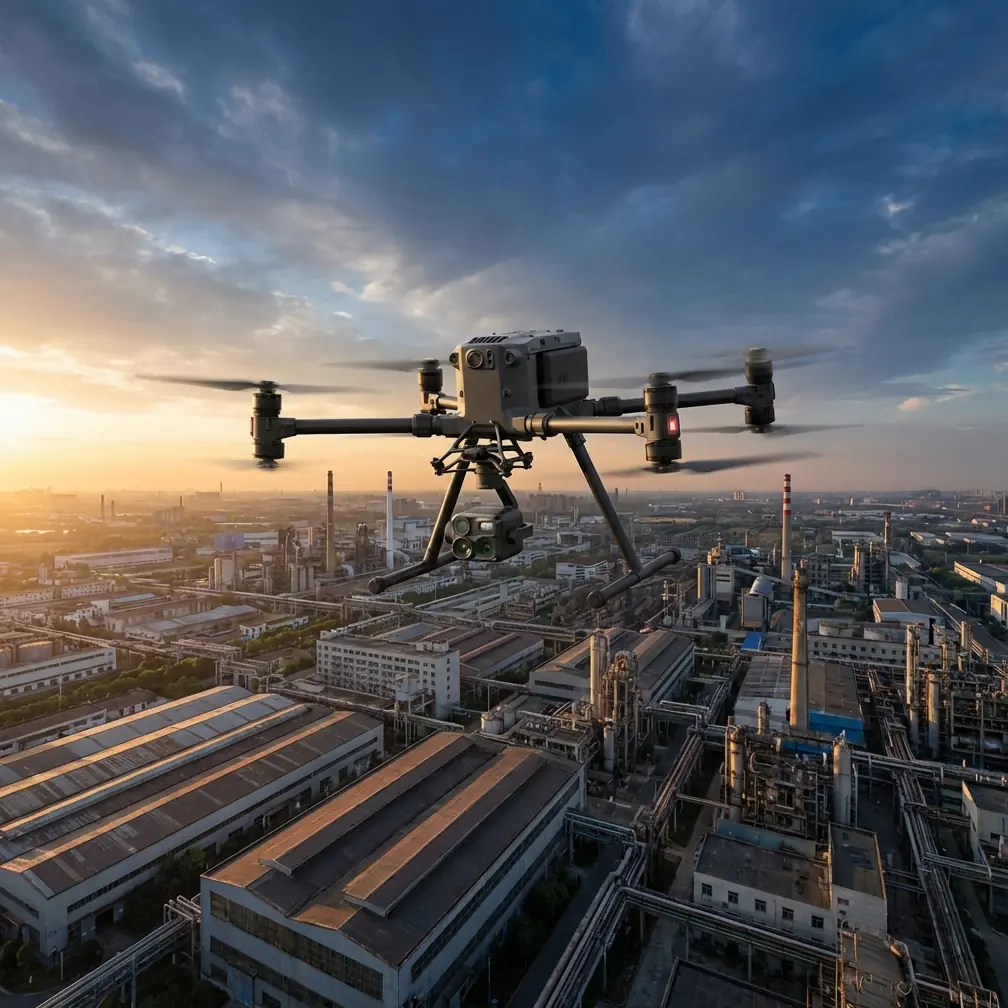
Matrice 4 in Windy Wildlife Missions: A Specialist’s Case Study on Control Integrity, Landing Discipline, and What Actually Keeps Data Usable
META: A field-driven Matrice 4 case study for wildlife tracking in windy conditions, covering control integrity, landing technique, thermal workflow, transmission reliability, and pre-flight safety practice.
Wind changes everything in wildlife work.
Not in the abstract. In the field. On the edge of a marsh, above a ridgeline, over grassland where heat shimmer distorts the image and an animal can disappear into scrub between one orbit and the next. The aircraft may still be within spec, the pilot may still have a clear plan, and the payload may still be returning usable thermal signature data. Yet the quality of the mission often comes down to two things most people underrate: control-system integrity and the discipline of the last thirty seconds before touchdown.
That is the frame I use when discussing Matrice 4 for wildlife tracking in windy conditions.
This is not a generic overview. It comes from the way civil aircraft control philosophy and landing dynamics translate into real drone operations. The source material behind this article is not a marketing sheet. It comes from aircraft design references that focus on electronic flight control systems, interface reliability, backup power expectations, and the coupled nature of longitudinal and lateral-directional behavior during takeoff and landing. Those details matter more than they might appear to, especially when a wildlife team is trying to gather repeatable evidence instead of merely getting a drone in the air.
The mission profile: windy wildlife tracking is really a control-quality problem
A typical conservation mission sounds simple on paper. Launch at dawn. Sweep a predefined grid. Use thermal imaging to identify animal movement before direct sunlight reduces temperature contrast. Capture enough overlap for photogrammetry in selected zones. Maintain standoff distance to minimize disturbance. Return with data that can be compared against previous surveys anchored to GCP-marked ground truth.
In practice, wind destabilizes every step.
It affects drift over a target, angle stability during observation, and how confidently an operator can classify a thermal signature when the aircraft is making constant micro-corrections. It also affects the landing phase, which is often treated as routine right up until a gust forces an aggressive correction near the ground.
For Matrice 4 crews, the central question is not just “can the platform fly in wind?” It is whether the aircraft can preserve command fidelity, sensor usefulness, and safe recovery when multiple variables begin to stack up.
That distinction is where the reference material becomes surprisingly relevant.
Why electronic control integrity matters more than raw flight time
One of the strongest details in the source material is the insistence that an electronic flight control system must preserve interface integrity, not merely function most of the time. The text describes how electronic interfaces—AC, DC, and data bus pathways, plus feedback and sensor inputs—are vulnerable to false signals from electrical disturbances, static, or subsystem faults. It also notes that special design measures are necessary to achieve the same practical insensitivity that older hydraulic-mechanical systems delivered by architecture.
That sounds like big-aircraft engineering, but the operational lesson carries directly into Matrice 4 wildlife work.
When you are tracking moving animals in gusty conditions, tiny corruptions matter. Not because the aircraft will suddenly become uncontrollable in a dramatic sense, but because control quality degrades first at the margins. Margins are exactly where wildlife work lives. The drone is often holding an oblique viewing angle, balancing position against wind, preserving a quiet enough presence to avoid flushing animals, and trying to maintain a clean line for image interpretation. If control and sensor interfaces are not robust, the first thing you lose is confidence in the data.
That is why I tell teams to treat O3 transmission quality and onboard signal hygiene as part of the survey chain, not a convenience feature. A strong link is not just about video continuity. It is about preserving pilot awareness when the aircraft is fighting moving air and the operator is making decisions based on subtle visual and thermal cues. If your organization runs sensitive ecological surveys and wants to compare outputs season over season, transmission reliability and encrypted workflow discipline—AES-256 in your data handling stack, for example—are not administrative extras. They protect mission continuity and sensitive location information.
The pre-flight cleaning step most teams rush through
The prompt for this article asked for a pre-flight cleaning step, and I’m glad it did, because this is one of the most practical safety habits a wildlife crew can adopt.
Before launch in dusty, grassy, or salt-laden environments, I recommend a deliberate cleaning pass on the aircraft’s sensor windows, obstacle sensing surfaces, landing vision elements, and battery contact areas. Not a quick shirt-sleeve wipe. A documented cleaning step with proper optics-safe materials and attention to debris in seams, vents, and contact interfaces.
Why does this matter so much in wind?
Because the source material emphasizes that electronic control systems depend on the integrity of command, feedback, and sensor signals. In drone terms, if the aircraft relies on a network of sensing and feedback channels to stabilize itself and support landing, contamination is not cosmetic. Dirt film, residue, grass fragments, and moisture traces can reduce the reliability of the very information the aircraft uses to maintain stable behavior near the ground.
For wildlife teams, this pre-flight step has a second benefit: cleaner optics mean cleaner thermal interpretation. A weak or smeared image in a breezy dawn launch can look like poor atmospheric conditions when the real problem is preventable contamination on the payload window.
I have seen missions lose their best thermal window in the first ten minutes because nobody checked for fine dust after transport.
Backup power is not just about endurance
Another hard number from the source text deserves attention: it references a reliability target of 1 × 10^-9 per flight hour for electronic flight control power-system design in civil aircraft contexts, along with the need for enough backup capacity to maintain essential control functions when normal power is lost.
No one should flatten that number into a claim about any one drone platform. The operational takeaway is different. In professional UAV work, especially beyond easy walking distance or in BVLOS planning contexts where allowed and properly authorized, backup philosophy matters just as much as nominal battery duration.
That is where hot-swap batteries become operationally meaningful for Matrice 4 teams. They do not just reduce downtime. They support continuity in changing field conditions, shorten exposure during fast redeployment, and reduce the temptation to stretch a pack into the low-confidence zone because a target was finally acquired after a long search leg.
In windy wildlife tracking, crews often make poor battery decisions for good reasons. An animal appears. A herd shifts. A thermal cue suggests a den or nest zone that warrants a second pass. This is exactly when a disciplined battery strategy protects both safety and data quality. When operators know they can cycle quickly and relaunch cleanly, they are less likely to force the aircraft into a marginal return or rushed landing.
The landing phase is where wind exposes weak habits
The second reference source, focused on aerodynamic design, is centered on takeoff and landing control. It describes a process in which each calculation step feeds lateral-directional solutions back into the longitudinal equations, because the aircraft’s behavior in flare and landing is coupled. In plain terms, landing is not a one-axis event. Roll, yaw, pitch, and sink-rate management interact continuously, especially as the aircraft approaches the ground.
That has direct value for Matrice 4 operations.
A windy wildlife mission often ends with a tired crew, partial distraction from reviewing observations, and a launch site that looked comfortable an hour earlier but is now more turbulent due to terrain heating. Operators who think of landing as a simple descent miss the coupling. A crosswind correction changes attitude. Ground effect changes the visual picture. A minor lateral drift correction changes how much vertical control margin remains. Near the surface, everything compresses.
The source text even frames landing solutions around reaching the point where y = 0, effectively driving the whole process to ground contact while continuously updating the dynamic state. That is exactly the mindset drone crews need: not “bring it down,” but “manage a coupled sequence all the way to settled touchdown.”
For Matrice 4 wildlife teams, this means three practical things:
Choose recovery zones for airflow, not convenience.
The flattest patch is not always the best patch. Avoid lee-side rotor zones behind vehicles, hides, berms, or tree lines.Brief the final thirty seconds.
Call out who is responsible for airspace watch, who monitors battery margin, and who confirms surface clearance. Silence casual conversation.Respect sensor cleanliness and landing optics.
If the aircraft’s lower sensing surfaces are obscured, wind recovery gets less forgiving.
This is not over-procedure. It is field realism.
A real-world style case study: wetland ungulate survey in crosswind
Let’s anchor this in a representative mission.
A conservation team is surveying a wetland edge for deer movement at first light. Wind is stronger than forecast and quartering across the planned observation line. The crew’s objective is twofold: identify active movement with thermal signature detection, then map hoof-worn access routes near the reed boundary for habitat analysis using photogrammetry tied back to existing GCP points.
The first launch goes well, but drift is evident on station holds. The pilot notices that image interpretation is easiest when the aircraft is not fighting for exact geographic position. So the team adjusts. Instead of forcing a static hover over each suspected target, they adopt short tracking arcs that keep the sensor angle more stable relative to the wind. This reduces abrupt corrective inputs and yields cleaner thermal reading of animal movement.
That is a control-integrity decision, not just a piloting style preference.
Mid-mission, the crew recovers and swaps batteries rather than squeezing one more pass from the first set. This preserves landing margin and allows a fresh launch during the best remaining thermal contrast window. Again, the point is not just endurance. It is the avoidance of rushed low-battery decision-making in gusts.
Before relaunch, the team performs a proper cleaning check on the sensor faces and landing vision area because the first recovery threw fine marsh grit upward. That minute of discipline prevents degraded near-ground sensing and keeps the second sortie’s data sharp enough for later comparison against the GCP-referenced map set.
The result is not dramatic. No emergency. No viral incident. Just a mission completed with data that stands up to scrutiny.
That is what professional use looks like.
Why Matrice 4 fits this kind of work when the team is mature enough to use it properly
Matrice 4 becomes valuable in wildlife tracking not because it magically removes environmental complexity, but because it gives skilled crews a platform to manage complexity without collapsing data quality.
In windy missions, what matters most is the system-level picture:
- stable control behavior under variable loading from gusts
- dependable downlink awareness through O3 transmission
- secure handling of sensitive habitat data with AES-256-minded workflow discipline
- efficient relaunch cycles supported by hot-swap batteries
- payload utility that can move from thermal signature detection to survey-grade image capture for photogrammetry
That last point is worth stressing. Many teams split wildlife work into “search” and “mapping” as if they are unrelated jobs. They are not. Good conservation operations often begin with detection, then pivot into documentation. A Matrice 4 workflow that links thermal spotting with mapped habitat evidence becomes much more useful when the dataset can be repeated over time, tied to GCP control, and interpreted without wondering whether wind-induced instability distorted the results.
The hidden professional advantage: crews who think like systems engineers
The source references come from aircraft design, not drone field manuals, and that is exactly why they are useful. They remind us that safe, reliable flight is not just a matter of powerful motors or good software. It depends on preserving signal integrity, designing for backup conditions, and understanding that landing dynamics are coupled rather than linear.
That mindset raises the quality of Matrice 4 wildlife work immediately.
It changes pre-flight from a battery-and-prop routine into a verification of sensing surfaces and control-chain cleanliness.
It changes wind assessment from a simple speed check into an evaluation of what the aircraft must do near the ground.
It changes mission success from “we saw animals” into “we returned with defensible, repeatable evidence.”
If your team is refining a windy-environment wildlife workflow and wants to compare field procedures or payload strategy, you can message our flight operations desk here.
A final point. The best wildlife drone teams are usually not the most aggressive pilots. They are the most methodical observers. They understand that every gust taxes the aircraft, every contaminated sensor erodes confidence, and every careless landing can waste the one sortie that had the best biological signal of the morning.
Matrice 4 is at its best in that kind of hands.
Ready for your own Matrice 4? Contact our team for expert consultation.